- Few references already manufactured, with no variants: one shoot covers the catalogue.
- The living look of the material is part of the product: food, plants, skin or fabrics on a person.
- Images of the team or the factory, where what is being sold is the real side of the process.
GUIDE · RENDER OR PHOTO · DECISION TABLE · CATALOGUE
— GUIDE FOR MANUFACTURERS · 2026
3D product rendering
3D product rendering
or real photography:
when each one makes sense.
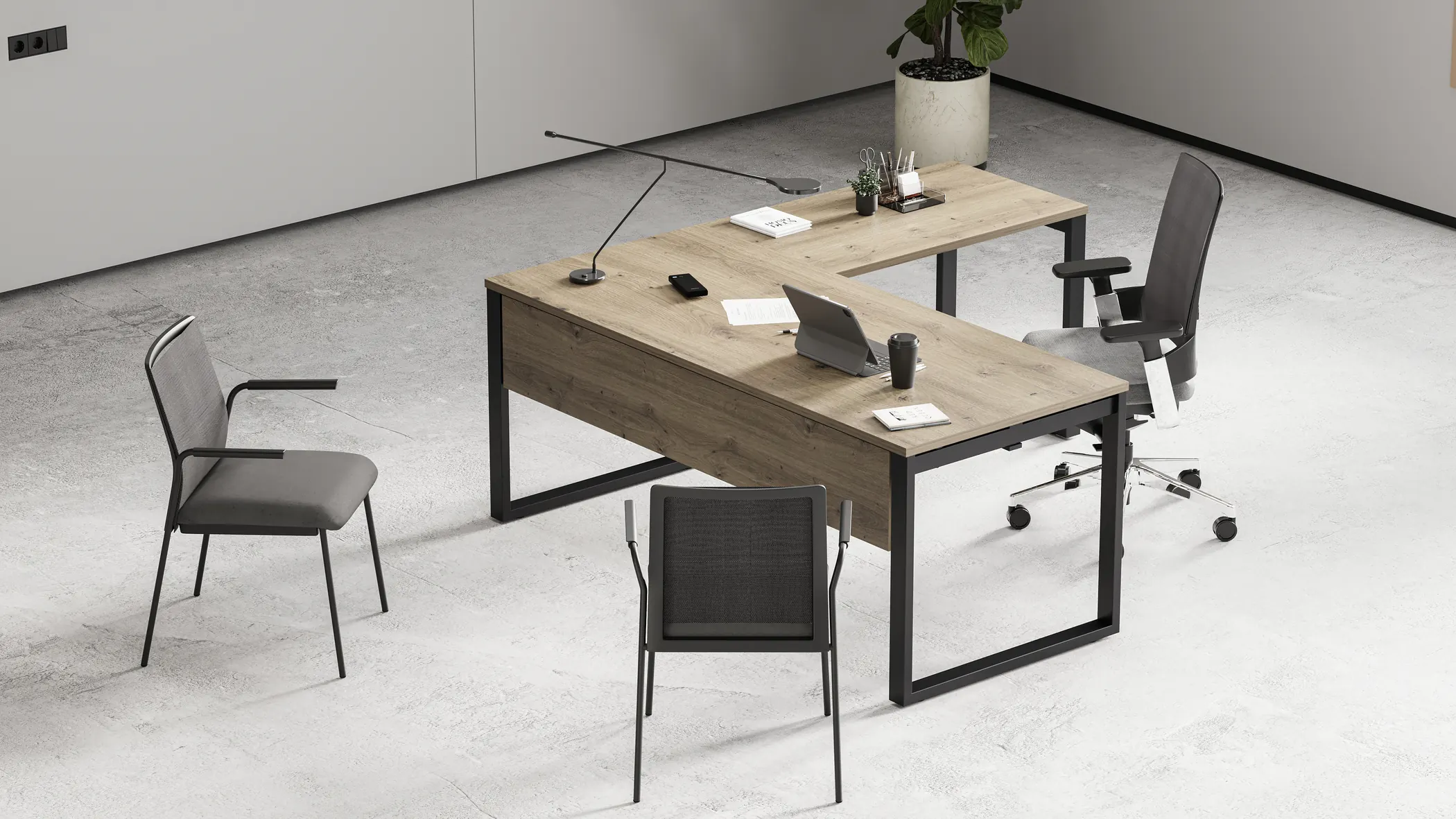
3D product photography is, in practice, a render: a photorealistic image generated from a digital model, with no studio and no physical product. It makes sense when the product does not exist yet, has many variants or you need a consistent catalogue; real photography makes sense when the product is already manufactured and you have few references. This guide compares the two options with a table, without calling either one better in every case.
— THE DIFFERENCE
What each one is
What each one is
and what it cannot do.
Both produce a product image; what changes is where it comes from.
In real photography the physical product is captured with a camera, in a studio or in a setting. It is excellent when the product already exists and you only need one or a few shots, and it is the best option for anything that depends on the living look of the material or on people in the scene.
In a 3D render the image is generated from a digital model to which materials, colour and lighting are applied. It does not need the product to exist, and every variant comes from the same model with the same light and the same framing. It also shows what a camera cannot reach: cutaways, exploded views and interiors. See 3D product rendering.
— COMPARISON TABLE
Render or photo,
Render or photo,
situation by situation.
A quick read to decide without selling either one.
| Situation | 3D render | Real photo |
|---|---|---|
| The product does not exist yet | Suitable: it starts from the CAD or the drawings | Not possible |
| Many colour or finish variants | Suitable: they are generated from the same model | One shoot or set-up per variant |
| Consistency across images in the whole catalogue | Suitable: same light and same framing | Difficult if the photos are from different moments or sources |
| Product already manufactured and few references | Possible, but it may not be worth it | Suitable: few shots |
| Cutaways, exploded views or interiors | Suitable: they are shown from the model | They cannot be captured |
| Image with people or with the product in real use | Possible in elaborate scenes | Usually more natural |
| Very organic material (food, fabric on a body) | Requires very fine material work | Usually more faithful |
| New references every season | Suitable: they are added to the system already built | A new shoot every time |
— WHEN PHOTOGRAPHY MAKES SENSE
When it is better
When it is better
not to commission a render.
Honestly, there are cases where photography is the right option.
- Selling before manufacturing: pre-sales, validation with the sales network or a trade fair with a product still in development.
- A range with many combinations of colour, material or size.
- An uneven catalogue because the photos come from different sources and need to be made consistent.
— THE MIXED OPTION
Combining them
Combining them
is also an option.
You do not have to choose just one for the whole range.
- 01
A photo of the main reference
If a piece already exists and is the flagship, a real photo shoot gives the most natural image.
- 02
Renders of the rest of the range
The colour and finish variants, the new references and those not yet manufactured, from a 3D model and with the same light across all of them.
- 03
A shared visual standard
A light and framing style is defined so that render and photo sit together without the catalogue looking like a collage. More in product rendering for ecommerce and catalogues.
A product render starts from €1,400; the final price depends on the number of images, the variants and the starting material, and it is given in writing. Details in 3D product render pricing.
— FREQUENTLY ASKED QUESTIONS
What we get asked
What we get asked
about render or photo.
Prices are on renders and 3D pricing and the full service on 3D product rendering.
What is 3D product photography?
It is a photorealistic image of a product generated by computer from a 3D model, with materials, colour and studio lighting. It is also called a product render: nothing is photographed, so the product does not need to exist physically.
Is a 3D render or product photography better?
It depends on the case. The render wins when the product does not exist yet, has many variants or you need a consistent catalogue; the photo wins when the product is already manufactured and you have few references, or when the living look of the material matters.
Can you tell it is a render and not a photo?
With a faithful model, well-developed materials and careful lighting, the result holds up next to product photography. With very organic materials or with people, real photography is usually more natural, and it can be combined with renders.
When is a render worth more than a photo?
When there are many colour or finish variants, when new references are launched every season or when the product is not yet manufactured. In those cases the model is built once and reused, instead of repeating a shoot for each variant.
Can photos and renders be combined in the same catalogue?
Yes, and it is a common option: a photo of the main reference that is already manufactured and renders of the rest. It is worth defining a shared light and framing style so the catalogue looks consistent.
How much does a product render cost compared with a photo shoot?
A product render starts from €1,400 and the final price depends on the number of images and variants, the complexity of the product and the starting material; it is given in writing. The cost of a photo shoot is set by each photographer, so what can be compared is the cost per reference and per variant. Details in 3D product render pricing.
— QUOTE
Tell us
Tell us
how many references
you have.
If you are unsure between render and photo, send us the list of references and variants, and whether the product is manufactured or in development. With that we will honestly tell you which option suits you, even if it is the photo.
We reply in writing after reviewing the material, with the scope and the price of the render if it fits. No obligation.
Would you rather talk it through? Call us on 662 061 421 or write to grup3d@grup3d.es.
— KEEP READING
Product renders and 3D
Product renders and 3D
to keep reading.
3D product render
What it includes, when it makes sense and how it is produced.
Read →3D product render pricing
What the quote depends on and how to ask for a tailored proposal.
Read →Product rendering for ecommerce and catalogues
Which images a product page needs and what to send the studio.
Read →3D product catalogue
The whole range with the same light and the same framing.
Read →Renders or 3D configurator?
When images are enough and when a configurator makes sense.
Read →