3D conveyor belt configurator with a belt conveyor running, boxes moving along and emergency stops
MACHINERY, AIR CONDITIONING AND PLASTIC · OPEN DEMO
— FOR MADE-TO-MEASURE CONVEYOR MANUFACTURERS

3D configurator
for conveyor
belts.

They ask you for “a conveyor about five metres long to take boxes off the packing machine” and every conveyor is a project: width, working height, speed, incline, motor and safety. The technical quote goes out days later, in a document the production manager cannot read.

— WHAT HAPPENS TO YOU

Subject:
“conveyor for boxes,
urgent”

The email reaches a workshop that makes made-to-measure conveyors, with twenty staff and one engineer who does all the quotes. It comes from the production manager of a nut packing plant: he needs to move boxes from the packing machine to the palletising area, “about five metres, at table height”, and he needs it before the season starts. He attaches a photo of the warehouse floor with tape marking the route.

The engineer has six other technical quotes open. For this one he needs to know the size and weight of the boxes, how many come out per minute, whether there is any change in level and whether the belt can be rubber or has to be modular so it can be cleaned. He writes asking. The answer takes three days and opens new questions: now they want a hopper at the start and the conveyor to rise slightly to clear a step in the warehouse.

The quote goes out with a drawing, a list of components and a price: frame, belt, geared motor, inverter, adjustable feet, emergency stop and photocell. The production manager forwards it to his director, who asks how many boxes per minute it moves, what the inverter is for and whether the photocell is really necessary. Nobody in that meeting can answer with the document in front of them, and the decision moves to the following week while the season gets closer.

— WHERE THE SALE LEAKS AWAY

The bottlenecks
you will recognise
straight away.

“A normal conveyor, about five metres.”

Every enquiry starts with questions

Nobody asks for a conveyor by giving the belt width, the working height, the speed and the incline: they ask for “something to take boxes from here to there”. The engineer answers with a list of questions, the customer answers half of them and the quote never gets going, while they are already talking to other workshops.

What it costs youThe first quote the customer receives is not yours.
“Fine, but how many boxes does this move?”

Technical quotes that are hard to read

The quote says 500 mm rubber belt, 20 m/min and a 0.75 kW head motor. For the production manager, and even more for his director, that does not answer what matters to them: whether the conveyor keeps up with the packing machine and whether it is safe for whoever works next to it.

What it costs youA decision postponed because the document cannot be understood without you there.

“While we are at it, can we add a hopper?”

Changes that arrive in instalments

The customer does not ask for the changes all at once: they discover them along the way. First a hopper; three days later, the conveyor rising to clear a step; then an extra metre to reach the palletiser. Every email reopens a quote the engineer already considered closed and takes him away from the sold projects waiting in the workshop.

What it costs youSold projects delayed by quotes that are not sold yet.

“And where does the emergency stop go? Health and safety want to see it.”

Nobody sees where each stop goes

Emergency stops, presence sensor and side guides go into the quote as references in a list. The production manager needs to know where each emergency stop sits relative to the operator loading the boxes, and the health and safety officer wants to see it before signing off. With a plan view, that conversation goes nowhere.

What it costs youAn approval waiting for one more meeting, with the season upon them.

“This one is almost the same as the one we did in March.”

Engineering work that keeps repeating

Most conveyors are alike: the length, the width and the accessories change. Even so, every component list is put together by hand, copying a previous quote and correcting quantities. A slip in that copy is expensive: a belt cut to March's length or two feet fewer than the new frame needs.

What it costs youA belt that has to be cut again and an installation that runs late.

— DO THE MATHS

What it costs you
today, with
your own numbers.

Add up the engineering hours that go into quotes, signed or not. As a starting point, the figures of a workshop with one engineer doing the quotes.

quotes
h
€
ENGINEERING SPENT ON QUOTES EACH MONTH 0

€ a month

The values are an example: replace them with yours. The calculation is a simple multiplication and does not come from any study.

— HOW IT IS SOLVED

Every bottleneck,
with its
answer.

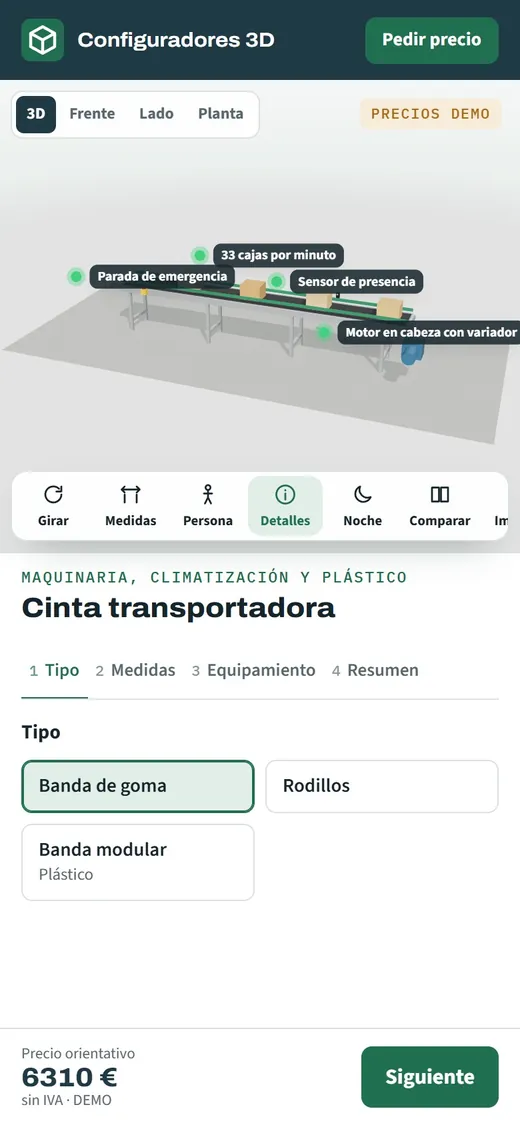
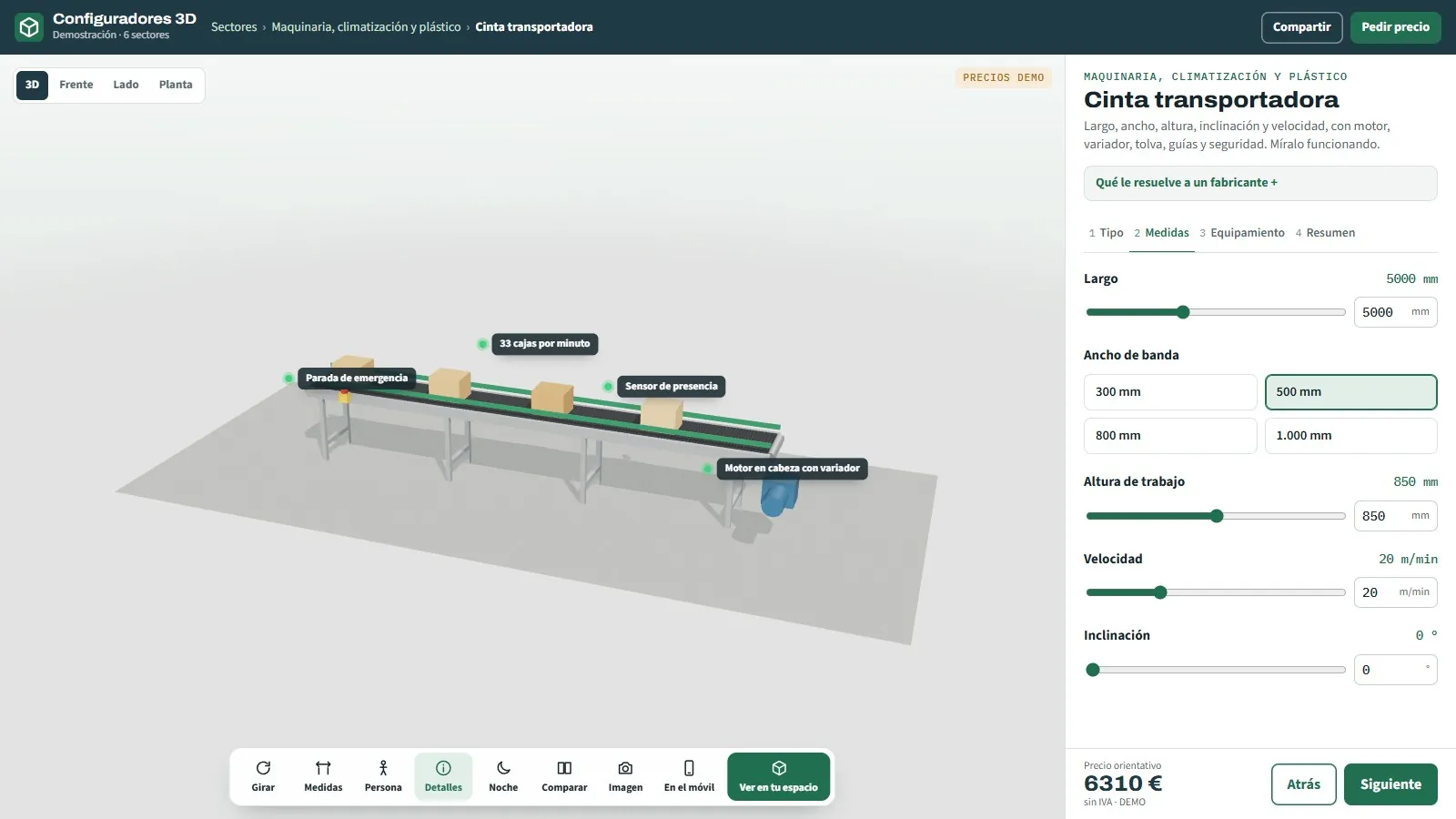
Conveyor belt configurator screen with belt type, length, width, working height and speed
Answers · Every enquiry starts with questions

The customer defines their conveyor before writing to you

Belt type, length, width, working height, speed, incline, head or centre motor and equipment are chosen in three steps. The email the engineer receives already has all the dimensions, the chosen conveyor and the indicative price the customer is working with. No more rounds of questions.

Configuration in three steps
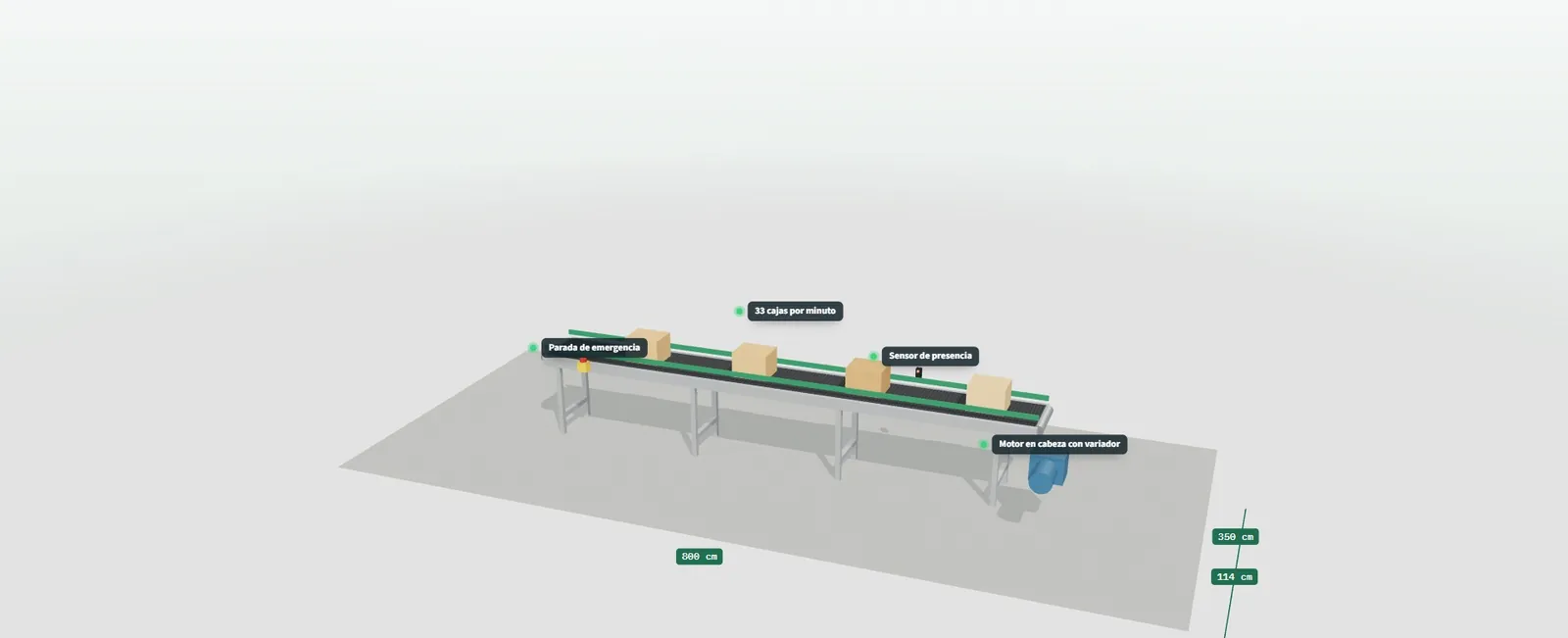
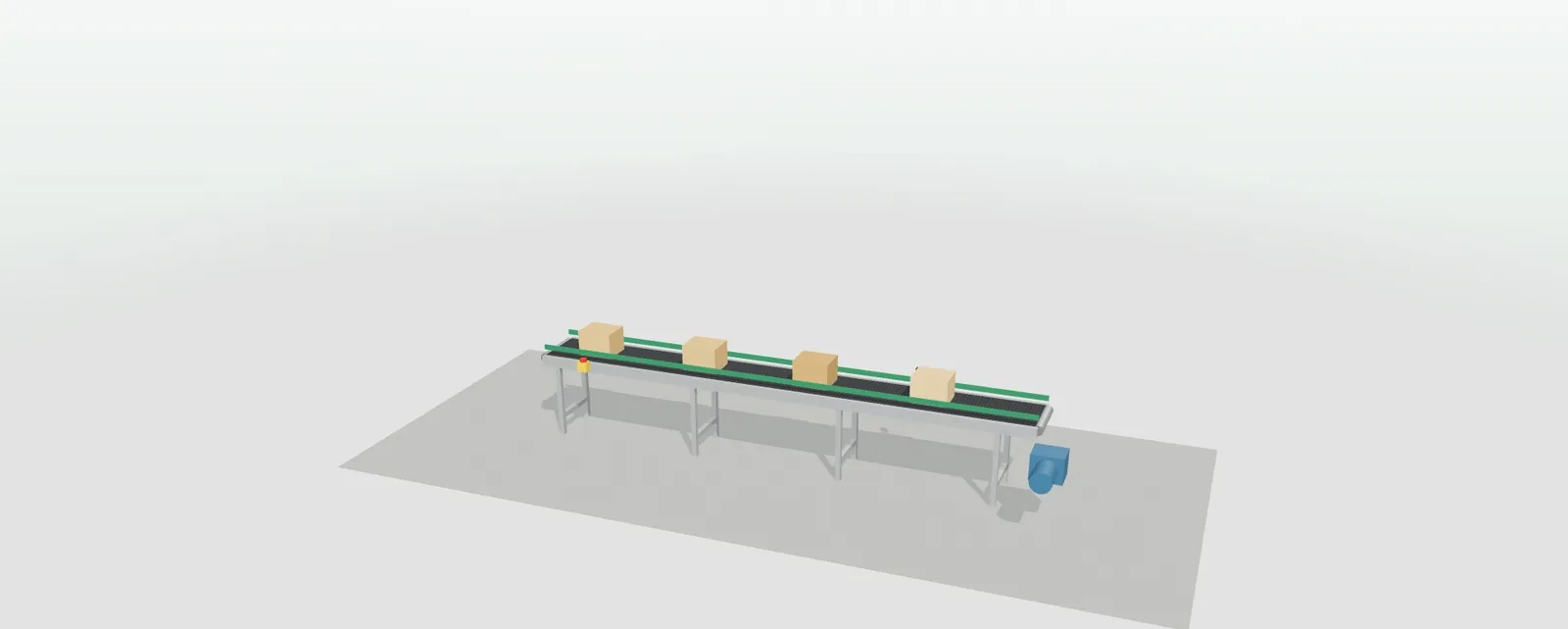
Belt conveyor in 3D with boxes moving along, side guides, head motor and adjustable feet
Answers · Technical quotes that are hard to read

They see it running and know how many boxes it moves

The conveyor appears in 3D and running, with the boxes moving at the chosen speed. Next to it, the approximate boxes per minute and the motor power. The production manager shows it to his director on a phone and the question “will it keep up?” now has a figure beside it.

Animated conveyor with capacity per minute
Conveyor belt configurator open on a phone, with the conveyor in 3D and its equipment options
Answers · Changes that arrive in instalments

Last-minute ideas, settled before writing to you

What about a hopper? What if it rises ten degrees? The production manager tries it at his desk and sees the conveyor, the boxes per minute and the indicative price all change together. By the time he writes to you, he has settled those doubts himself, and what reaches the engineer is a closed version.

Instant changes
Close-up of the conveyor in 3D with labels for the emergency stop, the photocell and the motor
Answers · Nobody sees where each stop goes

Health and safety sees every stop in place

The emergency stops, the photocell and the side guides appear fitted on the conveyor, each with its label. The conveyor can be rotated, the view zoomed in on the loading position and, if there are doubts, up to three versions compared side by side — with and without a hopper, for example — with the differences highlighted.

Labels on the 3D and a comparison tool
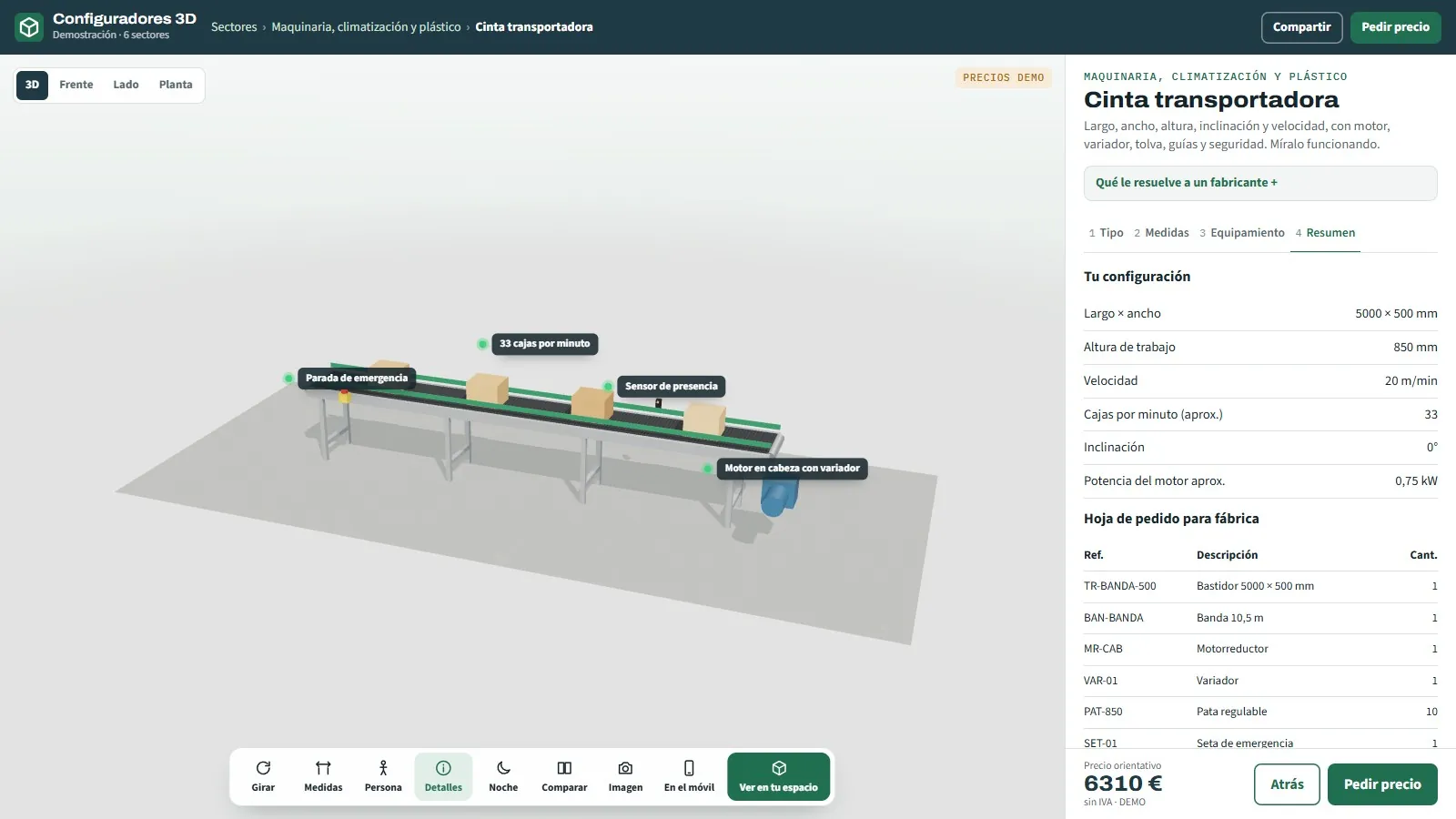
Conveyor summary with dimensions, boxes per minute, motor power and component list
Answers · Engineering work that keeps repeating

The component list comes out with the conveyor

Frame, belt with its length, geared motor, inverter, adjustable feet, emergency stop and photocell, with reference and quantity. With your manufacturing rules inside, the list is no longer copied from March's conveyor: it comes from this one, ready for the workshop or for your ERP.

Factory order sheet
— TRY IT NOW

Try it
for
yourselves.

Set 8 metres of length and a 10° incline, switch on the loading hopper and then raise the speed: check how many boxes per minute come out and how the running conveyor speeds up.

An open demo, with no registration, with example products and prices. It is designed for manufacturers, dealers and installers: private customers are welcome to try it, but we do not sell the product.

— INVESTMENT AND NEXT STEP

Send us the last conveyor you quoted

We reproduce it in the demo and you can see for yourselves how it would work with your belt types, your components and your manufacturing rules.

From €6,500

Most projects for manufacturers fall between €14,500 and €35,000, depending on the catalogue, the manufacturing rules and the integrations. Maintenance and hosting from €190 a month. We start from a base that already works: you are not paying for development from scratch.

  • What is includedThe configurator with your products, your rules and your price list, embedded in your website and in your dealers' sites, with training for the sales team.
  • TimeframeBetween 3 and 16 weeks depending on the scope; the exact date goes in the proposal.
  • Payment terms40% to start, 40% with the test version and 20% at go-live.

Would you rather talk it through? Call 662 061 421 or write to grup3d@grup3d.es.

— FREQUENTLY ASKED QUESTIONS

What we
get asked.

There are more short answers in frequently asked questions about 3D configurators and who we are in 3D configurator company.

What can the customer configure on a conveyor belt?

In the demo they choose a rubber belt, rollers or a modular plastic belt; a length from 1 to 12 metres; a belt width from 300 to 1,000 mm; working height, speed and an incline of up to 15°. Then head or centre motor, side guides, presence sensor, emergency stops, speed inverter and loading hopper.

Does the configurator work out the capacity and the motor?

It shows the approximate boxes per minute and the approximate motor power for the chosen configuration, alongside the dimensions and the speed. They are indicative figures so the customer understands what they are buying. In your version the calculation follows your manufacturing rules and your engineer confirms the final sizing before manufacturing.

What happens if the customer needs something non-standard?

The configurator works within the ranges and combinations you define. If a customer needs something outside them, they send you the closest configuration with all their data and your engineer adjusts it. Even then, the engineer starts from specific dimensions, speed and equipment, not from tape marks on a floor.

Can integrators and distributors who sell our conveyors use it?

Yes. Each integrator logs in with their margin and their brand, puts the conveyor together with their customer, shows it running and passes you the order sheet with your references. What reaches you are defined orders, not half-finished enquiries to be completed over the phone.

How does the customer know whether the conveyor fits next to their packing machine?

After scanning the QR code, augmented reality places the conveyor at real scale over the route they marked on the floor, with nothing to install. That way they check the length, the working height next to the person for scale and the point where it starts to rise if it has an incline. If it does not fit, they change the length right there and look again.

How much does a conveyor belt configurator cost?

It varies with the conveyor and equipment types included, your manufacturing rules, your price list and whether you want the order to go straight into your ERP. If you send us two or three recent quotes, we can give you the exact figure after a short call. Reference price for the bespoke development: developments start from €6,500 for a visual configurator of one product family; most projects for manufacturers fall between €14,500 and €35,000, depending on the catalogue, the rules and the integrations, plus maintenance from €190 a month.