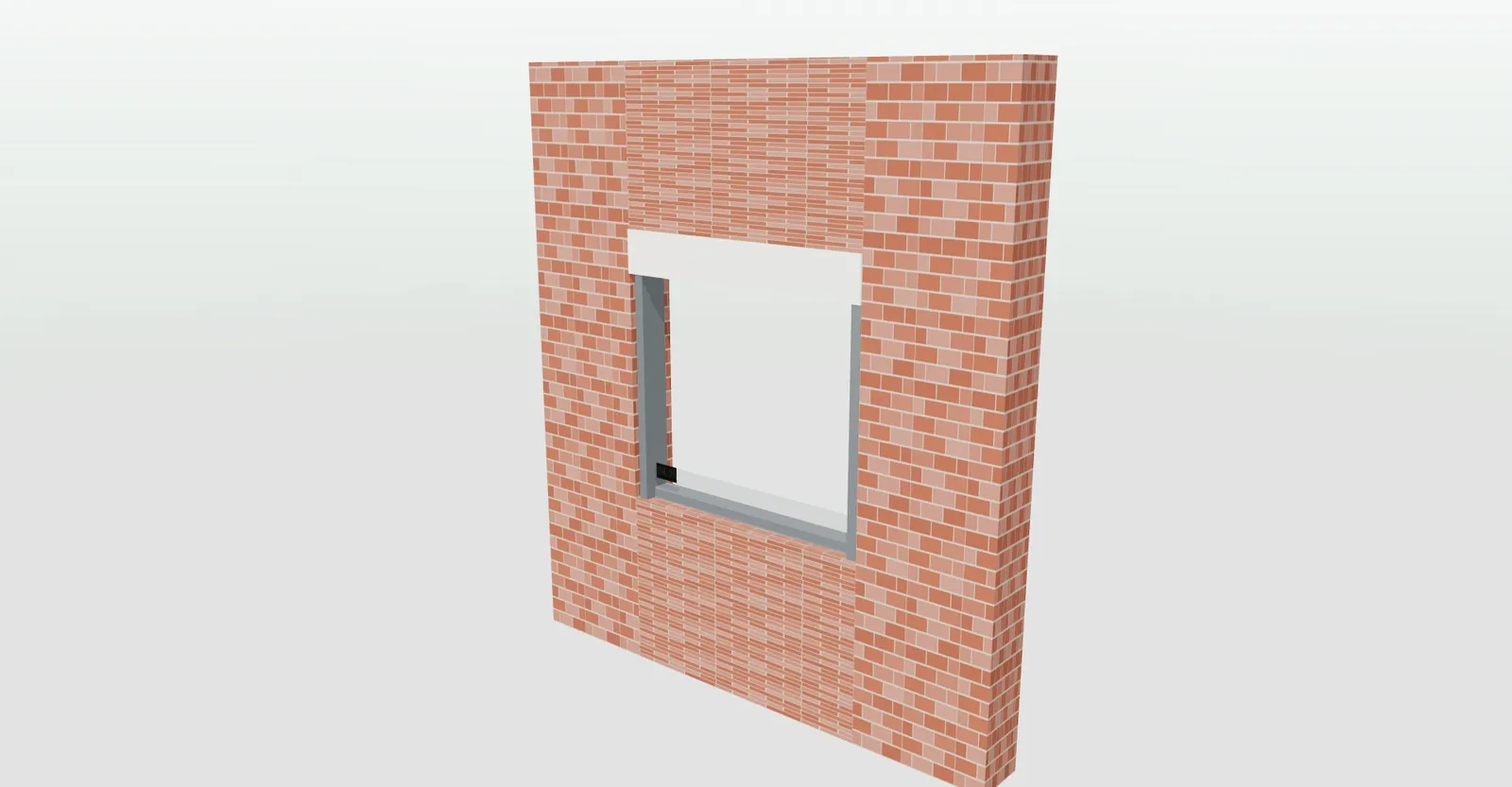
A galvanised steel monoblock subframe with a shutter box and dimensions in the 3D subframe configurator
DOORS, WINDOWS AND SECURITY · OPEN DEMO
— FOR MANUFACTURERS SUPPLYING CONSTRUCTION SITES

3D configurator
of subframes
for new builds.

A development of 64 homes arrives as a spreadsheet with two hundred openings, four versions and measurements that change from one floor to the next. Any row copied wrong is discovered when the bricklayer is already on site. Better for every opening to be ordered while looking at it, with its home label and its lead time already chosen.

— WHAT HAPPENS TO YOU

The list
was called
“final_v4”.

The attachment is called “joinery_list_final_v4” and it is sent mid-morning by the contractor's purchasing department. It is a development of 64 homes in three blocks, with 212 openings between windows, French windows and terrace doors. There are eleven different sizes, two tabs with the width and height in a different order depending on who filled them in, and a note in red: “careful, block C with monoblock”. They need it on site in three weeks, because the partition walls start when the subframes arrive.

At your office someone sits down to turn that list into a factory order. They separate window subframes, door subframes and monoblocks with a box; they work out the linear metres of insulating tape; they find out which ones need a thermal break because the specification calls for it on the north façade. Every doubt is an email to purchasing, who forward it to the site manager, who answers when he can. The quote goes out on Friday, with half the questions still open.

Three weeks later, the pallets arrive on site. The foreman looks for the subframes for flat 2B and cannot tell which they are: the labels give the size, not the home. Two openings on the fourth floor were wrong on the list from the start and nobody spotted it. The crew waits, the partition walls stop for a morning, and the contractor calls asking for two units urgently. The urgency, of course, was not in the quote and nobody wants to pay for it.

— WHERE THE SALE LEAKS AWAY

The bottlenecks
you will recognise
straight away.

“I am sending you the updated list, the previous one is no longer valid”

Opening lists full of errors

The openings arrive in spreadsheets made by different people, with columns swapped, measurements in centimetres and in millimetres and versions that overwrite each other. Your office has to check row by row and compare them against the previous version. The error that slips through does not show up until the subframe will not go into its opening.

What it costs youMade-to-measure subframes that are no use for any other opening.

“Does this one have a thermal break or not?”

Specifications decided over email

Material, colour, insulating tape, thermal break, internal trim, shutter box. The specification only half says it and every detail is cleared up with an email that takes days to come back. Meanwhile, the order cannot be released to the factory and the site programme keeps running all the same.

What it costs youDays of lead time lost before manufacturing even starts.

“What is the price per linear metre if I order the whole block?”

Slow site quotes

The contractor wants to compare offers per linear metre and per unit, with a volume discount. Working out perimeters, metres of tape and boxes for two hundred openings takes hours, and any change of size means redoing it all. If the quote is slow, purchasing closes with whoever answered first, even when their subframe is worse.

What it costs youWhole sites awarded on speed, not on quality.

“I need it for Monday, the job is stopping”

Site programmes that do not wait

The rush always comes: a floor brought forward, two openings forgotten, a replacement. The urgent lead time has a cost for your factory, but nobody sees it in the order and afterwards it is hard to charge for. The contractor assumes the urgency comes at the same price as the normal lead time.

What it costs youUrgent jobs manufactured at a loss.

“Which one is for flat 2B?”

Pallets with no way of knowing which home they belong to

The subframes arrive on site labelled by size, not by home. The foreman has to open pallets and measure to work out which goes in each opening, and the ones with similar sizes get mixed up. If on top of that the delivery was to your warehouse and the foreman was expecting it at the site, the whole morning is lost.

What it costs youCrews standing idle looking for the right piece.

— DO THE MATHS

What it costs you
today, with
your own numbers.

Every job that comes in as a spreadsheet passes across someone's desk before it reaches the factory. Replace the example values with the ones from your office.

sites
h
€
MONTHLY COST OF CHECKING LISTS AND QUOTING SITES 0

€ a month

The values are an example: replace them with yours. The calculation is a simple multiplication and does not come from any study.

— HOW IT IS SOLVED

Every bottleneck,
with its
answer.

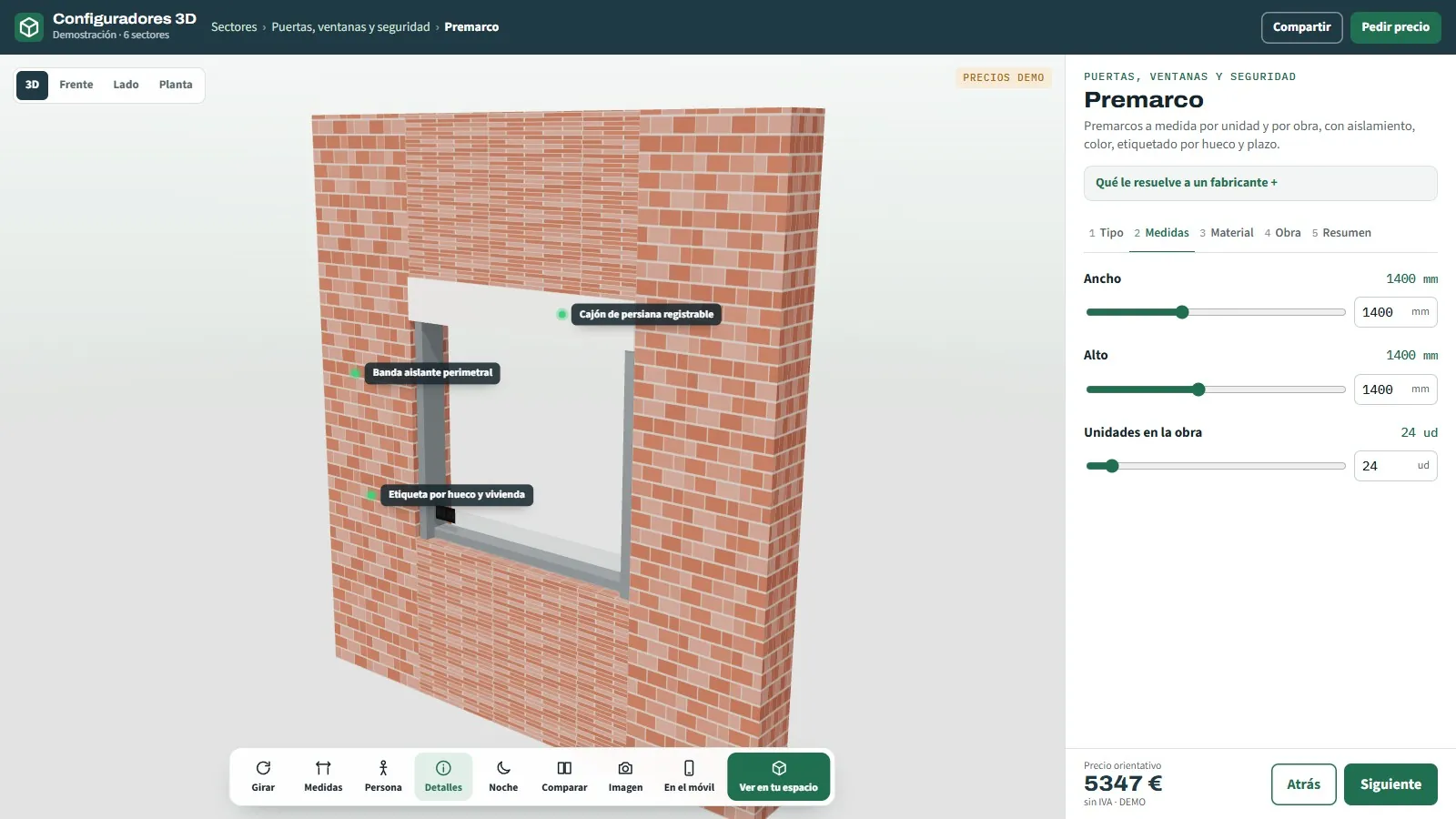
Subframe configurator screen with monoblock type, width, height and units on site next to the piece in 3D
Answers · Opening lists full of errors

Every opening is ordered while looking at it

The contractor chooses the type of subframe, enters the width and height to the millimetre and the units for that opening on the site, and sees the piece in 3D with its dimensions and a person for scale before sending it. A measurement with an extra zero shows up on screen, not in the partition walls.

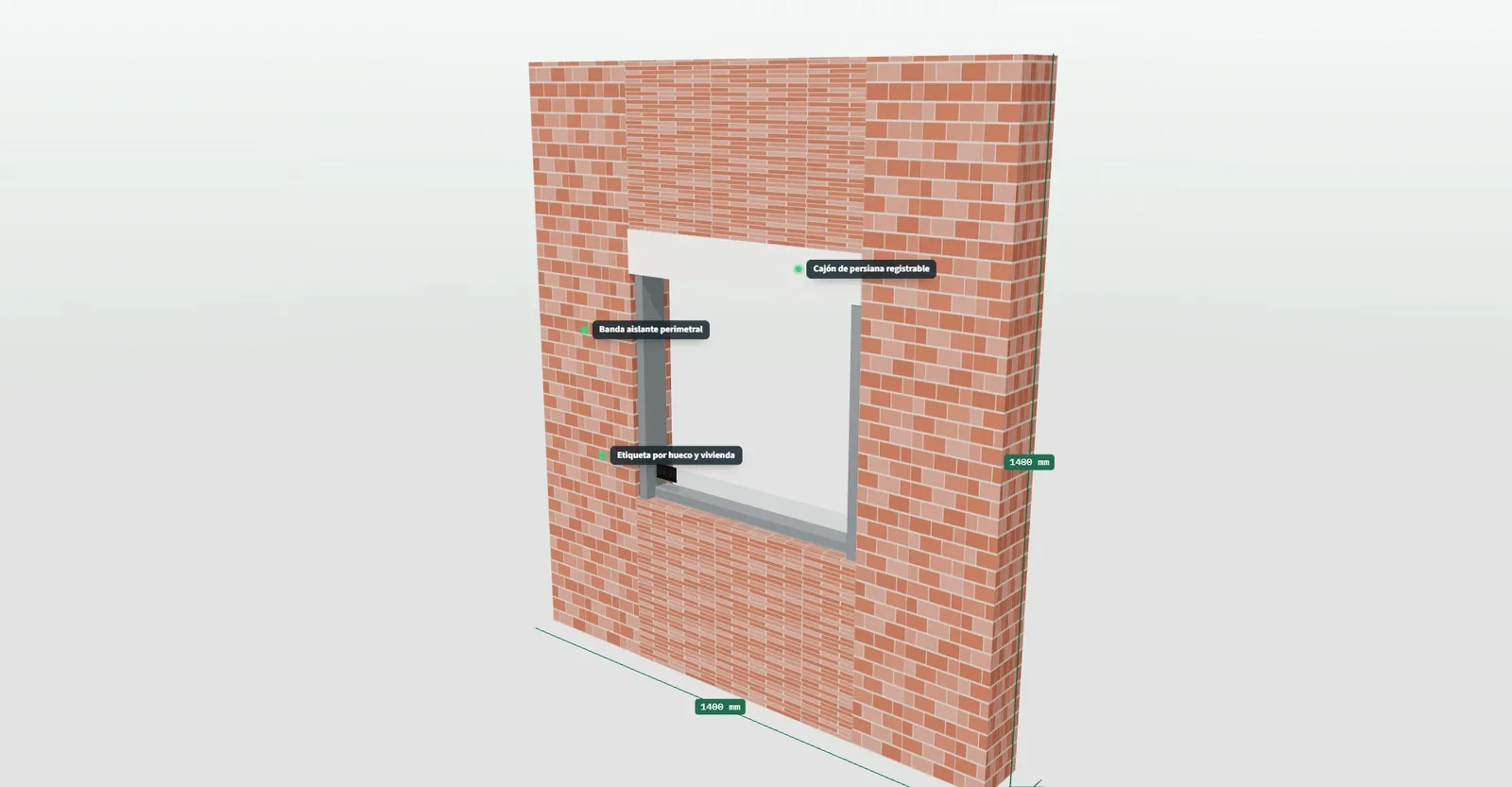
Millimetre measurements with dimensions in 3D
Close-up of the subframe in 3D with labels for the perimeter insulating tape, the material and the monoblock's shutter box
Answers · Specifications decided over email

Material and insulation are decided on the same screen

Site manager and purchasing decide without a chain of emails. Galvanised steel, aluminium or PVC, colour, insulating tape, thermal break and internal trim are all chosen on the same screen. Each option carries a note over the 3D explaining what it adds, and up to three versions can be put side by side to see what changes between them.

Labels over the 3D and an option comparison tool
A galvanised steel monoblock subframe with a shutter box and width and height dimensions in the 3D configurator
Answers · Slow site quotes

Linear metres and price as soon as the size goes in

The perimeter per unit and the total metres for the site are worked out automatically, and the indicative price is recalculated with every change of size or units, applying your price list and whatever volume discount you have agreed. The contractor has a comparable figure the same day they ask for it.

Metre calculation and indicative price
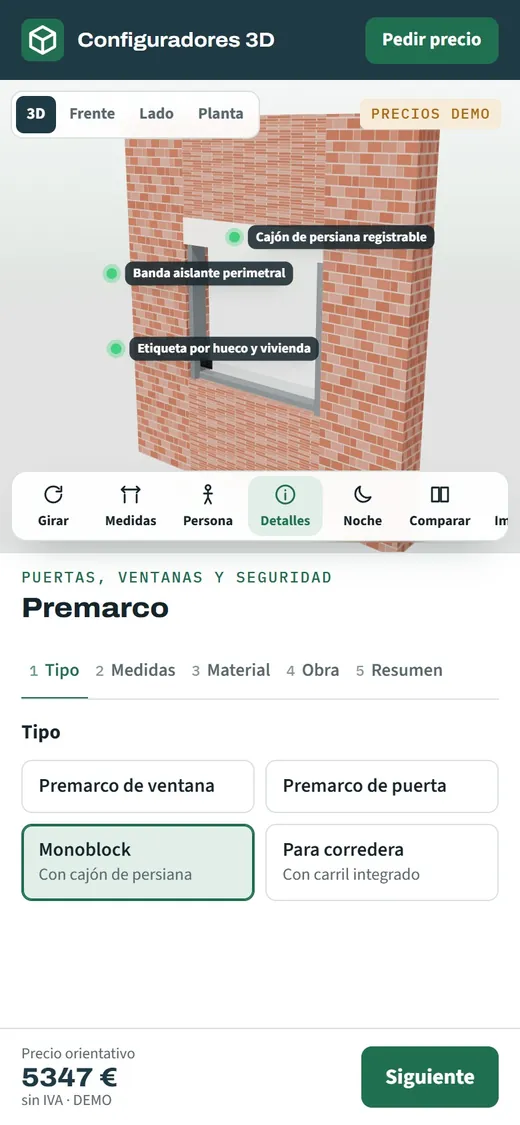
Subframe configurator open on a phone to check the lead time, delivery and price of the order from the site itself
Answers · Site programmes that do not wait

The urgency is chosen and its cost is visible

The lead time is chosen in the order itself: three weeks or one week urgent, with the cost of the urgency in view before confirming. Whether delivery is to the site or to your warehouse is also chosen there. Nobody finds out afterwards that the rush had a price.

Lead time and delivery point in the order
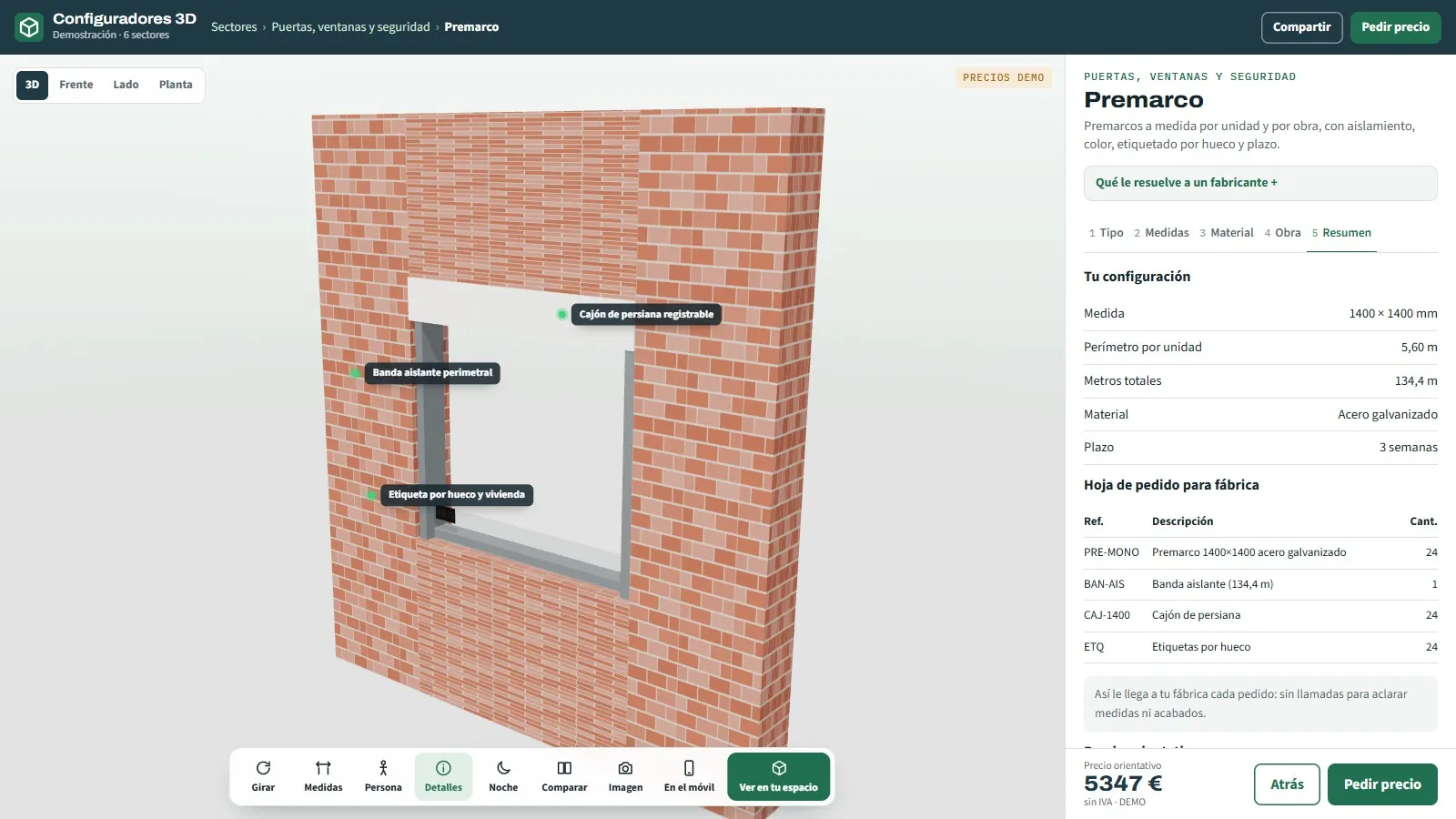
Subframe order sheet with 24 units, metres of insulating tape, shutter boxes and labels by opening
Answers · Pallets with no way of knowing which home they belong to

Every subframe arrives with its home written on it

With labelling by opening and home switched on, the order sheet for the factory includes a label per unit, as well as the references for subframe, insulating tape and boxes with their quantities. The foreman opens the pallet and knows where each piece goes. And the order can go straight into your ERP.

Order sheet with labels by opening
— TRY IT NOW

Try it
for
yourselves.

Choose the monoblock with a box, put the units up to 120 and watch how the total metres and the price change when the lead time goes to urgent.

An open demo, with no registration, with example products and prices. It is designed for manufacturers, dealers and installers: private customers are welcome to try it, but we do not sell the product.

— INVESTMENT AND NEXT STEP

Bring us the list from a real job

With a list of yours, with no customer data, we will show you in 20 minutes how the contractor would order it with the configurator and which manufacturing rules would have to be loaded.

From €6,500

Most projects for manufacturers fall between €14,500 and €35,000, depending on the catalogue, the manufacturing rules and the integrations. Maintenance and hosting from €190 a month. We start from a base that already works: you are not paying for development from scratch.

  • What is includedThe configurator with your products, your rules and your price list, embedded in your website and in your dealers' sites, with training for the sales team.
  • TimeframeBetween 3 and 16 weeks depending on the scope; the exact date goes in the proposal.
  • Payment terms40% to start, 40% with the test version and 20% at go-live.

Would you rather talk it through? Call 662 061 421 or write to grup3d@grup3d.es.
— FREQUENTLY ASKED QUESTIONS

What we
get asked.

There are more short answers in frequently asked questions about 3D configurators and who we are in 3D configurator company.

Which types of subframe does it include?

The demo comes with a window subframe, a door subframe, a monoblock with a shutter box and a subframe for sliding doors with an integrated track, in galvanised steel, aluminium or PVC. For your factory only your types, your profiles and your minimum and maximum sizes would be left, with nothing you do not make.

Does it work out the linear metres of insulating tape?

Yes. From the width, the height and the units, the configurator works out the perimeter of each subframe and the total metres for the site, and carries them onto the order sheet along with the boxes and the labels. If the size or the number of openings changes, the metres and the indicative price are recalculated straight away.

How is the cost of an urgent order shown?

The lead time is chosen in the site step: three weeks or one week urgent. With your price list loaded, the urgency surcharge appears in the indicative price before confirming and is written into the PDF and the order sheet. The contractor knows what the rush costs when they ask for it, not when the invoice arrives.

How much does developing a subframe configurator cost?

Developments start from €6,500 for a visual configurator of one product family; most projects for manufacturers fall between €14,500 and €35,000, depending on the catalogue, the rules and the integrations, plus maintenance from €190 a month. With subframes, the figure moves mainly with the types and materials included, with the manufacturing rules you want applied and with whether the labelled order has to reach your ERP. Bring the catalogue to a 20-minute demo and we will send you a scope with what is included and what is not.

Can our sales reps use it on site?

Yes. It opens on a phone or a tablet by scanning a QR code, with no app to download. The sales rep configures the subframe with the site manager in front of them, turns it round, shows the dimensions with the person for scale and sends the PDF there and then, without going back to the office to work it out.

Can each contractor see their own prices?

Yes, with a trade customer login where each contractor or distributor signs in with their own user and works with their price list and their volume discounts. Orders reach your office with the full configuration and, if you want, are recorded straight into your CRM.