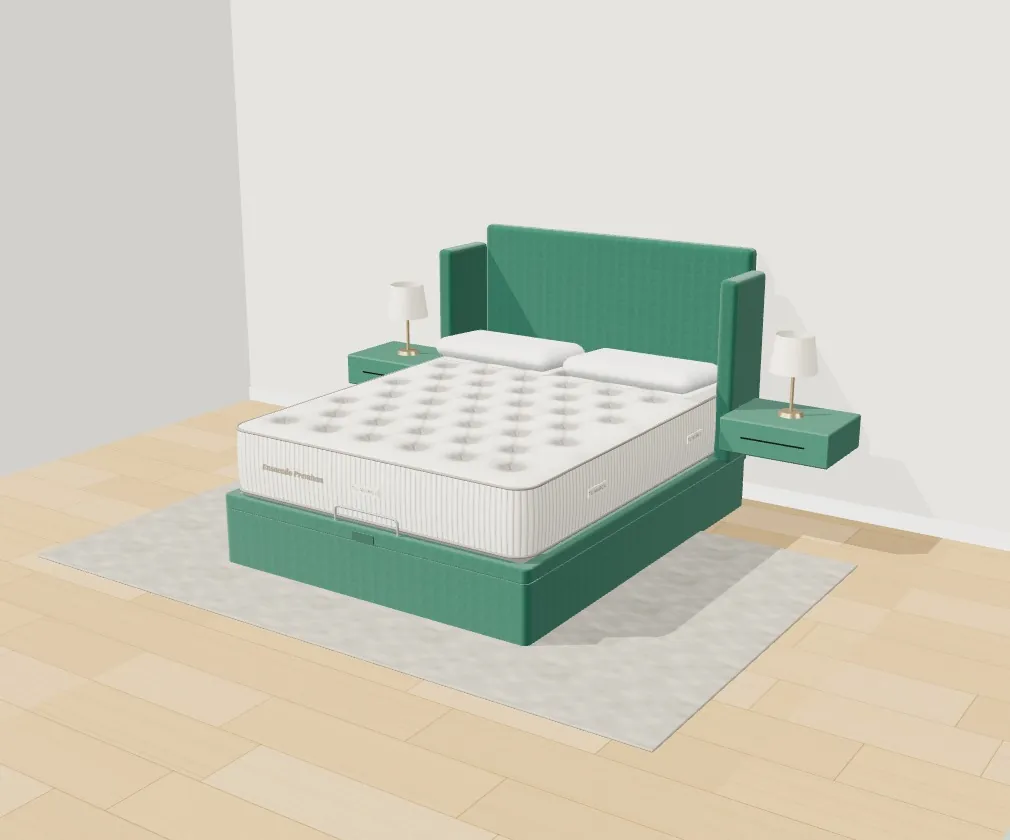
Complete bedroom in 3D with storage base, upholstered headboard and bedside tables in the bed configurator of the Grup3D demo, an example of a product that sells as a whole thanks to a 3D configurator
GUIDE · 10 BENEFITS · WHAT TO MEASURE IN EACH ONE
— GUIDE FOR MANUFACTURERS · 2026

Ten benefits
of a 3D configurator
you can measure.

“It looks more modern” is not a benefit: it cannot be measured. These ten can: visits no longer made just to give a price, parts no longer made twice, extras that are now seen and sold, technical-office hours, requests that arrive with the whole configuration. Each one with the example of a demo and the figure worth noting down before and after.

— THE TEN BENEFITS

Ten benefits,
and what to note down to measure them.

Note down today's figure before you start. It is the only way to know, six months from now, what has changed.

01

Fewer visits just to give a price

The customer enters their sizes and sees the indicative price before calling; the visit is to confirm. What to measure: visits per month that end without an order. In the terrace enclosure demo, the customer arrives at the visit already knowing the system and the roof.

02

Fewer parts made twice

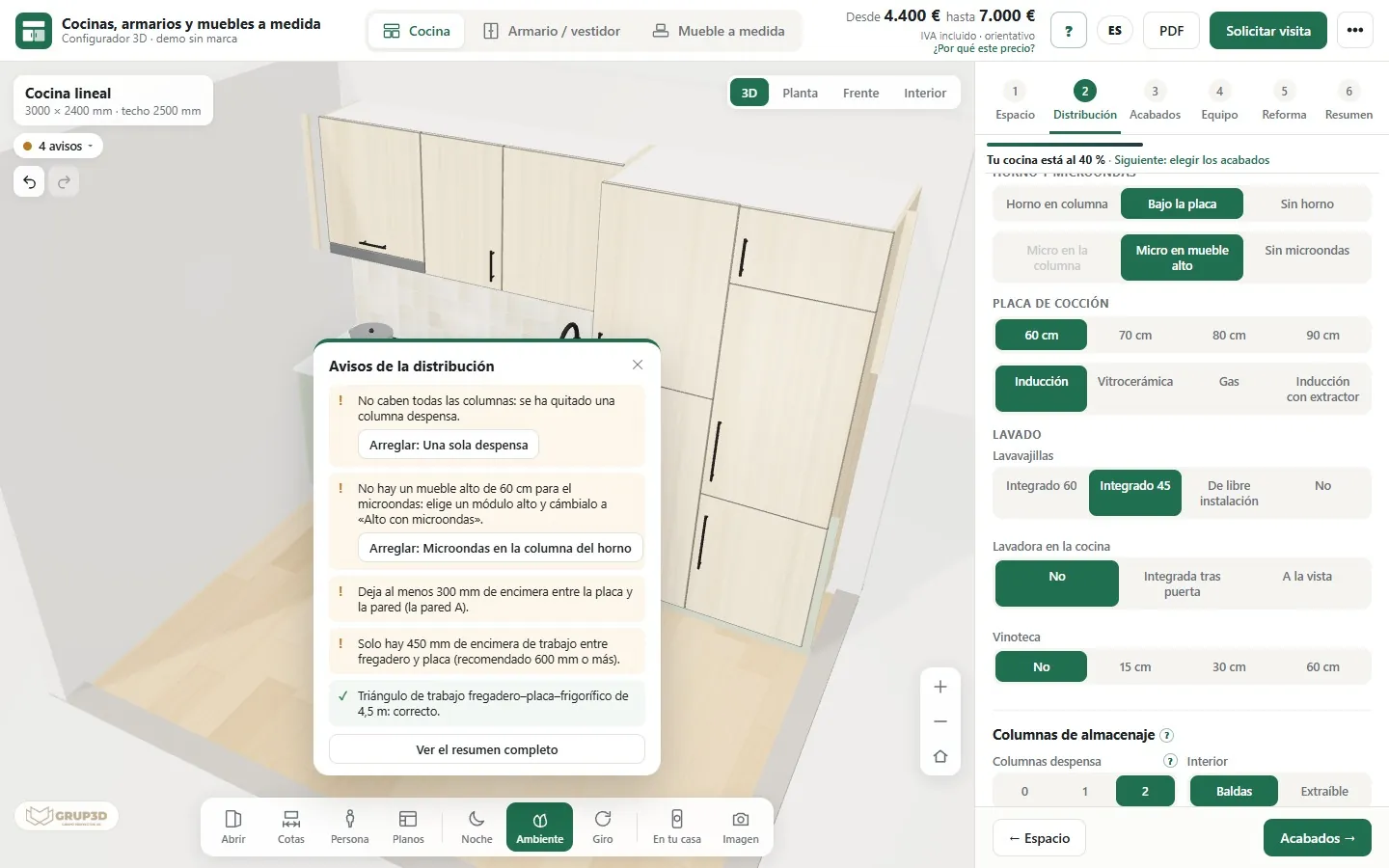
The handing is chosen while looking at the open sash, sizes outside the limits are flagged and the order sheet comes out without interpretation. What to measure: parts remade per year because of handing, size or colour noted down wrong.

03

More extras sold

Motor, sensor, LED, acoustic glass, five-point lock: with one click, with its label in the 3D and with its price. What is seen gets ordered. What to measure: average order value and percentage with extras.

04

Technical-office hours that come back

The base calculation (power supply, lux, high-bays, pallet positions, cutting list) comes out on its own with your rules; the technician reviews. What to measure: hours per offer and offers that do not get signed.

05

Complete orders first time

End caps, clips, mounting plate, power supply, anchors: the order sheet carries the small stuff, with reference and quantity. What to measure: second shipments for the missing part.

06

Requests with the whole configuration

Name, company, email, phone and what they configured, in a panel and by email, assigned by area. What to measure: requests per month and how many arrive with sizes and finishes defined.

07

Decisions that are not put off

The customer sees the fabric on the whole bed, the floor plank by plank in their living room, the pool on their plot. And with augmented reality, at real size in their home. What to measure: days between the first enquiry and the order.

08

The network sells with your rules

Each distributor, shop or installer configures with the customer in front of them, with their margin and their brand, and sends you the order sheet always the same. What to measure: calls from the network to the factory for a figure.

09

Whoever signs off without being there decides

The residents' association, purchasing, the director, the council: they receive the PDF with the image, the data and the price, or the three versions compared. What to measure: sales stuck waiting for an approval.

10

The whole catalogue, in any shop

What is not set up in the showroom hardly sells; on the shop's tablet the whole catalogue is there, with kiosk mode and offline. What to measure: percentage of the catalogue that sells.
— THE FIVE STOPS

The five stops
of an order, before and after.

A made-to-measure order passes through five places. At each one time is lost or an error creeps in; with the configurator, they change like this.

StopTodayWith the configurator
EnquiryA photo, three measurements and “how much would it be?”The customer sees their product with their sizes and an indicative price
VisitMeasuring and showing samples to someone still comparingConfirming what the customer has already chosen
Technical officeMetres, parts and extras in a spreadsheet, and again with every changeReviewing a calculation done with your rules
ApprovalResidents' association, committee or purchasing decide without seeing itThey receive the image, the PDF and the compared versions
Factory and siteThe order is copied by hand and the error shows up at installationOrder sheet with references and quantities, from the same configuration
Kitchen configurator from the demo with warnings about sizes that do not fit and the button to fix them in one click
Benefit 02 in the kitchen demo: the warning arrives before manufacturing, with the fix in one click. Sample products and prices.
— THE ACCOUNT

Do the maths
with your own numbers.

Three figures almost every manufacturer knows and that are enough for a first estimate. Put your own in place of the example.

Sample figures. Each sector page has a similar account with the items for that product.
FigureExampleWhat it is
A · Visits per month just to give a first price20The ones that end in “we'll get back to you”
B · Cost of each visit€90Sales rep hours and travel
C · Parts made twice per year12Because of handing, size or colour noted down wrong
D · Cost of each repeated part€350Material, transport and crew
Annual cost of visits to give a price€21,600A × B × 12 months
Annual cost of repeated parts€4,200C × D

And what does not show in the account: the extras nobody showed, the offers that arrived late and went to someone else, and the technical-office hours on studies that never get signed. Development starts from €6,500 for a visual configurator of one product family; most manufacturer projects fall between €14,500 and €35,000, depending on catalogue, rules and integrations, plus maintenance from €190/month. Details in the price of a 3D configurator.

— WHAT IT DOES NOT DO

What a configurator
does not do.

For the benefits to be real it helps to know where they end.

— IT DOES NOT REPLACE
  • The final measurement: the configurator does not measure the opening; it makes the visit about confirming, not starting.
  • The technical study: lux, solar production, cutting lists and weights are indicative; the technician who signs is still the technician.
  • The final price: the configurator gives an indicative price with your price list; the final one you give in writing.
— IT DOES NOT WORK WITHOUT
  • Your rules in writing: without them it is a pretty viewer that lets people order what cannot be made.
  • A price list you change yourselves: if changing a price means calling someone, it goes stale.
  • The network inside: if the distributors do not have their own area, they keep calling the factory. See B2B configurator for distributors.
— FREQUENTLY ASKED QUESTIONS

What we get asked
about the benefits.

There are more short answers in frequently asked questions about 3D configurators and who we are in 3D configurator company.

What is the main benefit of a 3D configurator for a manufacturer?

That the order arrives defined: the customer or the network choose sizes, finishes and extras with your rules, see the price, and the order sheet comes out with references and quantities. Visits become about confirming, handing and size errors are flagged before manufacturing, and extras are seen and sold.

How is the return on a 3D configurator measured?

By noting down, before you start, the figures it is going to change: visits per month just to give a price and their cost, parts made twice per year and their cost, technical-office hours per offer, average order value and requests that arrive with the full configuration. After six months, you compare.

Does a 3D configurator sell more?

It sells more complete: extras with their price and their label in the 3D get ordered more than on a quote line, and the customer who sees the whole bed or the floor plank by plank decides sooner. How much more depends on your product; that is why it pays to measure the average order value before and after.

Is it also useful for a company without a factory?

Yes. Brands, importers, distributors and installers who sell other people's product get the same benefits: quoting with their price list and their margin, ordering from the manufacturer with its references and receiving requests in their panel. See 3D configurator company for manufacturers and for those who sell without a factory.

How long before the benefits show?

The order ones (fewer errors, complete order sheets) from the first week of use; the commercial ones (fewer visits to give a price, more extras) as the website and the network use it. The configurator goes live between 3 and 16 weeks after starting, depending on the scope.

How much does a 3D configurator cost?

Development starts from €6,500 for a visual configurator of one product family; most manufacturer projects fall between €14,500 and €35,000, depending on catalogue, rules and integrations, plus maintenance from €190/month. Separately, per product, 3D modelling and materials and finishes, at €30 to €120 per part or finish (or more).

— OPEN DEMO

Try it now
or see it with
your range.

The benefits show in five minutes in the open demos, with no sign-up and with sample products and prices: enter an impossible size, switch on an extra, open a sash. All at configurador.grup3d.es/demo.

With your figures in front of you? Tell us how many visits, how many remade parts and how many technical-office hours, and in a 20-minute video call we will see what would change with your product. No commitment.

Would you rather talk it through? Call us on 662 061 421 or write to grup3d@grup3d.es.