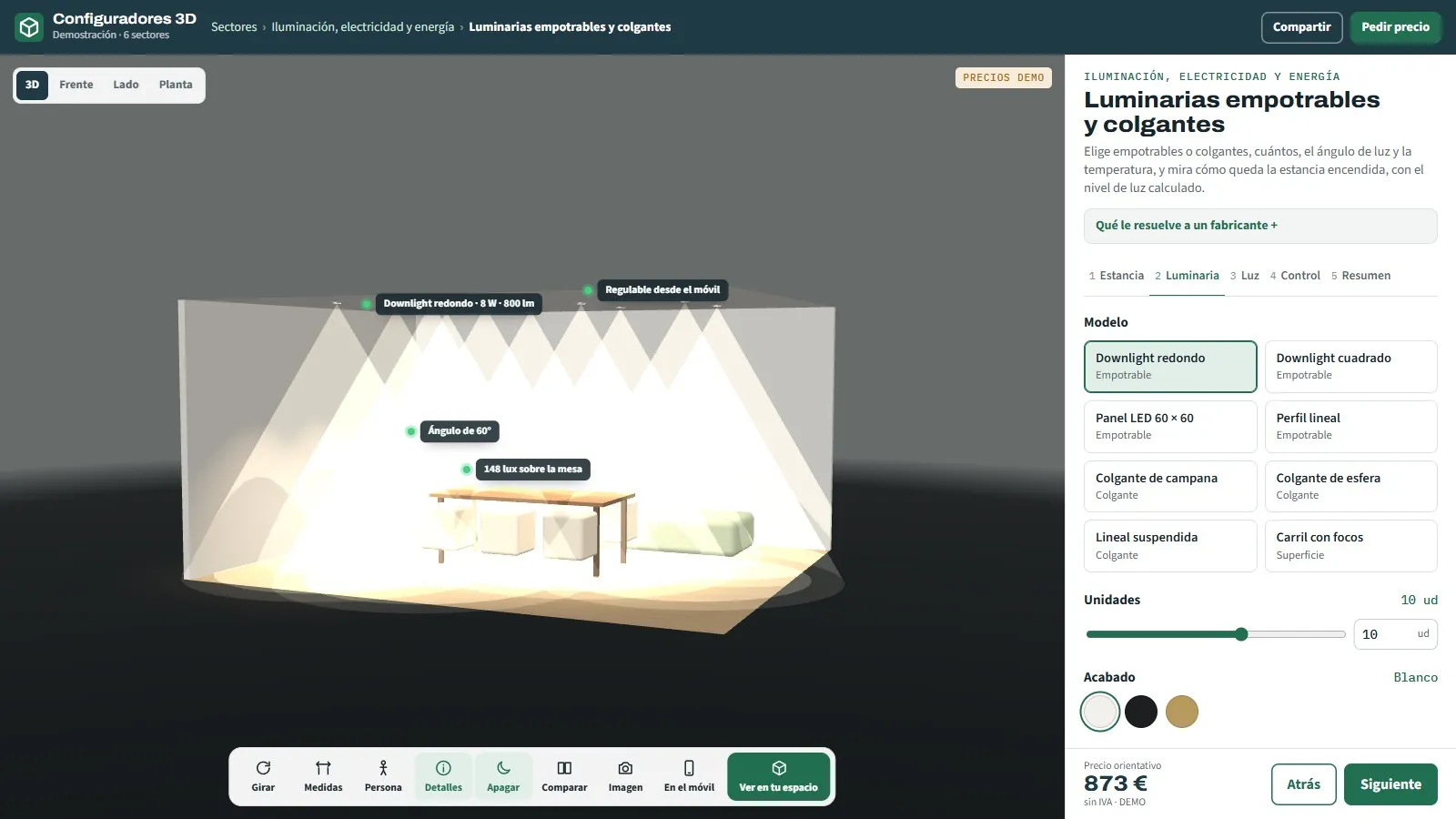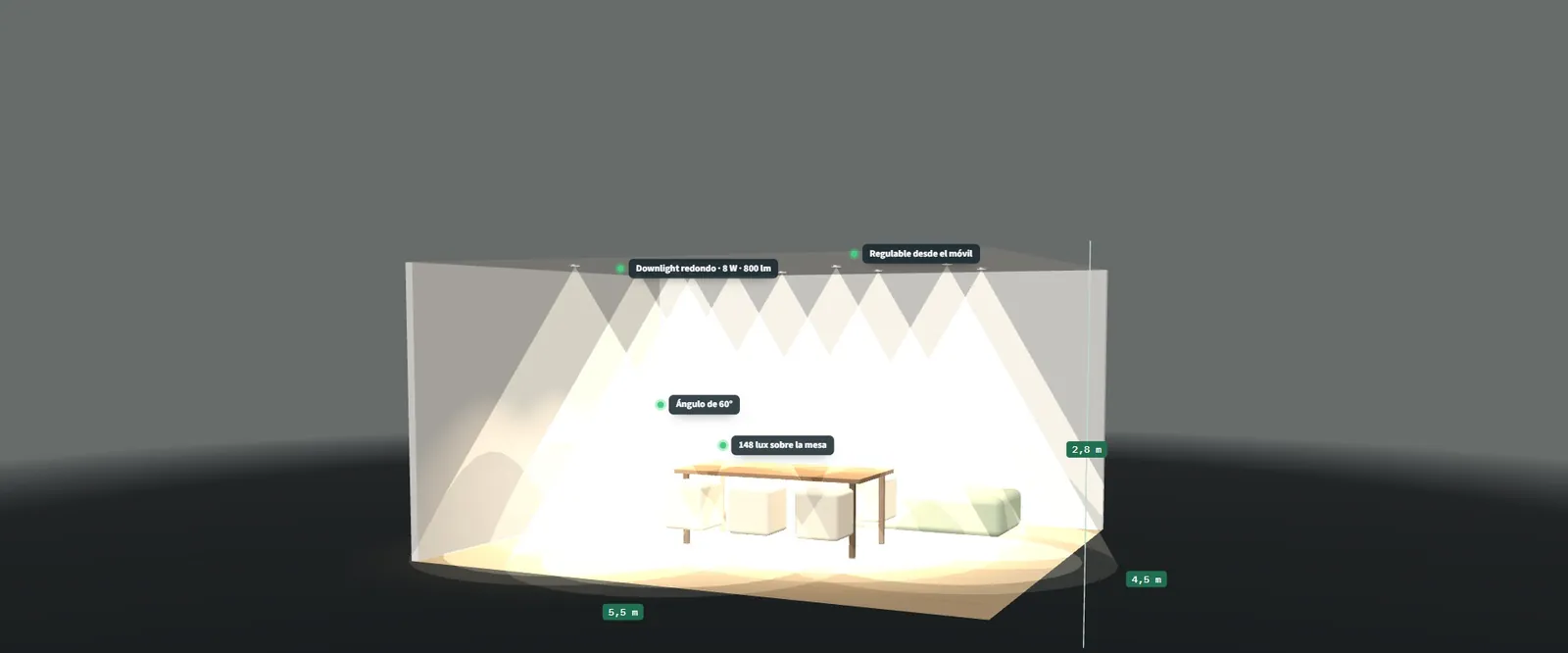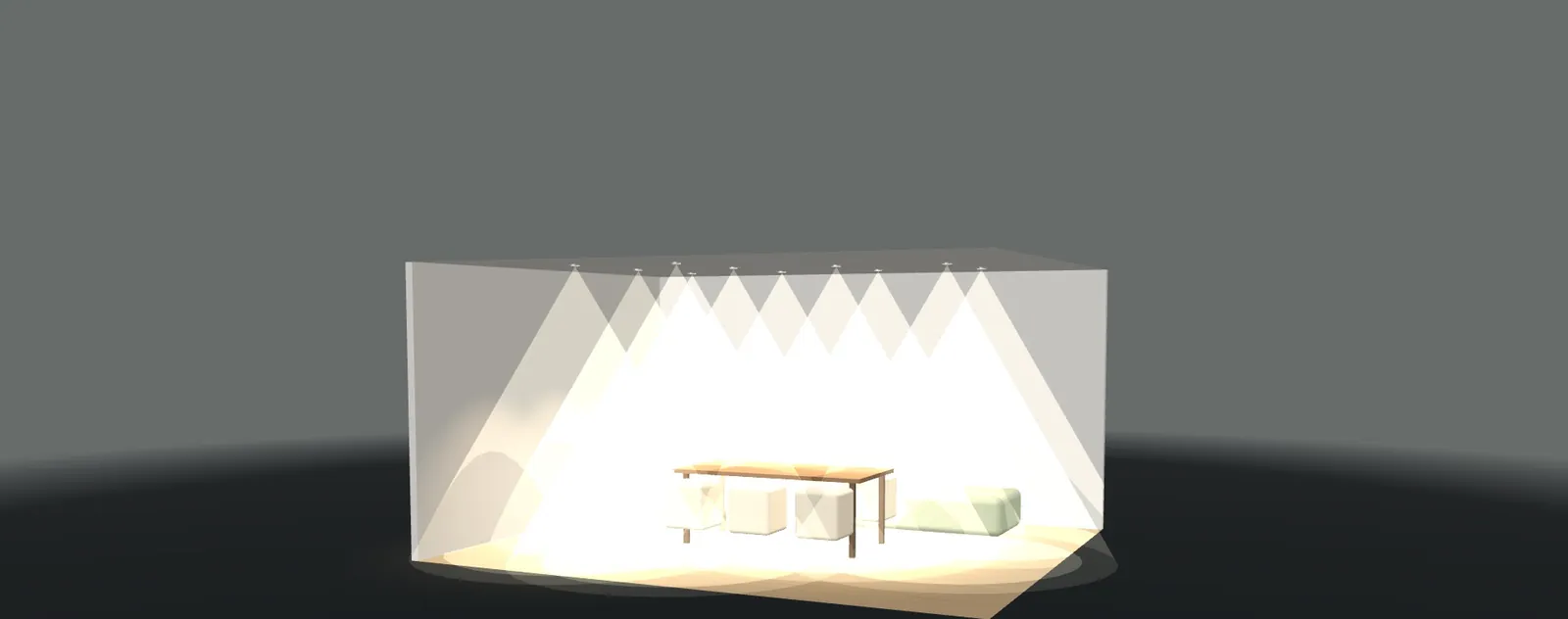
Living and dining room in 3D lit at night with ten recessed 3,000 K downlights and the light level calculated
LIGHTING, ELECTRICAL AND ENERGY · OPEN DEMO
— FOR LIGHT FITTING MANUFACTURERS

3D configurator
for light fittings
with the light calculated.

Your shops forward you living room plans asking for “a study to see how many downlights”. The technical office does it for free and takes two days, and the customer ends up buying on price because the catalogue does not show the difference between a 24° beam and a 60° one.

— WHAT HAPPENS TO YOU

A living room plan,
a shop in a hurry
and two days of calculation

You manufacture light fittings: downlights, panels, linear profiles, pendants and tracks with spotlights. You sell mainly through lighting shops and refurbishment companies, and you have a two-person technical office that produces lighting studies for whoever asks. By ten in the morning the first email of the day has already come in: a shop forwards you the plan of a 25 m² living and dining room with one line from the customer, “how many downlights do I need and which ones?”.

Four more like it follow: a kitchen with an island, a small office, the till area of a clothes shop and a bedroom. Each one means placing fittings on the plan, choosing beam and colour temperature, working out the lux and putting together a PDF with references. That is about two hours per study if all goes well. If the customer switches from a downlight to a pendant, or from 3,000 K to 4,000 K, it starts again.

Meanwhile, at the shop, the sales assistant has the customer in front of her with the catalogue open at the recessed fittings page: forty references that look the same in a photo. He asks why one costs twice as much as another, and she tries to explain colour rendering and beam angle with her hands. The customer takes the cheapest one. The technical office's study arrives two days later, when it no longer matters.

— WHERE THE SALE LEAKS AWAY

The bottlenecks
you will recognise
straight away.

“How many downlights do I need?”

The customer does not know how many fittings they need

They do not know what a lux is or how many are needed in a living room or a kitchen. All they know is that they do not want it to be dark or to look like a waiting room. So they ask in the shop, the shop asks you, and the answer comes back two days later, when the electrician has already cut the holes wherever seemed right.

What it costs youThe holes in the ceiling decide the number of downlights before you do.
“Do me a study, it is free.”

Lighting designs nobody pays for

The technical office produces studies for shops, refurbishers and private customers without knowing whether there is a purchase behind them. A living room, a kitchen, an office: two hours each, with the plan, the calculation and the PDF. Many go no further. And some of those that do get bought somewhere else, with your study printed out in hand.

What it costs youYour technical knowledge working for free, sometimes for the competition.

“They look the same in the photo.”

Catalogues with hundreds of references

Round or square downlight, 60 × 60 panel, linear profile, high bay or sphere pendant, suspended linear, track with spotlights. Each in three finishes, four colour temperatures and four beam angles. On paper, the customer cannot tell what changes from one option to another, and the catalogue raises more doubts than it answers.

What it costs youThey buy on price because the quality cannot be seen.

“And how does it look switched on?”

Light cannot be seen in a data sheet

The difference between a 24° beam that draws circles on the wall and a 100° one that washes the room, or between 2,700 K and 4,000 K, is exactly what decides whether the living room feels warm or cold. In a data sheet they are just numbers. The customer does not translate them into their own home and chooses blind.

What it costs youReturns of fittings that were technically the right choice.

“Give me the same as my neighbour has.”

The shop does not have time to explain it

The sales assistant sells light bulbs, table lamps and technical fittings in the same morning. She cannot sit down for twenty minutes with every customer to talk about colour rendering, dimming from a phone or the IP44 protection the bathroom needs. If your product needs explaining, she will end up recommending the one that explains itself.

What it costs youThe shop pushes the brand that is easiest to sell, not the best one.

— DO THE MATHS

What it costs you
today, with
your own numbers.

Count all the studies your technical office does every month, whether they end in an order or not. The values are an example you can change.

architects
h
€
MONTHLY COST OF LIGHTING STUDIES 0

€ a month

The values are an example: replace them with yours. The calculation is a simple multiplication and does not come from any study.

— HOW IT IS SOLVED

Every bottleneck,
with its
answer.

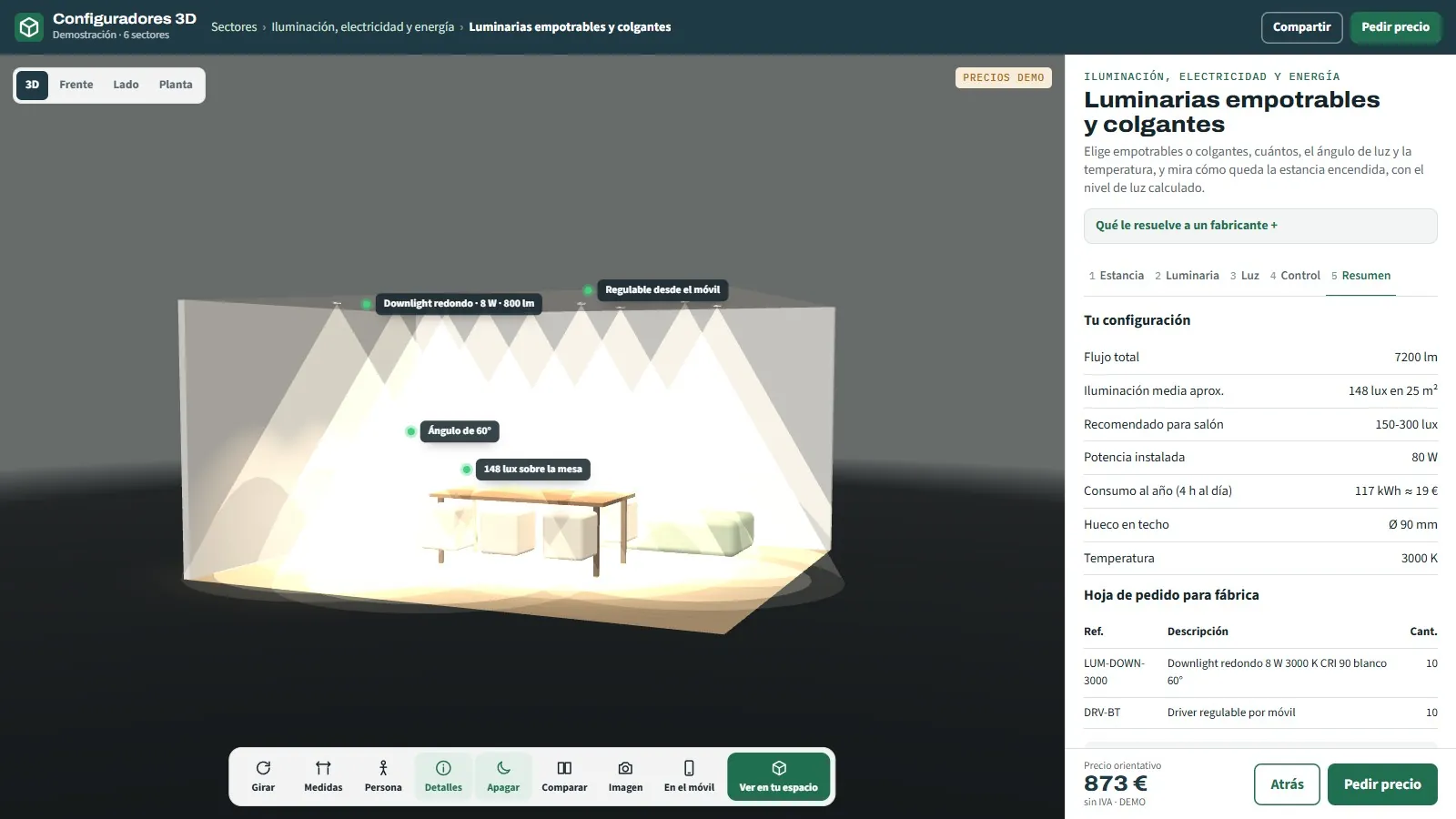
Light fitting configurator summary with total output, lux achieved against recommended and installed power
Answers · The customer does not know how many fittings they need

They know whether they have enough light before asking

They choose the room, the model and the number of units, and see the average lighting calculated against the level recommended for that use: for example, 148 lux over 25 m² when 150 to 300 are recommended for a living room. They add two more downlights and watch it change. By the time they reach the shop, they know how many they want.

Calculated light level
Light fitting configurator screen with room, downlight model, units, finish and colour temperature
Answers · Lighting designs nobody pays for

The customer arrives with their first calculation done

The enquiry comes in with the room, the model, the units, the temperature and the beam angle chosen, and with an order sheet that already includes fittings and drivers. Your technical office does not start from scratch: it reviews, fine-tunes and keeps the full study for the projects that really deserve it.

Enquiry with configuration and order sheet
Living and dining room in 3D with round downlights and labels for model, 60° beam, lux on the table and dimming
Answers · Catalogues with hundreds of references

Eight families that get tried on the ceiling

Downlights, panel, profile, pendants, suspended linear and track with spotlights are placed in 3D in the room, in white, black or brass. With the comparison tool, up to three options go side by side, with the differences highlighted, and the customer finally understands why one costs more than another.

Models in 3D and an option comparison
Living and dining room in 3D at night lit by ten recessed warm-light downlights with a 60 degree beam
Answers · Light cannot be seen in a data sheet

The room lit up, at night

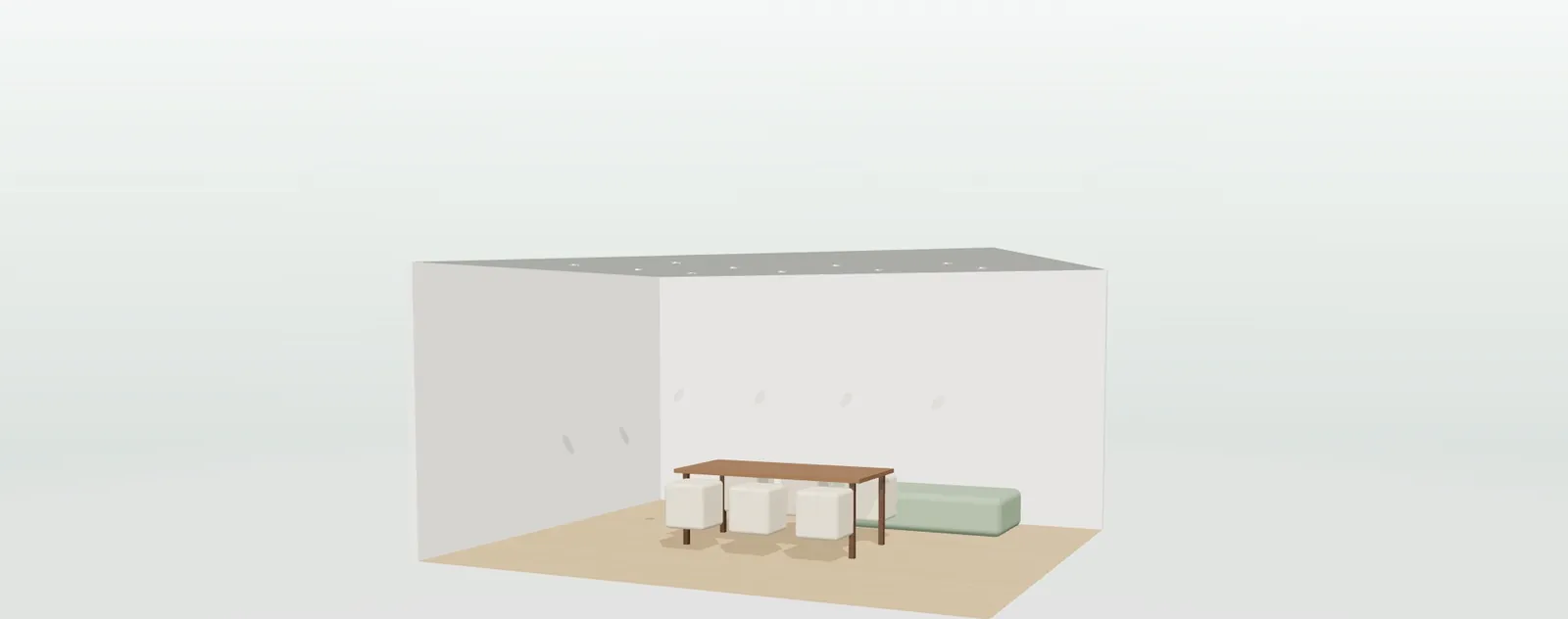
With the night scene you can see how the living room changes at 3,000 K or 4,000 K, with a narrow or a wide beam, with the intensity at half power or full. What was a number in the data sheet becomes an image the customer saves or opens on their phone with a QR code to show at home.

Day and night with temperature, beam angle and intensity
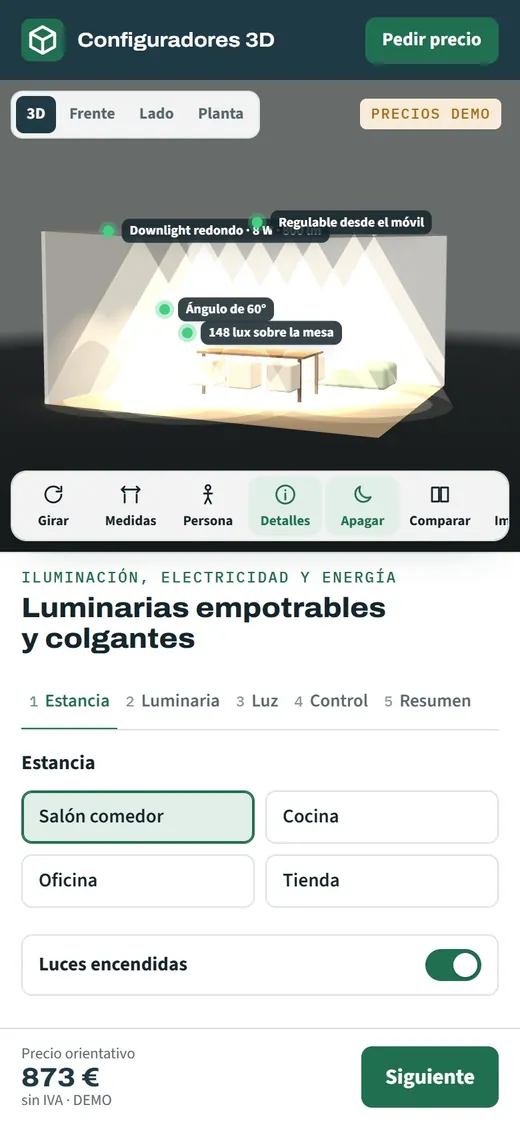
Light fitting configurator open on a mobile phone with the living and dining room lit by recessed downlights
Answers · The shop does not have time to explain it

The shop sells with the screen, not with their hands

At the counter, the sales assistant opens the configurator and lets the customer try: finish, dimming from a phone, presence sensor or IP44 protection for the bathroom. If you want, each shop works with its own logo and its own margin, and the proposal comes out as a PDF with an indicative price.

A shop area with indicative prices and a PDF
— TRY IT NOW

Try it
for
yourselves.

Choose the kitchen, set eight downlights with a 24° beam and then with a 100° one, and compare the two versions at night with the lux of each.

An open demo, with no registration, with example products and prices. It is designed for manufacturers, dealers and installers: private customers are welcome to try it, but we do not sell the product.

— INVESTMENT AND NEXT STEP

Stop giving lighting studies away

Send us your catalogue of recessed fittings and pendants and we will show you how your shops and their customers would see it, with your references and your price list.

From €6,500

Most projects for manufacturers fall between €14,500 and €35,000, depending on the catalogue, the manufacturing rules and the integrations. Maintenance and hosting from €190 a month. We start from a base that already works: you are not paying for development from scratch.

  • What is includedThe configurator with your products, your rules and your price list, embedded in your website and in your dealers' sites, with training for the sales team.
  • TimeframeBetween 3 and 16 weeks depending on the scope; the exact date goes in the proposal.
  • Payment terms40% to start, 40% with the test version and 20% at go-live.

Would you rather talk it through? Call 662 061 421 or write to grup3d@grup3d.es.

— FREQUENTLY ASKED QUESTIONS

What we
get asked.

There are more short answers in frequently asked questions about 3D configurators and who we are in 3D configurator company.

How many downlights are needed in a 25 m² living room?

It depends on the output of each fitting, the beam angle and the ceiling height, so there is no fixed number. In the demo, ten 8 W downlights give about 148 lux on average over 25 m², at the edge of the 150-300 recommended for a living room; adding units recalculates the figure instantly. It is an indicative calculation: for an office or a shop, the full study is done by your technical office.

Can we put in our own families of fittings?

Yes. The demo uses eight generic models; in your version we include your families with their outputs, power ratings, beam angles, finishes and references, and your manufacturing rules: which driver each one takes, which combinations you do not make and what ceiling cut-out it needs. The order sheet comes out with your codes and quantities.

What does a bespoke light fitting configurator cost?

A lighting catalogue is measured in families and variants: the more combinations of model, finish, temperature and beam angle have to be loaded, and if you add a shop area or a connection to your ERP, the more work it takes. Developments start from €6,500 for a visual configurator of one product family; most projects for manufacturers fall between €14,500 and €35,000, depending on the catalogue, the rules and the integrations, plus maintenance from €190 a month. Send us the catalogue and we will tell you which families we would load first and which can wait.

Does it work for bathroom or covered outdoor fittings?

Yes. The demo has an IP44 protection option for bathrooms and covered outdoor areas, switched on like any other option in the configuration, alongside dimming and the presence sensor. In your version it can be limited to the models you actually make with that protection, so nobody asks for a sphere pendant for the shower if it does not exist.

Can lighting shops use it with their customers?

Yes. Each shop can have a version with their name and their margin, use the configurator at the counter or send the link to the customer, who opens it on their phone with a QR code. Enquiries coming in through your website can be assigned by area to the right shop or sales rep.

What technical data does it give for each configuration?

Total output, approximate average lighting against the level recommended for that room, installed power, yearly consumption, ceiling cut-out diameter and colour temperature. The order sheet lists the fittings and the drivers with references and quantities, ready to pass to the factory or the warehouse without typing anything again.