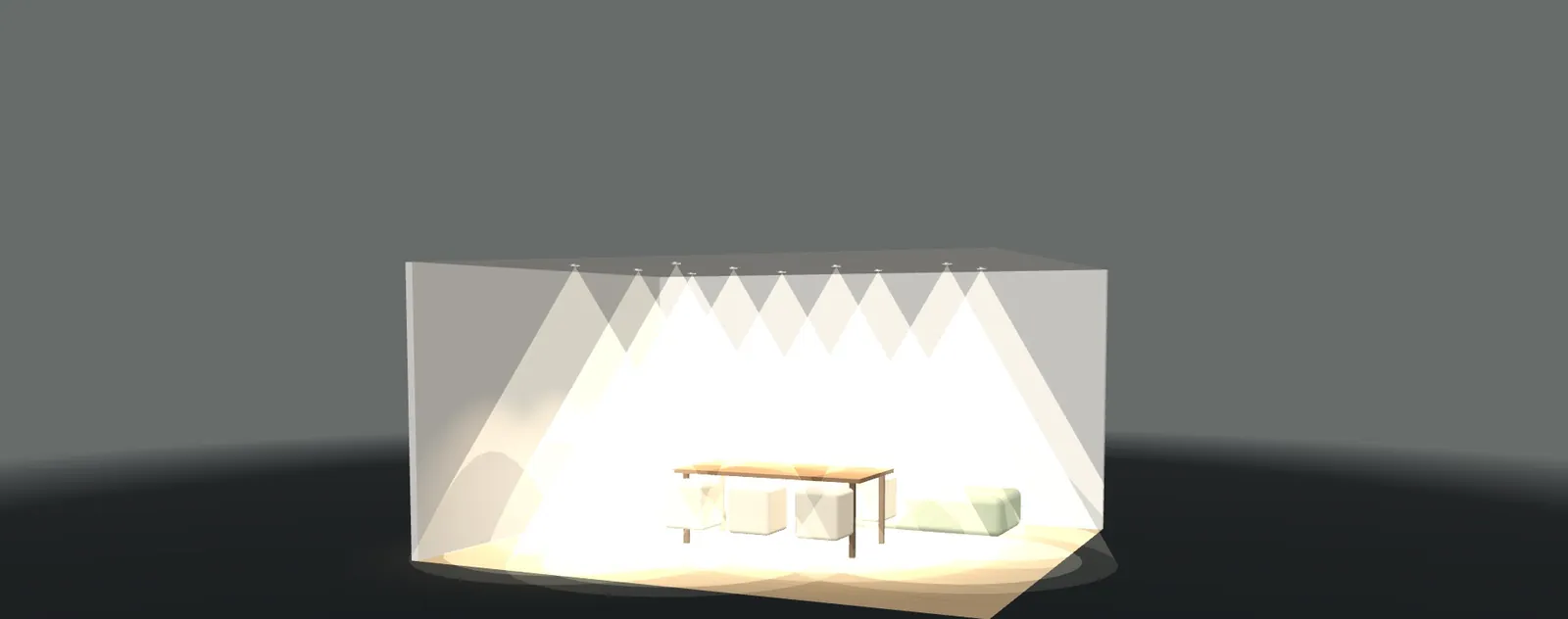
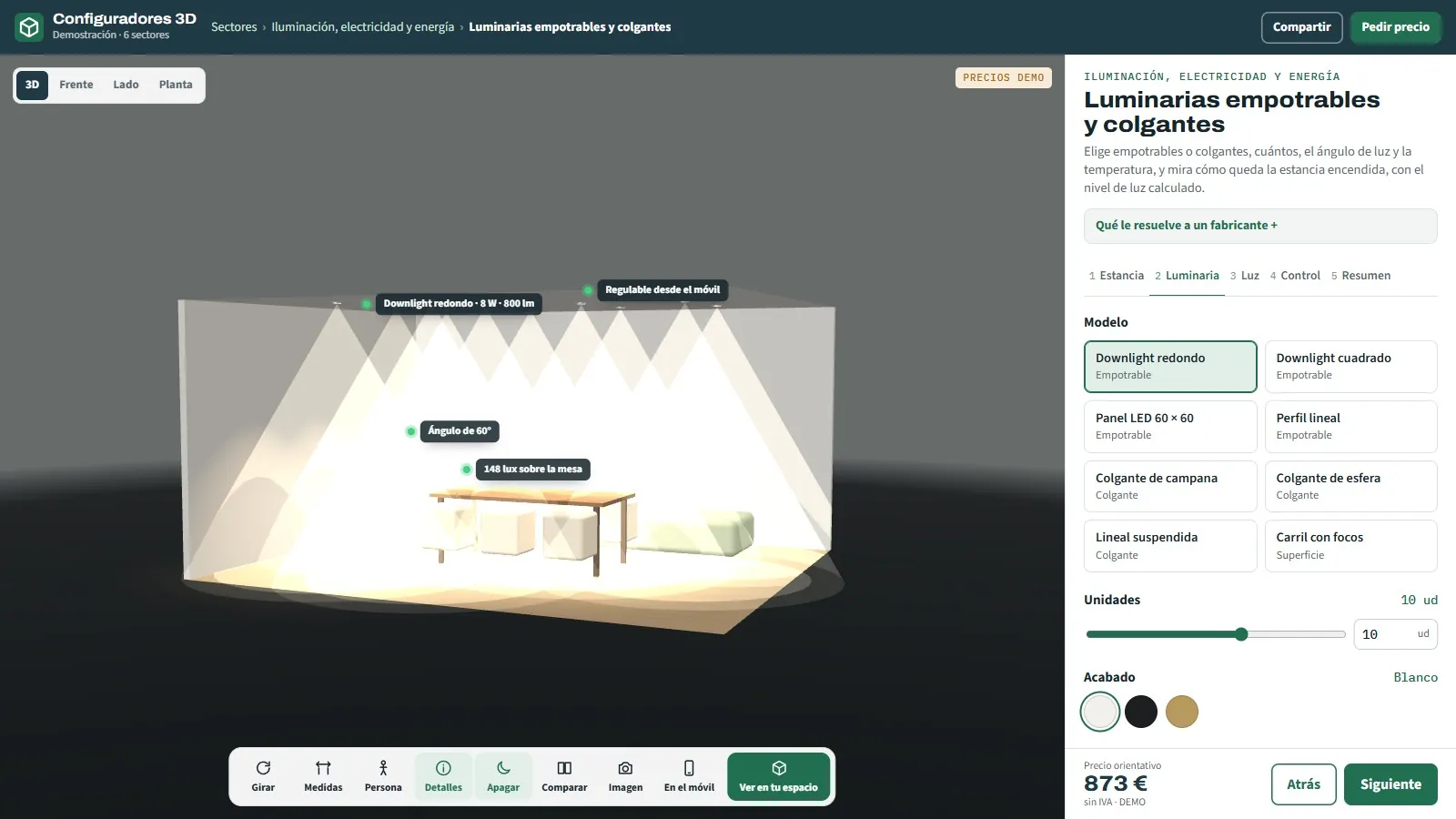
3D light fitting configurator from the lighting and energy sector: a living-dining room lit by ten downlights, labels for a 60° beam and 148 lux on the table, and an indicative price
LIGHTING, ELECTRICAL AND ENERGY · 7 OPEN DEMOS
— FOR MANUFACTURERS, WHOLESALERS AND INSTALLERS

3D configurators
for lighting and energy
manufacturers.

“Which driver do I fit?”, “how many spotlights do I need?”, “how much does my roof produce?”. Every question is a calculation your technical office does by hand, over the phone. With a 3D configurator, the wholesaler, the installer or the customer choose while looking at the product, switched on if it is light, with the calculation done and the order sheet complete.

— WHAT HAPPENS TO YOU

A system of parts
that gets ordered
as loose references.

Thursday, quarter past eight, the counter of an electrical wholesaler, with a queue of vans outside. An electrician brings the sketch of a kitchen with three runs of under-cabinet strip; behind him, a panel builder needs an enclosure for an outdoor switchboard, and an installer asks which charger to fit in a communal garage, forty metres from the board. The counter assistant has three PDF catalogues open and the phone in hand.

And in your technical office the phone rings. Which driver does the strip need if it goes from 9.6 to 14.4 W/m? Does the 800 × 600 enclosure include the mounting plate? A lighting shop forwards the plan of a living room with a “how many spotlights?”; an installer asks for the output of a south-west-facing roof. Every answer is a sum two people know how to do, between calls, without seeing the installation.

On Friday the consequences arrive: an order went out without end caps or clips, purchasing has put your high bay next to a cheaper one per unit, and the homeowner with the solar panels is “thinking about it”, because they cannot picture their roof. Nobody is to blame: an electrical product works as a system of parts that have to fit together, and it is ordered as loose references that pass through three pairs of hands.

— THINGS YOU HEAR EVERY WEEK

How hard it is
to sell light and energy
over the phone.

At the wholesaler, in the technical office, on site and in the meeting with purchasing. Under each phrase, how it gets solved.

“Which driver do I put on this?”

Calculations in your head, over the phone

The installer calls with the metres of strip; the wholesaler, with an enclosure they are not sure includes the plate. Every answer is a sum done standing up, without seeing the installation.

With the configuratorDriver, lux, DIN modules or charging time come out calculated with every change, and the strip warns of voltage drop.

“The end caps, the clips and the plate are missing.”

Orders that go out incomplete

What is visible gets ordered and the small parts are forgotten: end caps, clips, driver, plate, rails or sensors. The installer finds out with the ceiling open.

With the configuratorAn order sheet with references and quantities: for the strip, reels, profiles, end caps, clips and driver; for the enclosure, plate, rails and lock.

“Do me a study, it is free.”

Studies nobody pays for

The lighting of a living room, the high bays of a warehouse, the output of a roof: technician hours for someone who was only collecting prices or ends up buying elsewhere with your study.

With the configuratorThe customer does the first calculation (lux, high bays, output, savings) and the enquiry reaches you with their configuration.

“Show me how it looks lit.”

Light cannot be seen in a data sheet

2,700 K or 4,000 K, a 24° or 100° beam, front-lit or back-lit letters: in the catalogue they are numbers. The customer does not translate them to their ceiling and chooses on price.

With the configuratorStrip, light fittings, warehouse and sign are seen switched on in the night scene, and up to three versions are compared side by side.

“Send us a price per unit.”

The fitting is compared, not the installation

Purchasing ranks three high bay offers by unit price. How many are needed and how much light they give does not fit in that column.

With the configuratorVersions are compared with the high bays needed, lux and consumption, and the savings come out in euros per year, in a PDF.

“How much does it cost to put one in my space?”

The price depends on the installation

The charger three metres from the board or forty; the pitched roof or the warehouse. The customer saw the price of the device online and expects that figure.

With the configuratorAn indicative price with your price list and whatever changes in each installation: metres of cable and protection devices, or mounting structure depending on the roof.

“It is for outdoors, is this one all right?”

Protection rating chosen out of habit

An IP55 enclosure by the sea, an indoor strip in a bathroom. The person ordering does not always know where it will be installed.

With the configuratorThe protection rating is just another option (IP65 or IP67 for the strip, IP44 for the light fitting, IP65 for the warehouse) and the enclosure states its recommended use.
— THE JOURNEY TODAY

This is how
an order reaches
your factory from the site.

Five stops with sketches, PDFs and the phone. At each one, time is lost or a part drops out.

  1. 01

    Customer or purchasing

    Asks for a price with a photo, a plan or an invoice. You lose: the sale, if it takes too long.

  2. 02

    Installer

    Measures, notes it their own way and calls. You lose: the figure they did not write down.

  3. 03

    Wholesaler or shop

    Looks up the reference in a PDF and passes it on to you. You lose: the right reference.

  4. 04

    Technical office

    Calculates driver, lux, high bays or output by hand. You lose: hours on studies that never get signed.

  5. 05

    Dispatch and site

    What the paper says goes out. You lose: a second shipment for the missing part.

— WHERE THE MARGIN GOES
  • On the second shipment: parts worth a few euros that cost almost as much to send as the whole order.
  • On the free study: technical office hours for someone who was only collecting prices.
  • On the offer lost on unit price: more light per euro that nobody got to see.
  • On the unexplained extras: battery, power management, sensors or opal diffuser.
— AND YOUR BUYERS DO NOT HAVE IT EASY EITHER
  • They do not know what a lux, a kelvin or a DIN module is, and there is no reason they should.
  • They cannot picture the light switched on on their ceiling or the panels on their roof.
  • They want the price today; if it takes long, they ask someone else.

The problem is not your product. It is that it is sold as a system and explained with a catalogue designed for loose references (3D configurator vs PDF catalogue).

— DO THE MATHS

How hard it is
to calculate by hand,
with your own numbers.

Replace the example values with your own.

Assumed figures, just to see how the sum works out. They are not data from any company.
FigureExampleHow it is calculated
A · Enquiries per month that need a calculation60Driver, lux, high bays or output
B · Time per calculation, including changes40 minCalls, sums and PDF
C · Orders per month with a part missing10End caps, clips, plate, driver or sensor
D · Cost of preparing and sending what was missing€20Preparation and transport
Hours per year calculating by hand480 hA × B × 12 months
Cost per year of shipping loose parts€2,400C × D × 12 months
— WHAT CHANGES WITH A CONFIGURATOR

The same order,
with the maths
already done.

With a 3D lighting and energy configurator, the wholesaler, the installer or the customer choose the product while seeing it in 3D, with the technical data calculated, an indicative price and an order sheet. The same five stops:

  1. 01

    Customer or purchasing

    Sees their product in 3D, switched on if it is light, with an indicative price.

  2. 02

    Installer

    Configures on their phone from the site, with the calculation alongside.

  3. 03

    Wholesaler or shop

    Uses it at the counter with the customer in front of them and forwards the order sheet to you as is.

  4. 04

    Technical office

    Checks a calculation already done and keeps the study for those who deserve it.

  5. 05

    Dispatch and site

    The complete system goes out, small parts included, first time.

To get started: what a 3D configurator is and how it differs from a generic 3D product configurator .

— THE CONFIGURATORS FOR THIS SECTOR

Seven configurators:
light, switchboard and energy.

Each with its own page and an open demo, with no registration, with example products and prices.

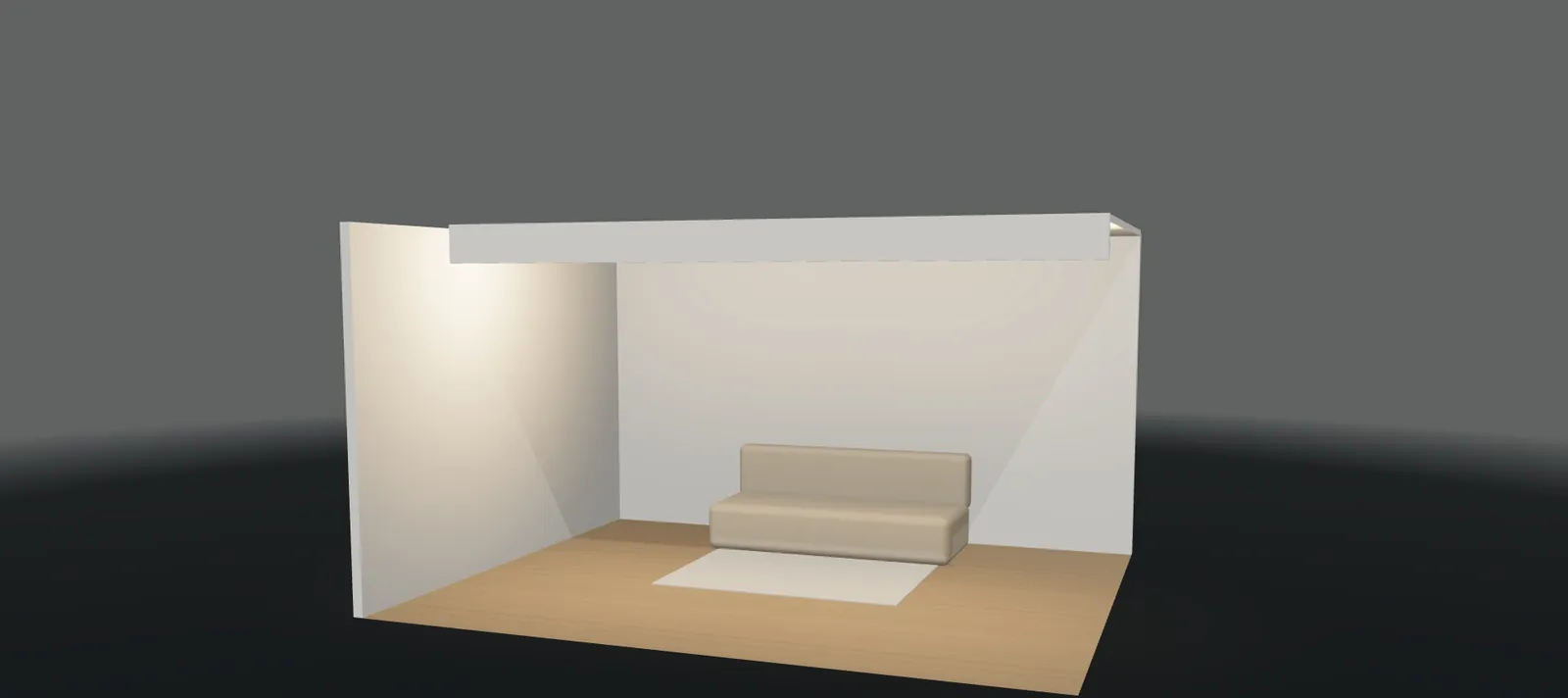
A living room in 3D with a ceiling cove and an LED strip lit in warm white in the 3D LED strip and profile configurator

LED strip and profile

Single colour, dimmable or RGB, with the driver calculated and a voltage drop warning.

A living-dining room in 3D lit by recessed downlights drawing their beams over the table in the 3D light fitting configurator

Recessed and pendant light fittings

Downlights, panels, profiles, pendants and tracks, with the room lit and the light level calculated.

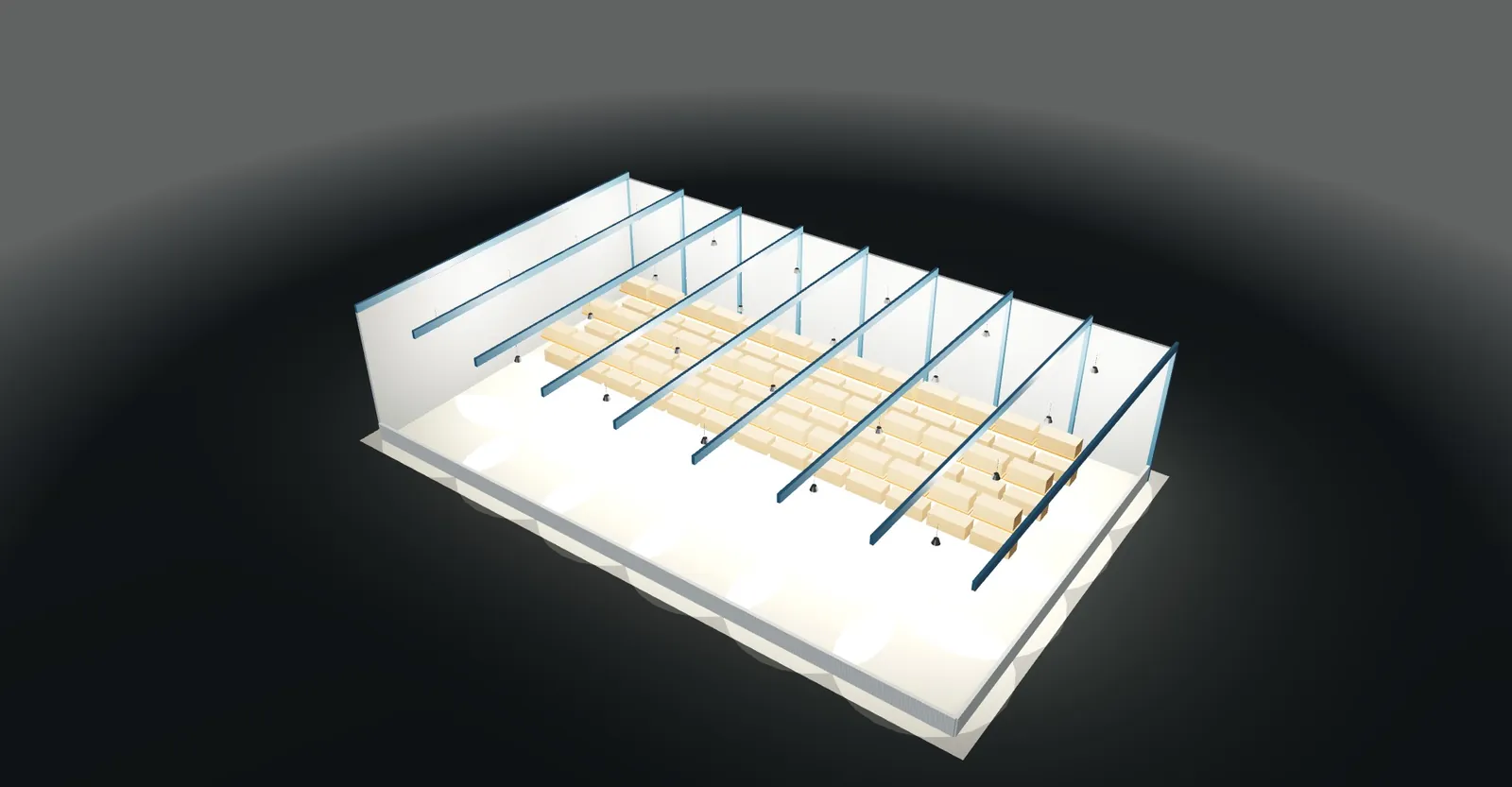
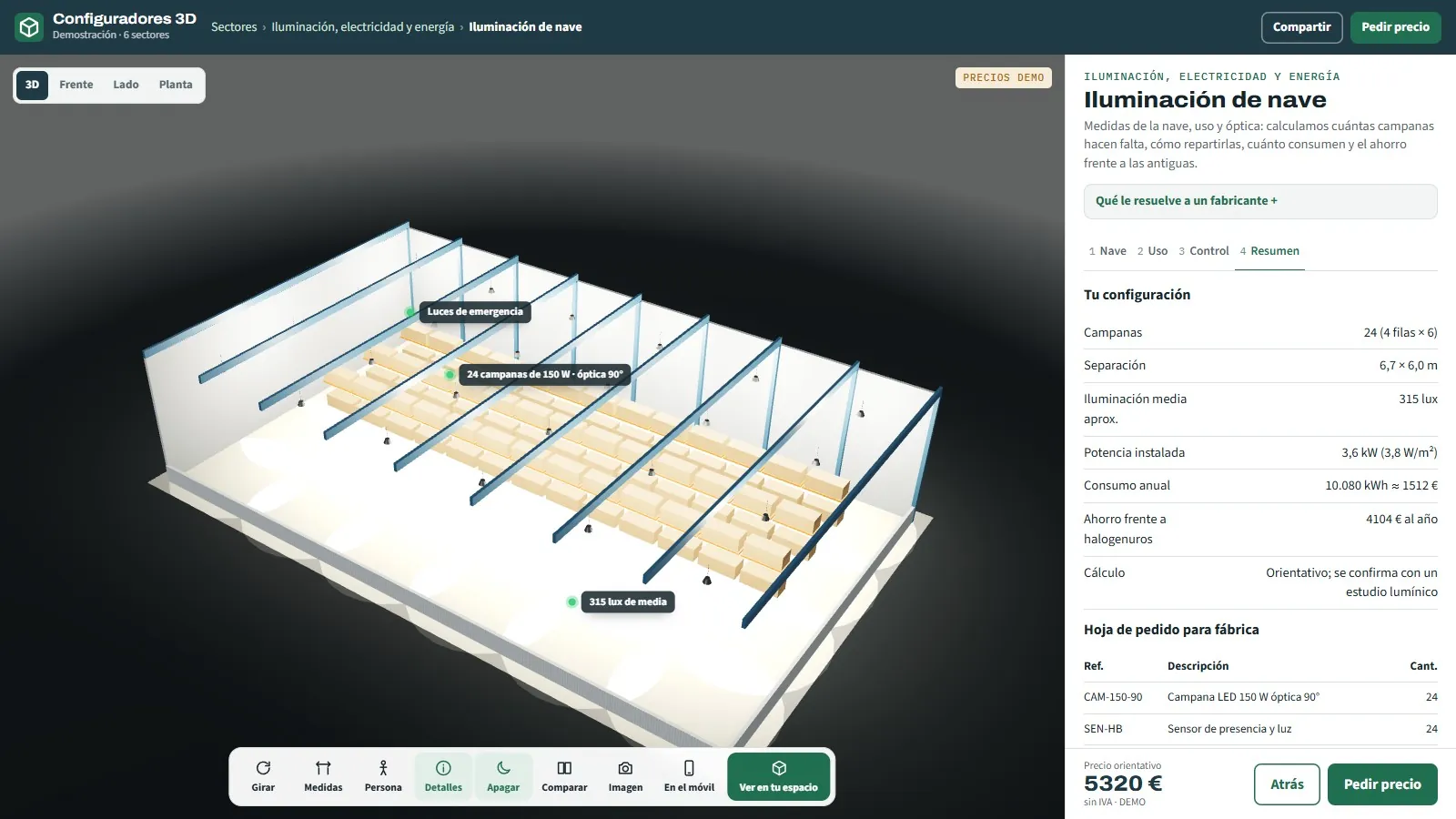
An industrial warehouse in 3D with rows of LED high bays lit over the storage area in the 3D warehouse lighting configurator

Warehouse lighting

How many high bays are needed, how to space them, how much they consume and the savings versus the old ones.

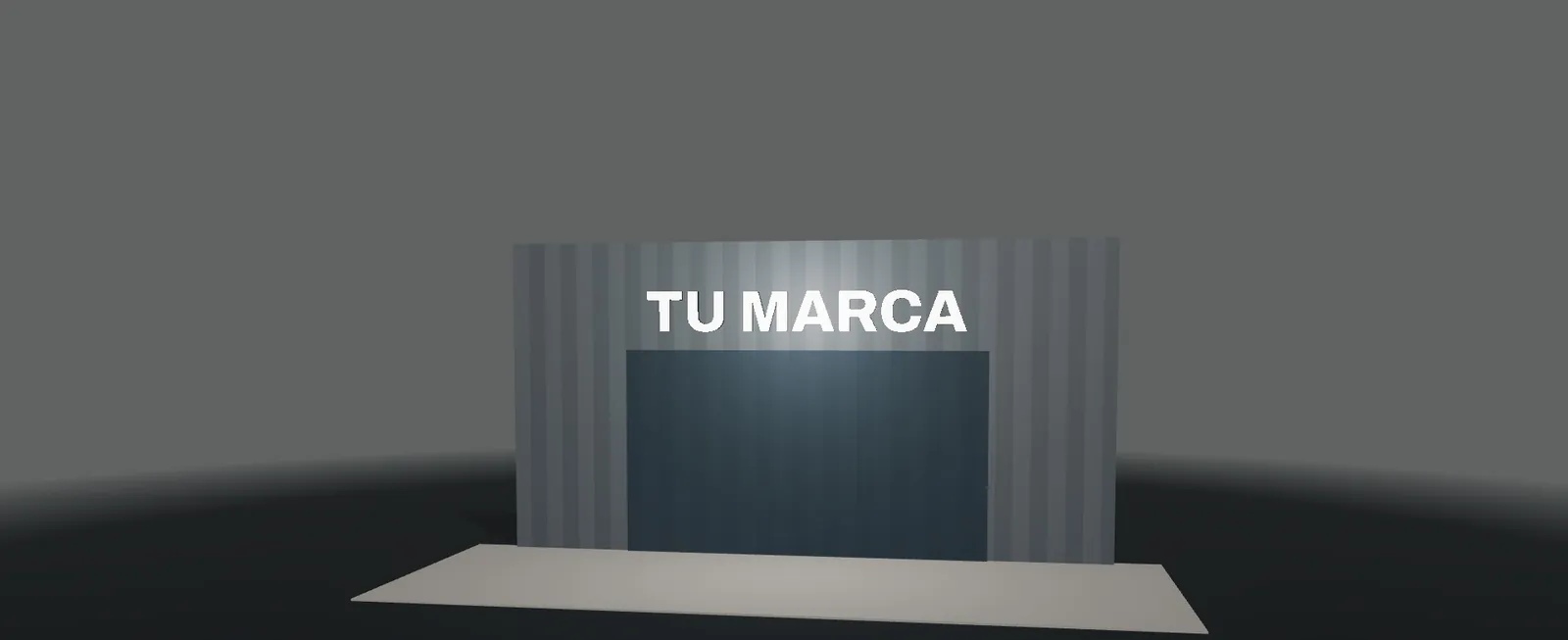
A sign of white built-up letters reading TU MARCA lit at night on a grey panel façade in the 3D configurator

Signage letters and signs

Front-lit, back-lit or LED neon, seen on the façade by day and by night.

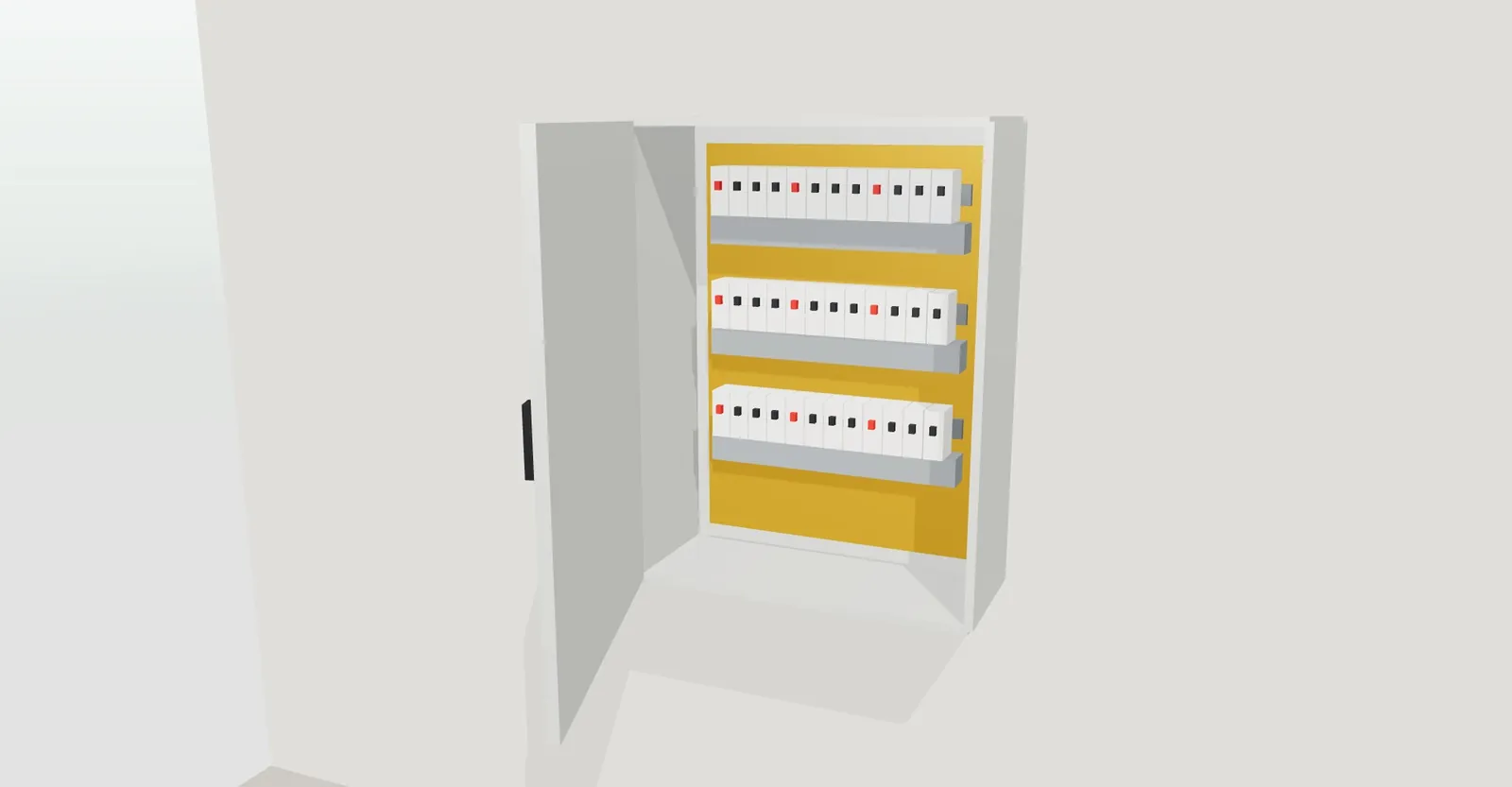
A wall-mounted electrical enclosure in 3D with the door open, a yellow mounting plate and three rows of DIN rail with switchgear

Electrical enclosures

Wall or floor-standing enclosures: size, material, IP rating, plate, DIN rails, climate control and rain canopy.

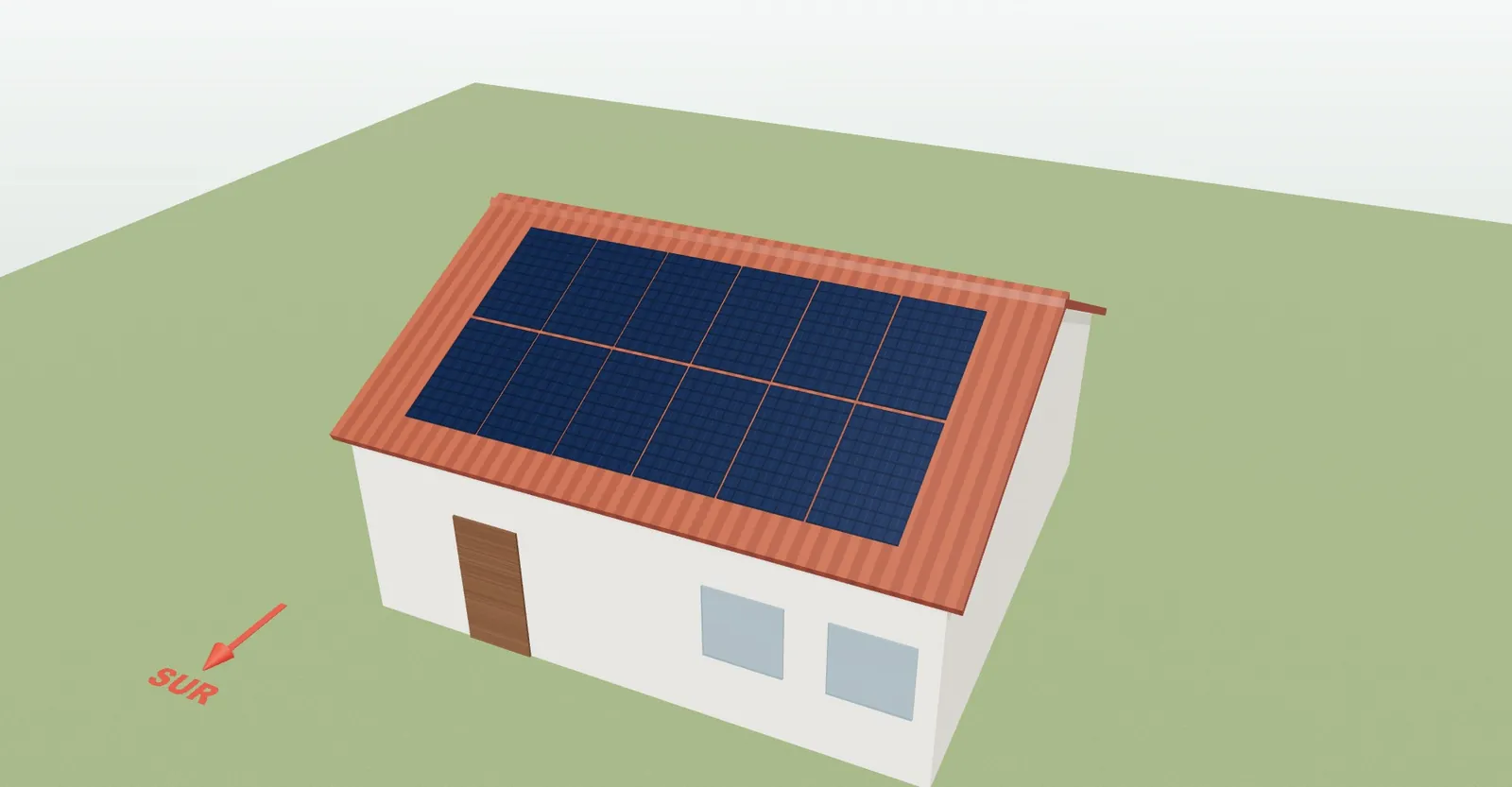
A house in 3D with twelve solar panels on a pitched tiled roof and the arrow marking south in the 3D configurator

Solar panels

Output by province with public data from the European Commission, savings and payback.

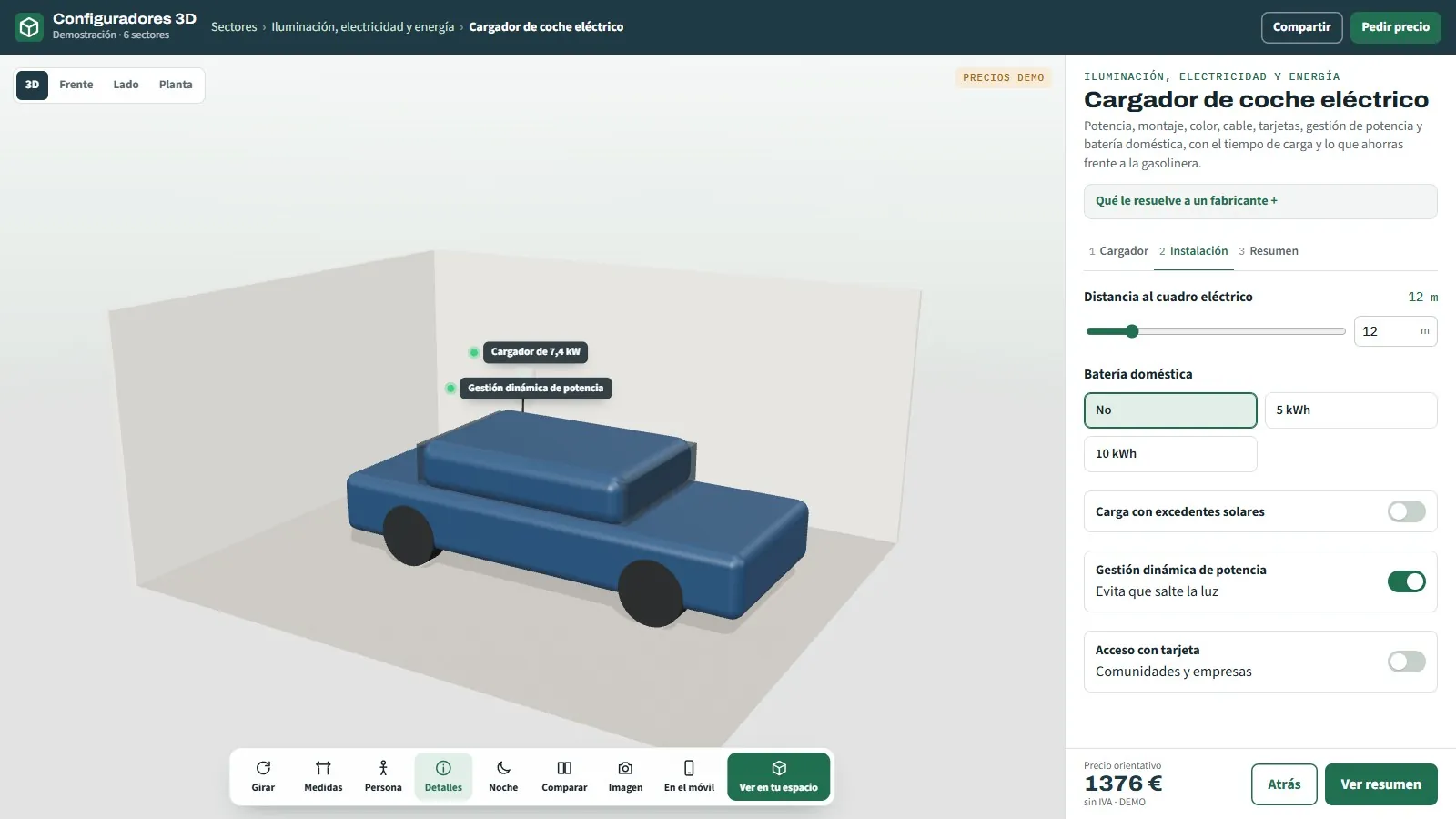
A garage space in 3D with a car and the wall charger, with labels for a 7.4 kW charger and dynamic power management and the dimensions of the space

Electric car chargers

Wall or post-mounted, with cards, power management, home battery and the charging time calculated.

Images from the demos, with generic products. Your version loads your families, rules and price list.

— WHAT IT CONNECTS TO

What comes out
of each configuration
and where it goes.

What the demo base already does and what gets developed in your project.

— WHAT THE BASE ALREADY DOES
  • Factory order sheet with reference, description and quantity, in all seven.
  • Calculated technical data: driver, lux, high bays, output and payback, charging time, DIN modules, sign width and power.
  • Warnings of voltage drop, too little or too much light, high bays too far apart or more output than is consumed.
  • PDF with the image, the technical data, the order sheet and the indicative price.
  • Enquiries with the customer's details and their configuration, in a dashboard with its status, exportable to CSV and with an email alert if you set up an account.
  • Link, image, QR code and augmented reality.
— WHAT GETS DEVELOPED IN YOUR PROJECT
  • Your families and references, with your calculation and compatibility rules.
  • Your price list and your reference values, such as the price of energy or the light levels per use.
  • An area for wholesalers, lighting shops, sign makers or dealers, with their brand and, for resellers, their margin on your price list.
  • Enquiries assigned by area to the right sales rep or installer.
  • Connection to your ERP or your CRM, if you have them.
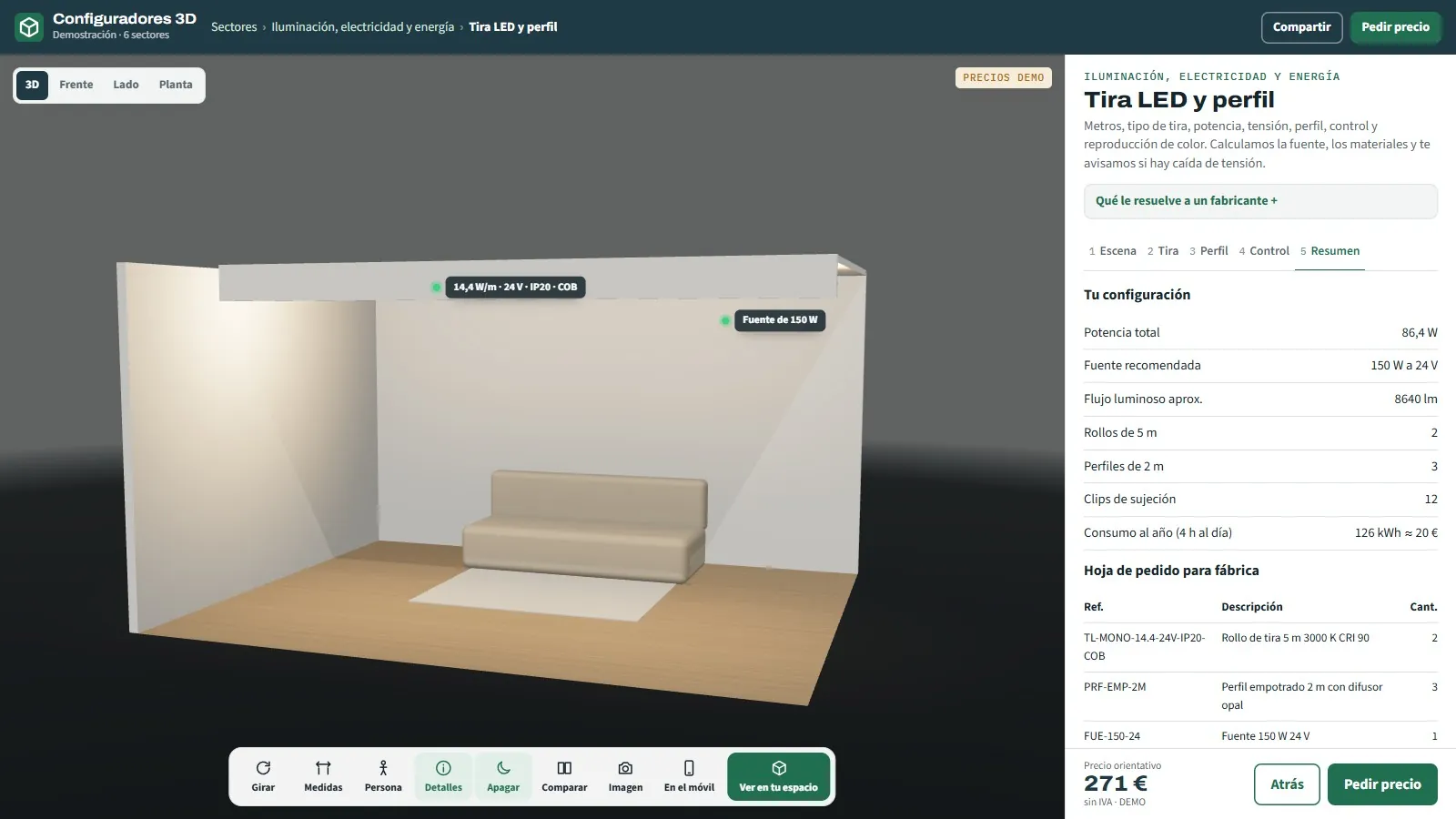
Summary of the LED strip configurator with total power, a recommended 150 W 24 V driver, reels, profiles, clips, annual consumption and a factory order sheet with references
Summary of a strip in the demo: calculation and order sheet. Example references and prices.
— HOW WE GET IT RUNNING

Four steps
with your catalogue.

The work focuses on loading what is yours and carrying over the sums from your technical office. Before starting, we put in writing what is included and what is not.

  1. 01

    Your families

    Strips, light fittings, high bays, enclosures, panels or chargers, with their variants and references.

  2. 02

    Your rules

    Driver margins, run limits, light levels, compatibilities and what you do not make.

  3. 03

    Price list and network

    Prices, discounts, wholesalers, shops and installers, and who receives each enquiry.

  4. 04

    Website and training

    On your website and on your distributors' websites, with training for the sales team.

— PRICE

A bespoke development,
at a fixed price.

We start from a base that already works: you do not pay for development from scratch.

— HOW MUCH IT COSTS

From €6,500

Developments start from €6,500 for a visual configurator of one product family; most projects for manufacturers fall between €14,500 and €35,000, depending on the catalogue, the rules and the integrations, plus maintenance from €190 a month.

  • Timeframe: between 3 and 16 weeks depending on the scope; the exact date goes in the proposal.
  • Payment terms: 40% to start, 40% with the test version and 20% at go-live.
  • The configurator is yours: it does not depend on a pay-per-use platform or on third-party licences.
— QUOTED SEPARATELY, PER PRODUCT
  • 3D modelling: light fittings, high bays, chargers or enclosures, from €30 to €120 per part, or more.
  • Materials and finishes: every lacquer, metal or diffuser faithful to the real one, from €30 to €120 per finish, or more.
  • It is settled once we see your files. If you already have the models, they are just adapted.

More detail at the price of a 3D configurator and in how much a 3D product configurator costs.

— FREQUENTLY ASKED QUESTIONS

What manufacturers in this sector
ask us.

What is a 3D lighting and energy configurator?

A web page in which the wholesaler, the installer or the customer choose the product and see it in 3D, switched on if it is light, with the technical data calculated on the spot. At the end, an indicative price with your price list, a PDF and an order sheet with references come out. Nothing to install. More at what a 3D configurator is.

Which products in the sector can be configured in the demo?

Seven, each with its own page and open demo: LED strip and profile, recessed and pendant light fittings, warehouse lighting, signage letters and signs, electrical enclosures, solar panels and electric car chargers.

Do the calculations replace our technical office's study?

No. The lux, the solar output, the savings, the charging time or the DIN modules are indicative: they are there so the enquiry arrives with a first calculation and to tell which ones deserve the full study, which your technical office still does.

Can we add our own calculation and compatibility rules?

Yes, that is the core of the project: driver margins, strip limits, light levels per use, which driver each light fitting takes or which accessories each enclosure accepts. What you do not make cannot be chosen, and the order sheet comes out with your references.

Can the wholesalers, shops and installers that buy from us use it?

Yes, as part of the custom development: every wholesaler, lighting shop, sign maker or dealer can have their own area with their brand and, if they resell, their margin on your price list. Orders reach you with the complete sheet and your references, and the enquiries from your website can be assigned by area to the right sales rep or installer.

What do we receive when a customer asks for a price?

A request with their details and their configuration, in a dashboard with its status and exportable to CSV; if you set up an email account, by email as well. The customer takes away a PDF with the image, the technical data, the order sheet and the indicative price.

Does it work on the installer's phone, on site?

Yes. It opens with a QR code, without downloading any app, with the calculation, the list of materials and the indicative price. With augmented reality, the charger, the enclosure or the sign are seen at full size in place. More at product augmented reality.

How much does a 3D configurator for the lighting and energy sector cost?

Projects start from €6,500 for a visual configurator of one product family; most projects for manufacturers fall between €14,500 and €35,000, depending on catalogue, rules and integrations, plus maintenance from €190/month. Separately, per product, 3D modelling and materials and finishes, from €30 to €120 per part or finish (or more), settled once we see your files. Lead time, between 3 and 16 weeks depending on scope; the specific date goes in the proposal. Details at the price of a 3D configurator.

— OPEN DEMO

Try it now
or see it with
your catalogue.

All seven demos are open, with no registration, with example products and prices: configurador.grup3d.es/demo.

With your catalogue in front of us? We will show you in a 20-minute video call, with your families and your sums.

  • No commitment.
  • We reply from grup3d@grup3d.es.

Would you rather talk it through? Call us on 662 061 421 or write to grup3d@grup3d.es.