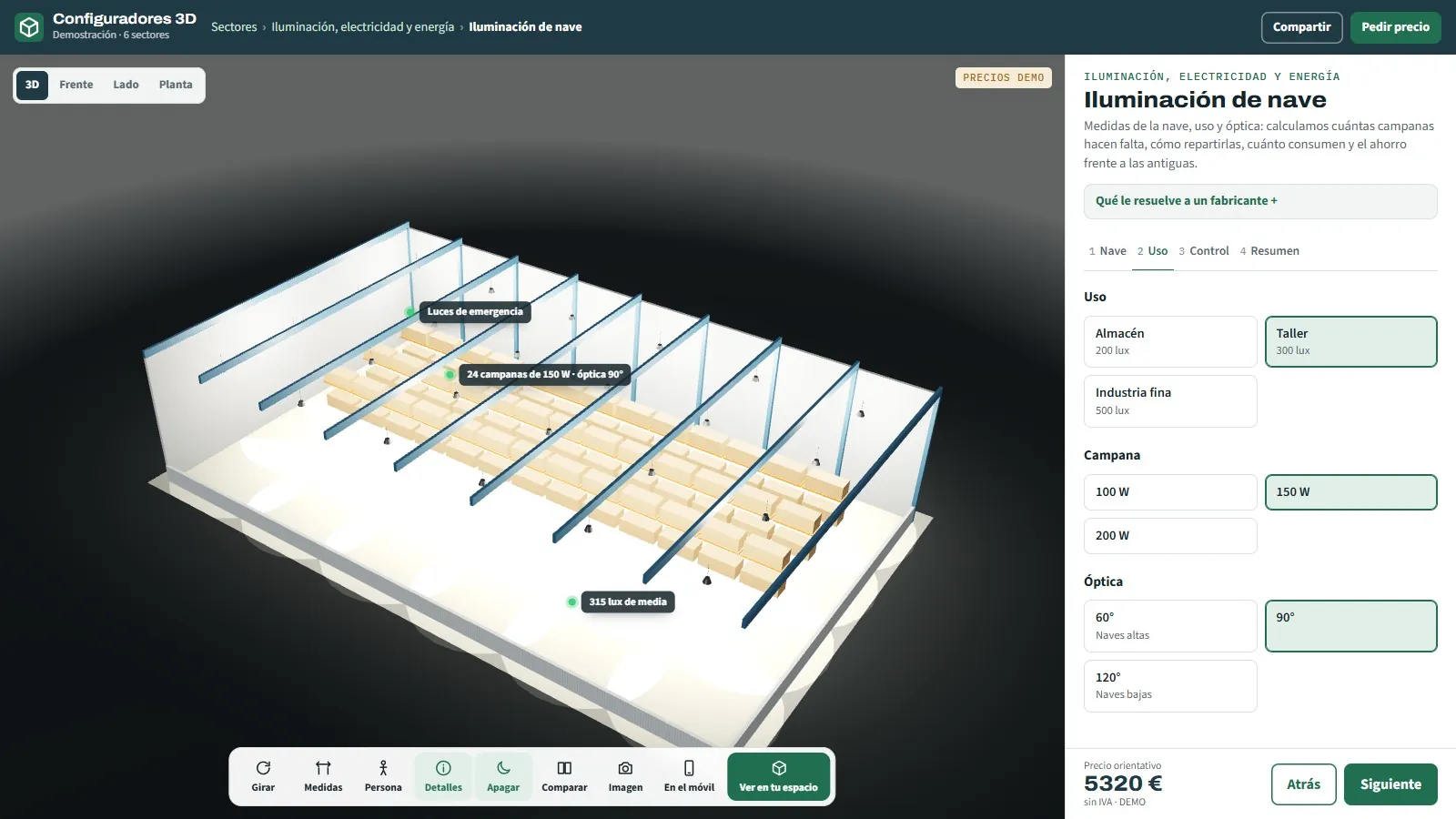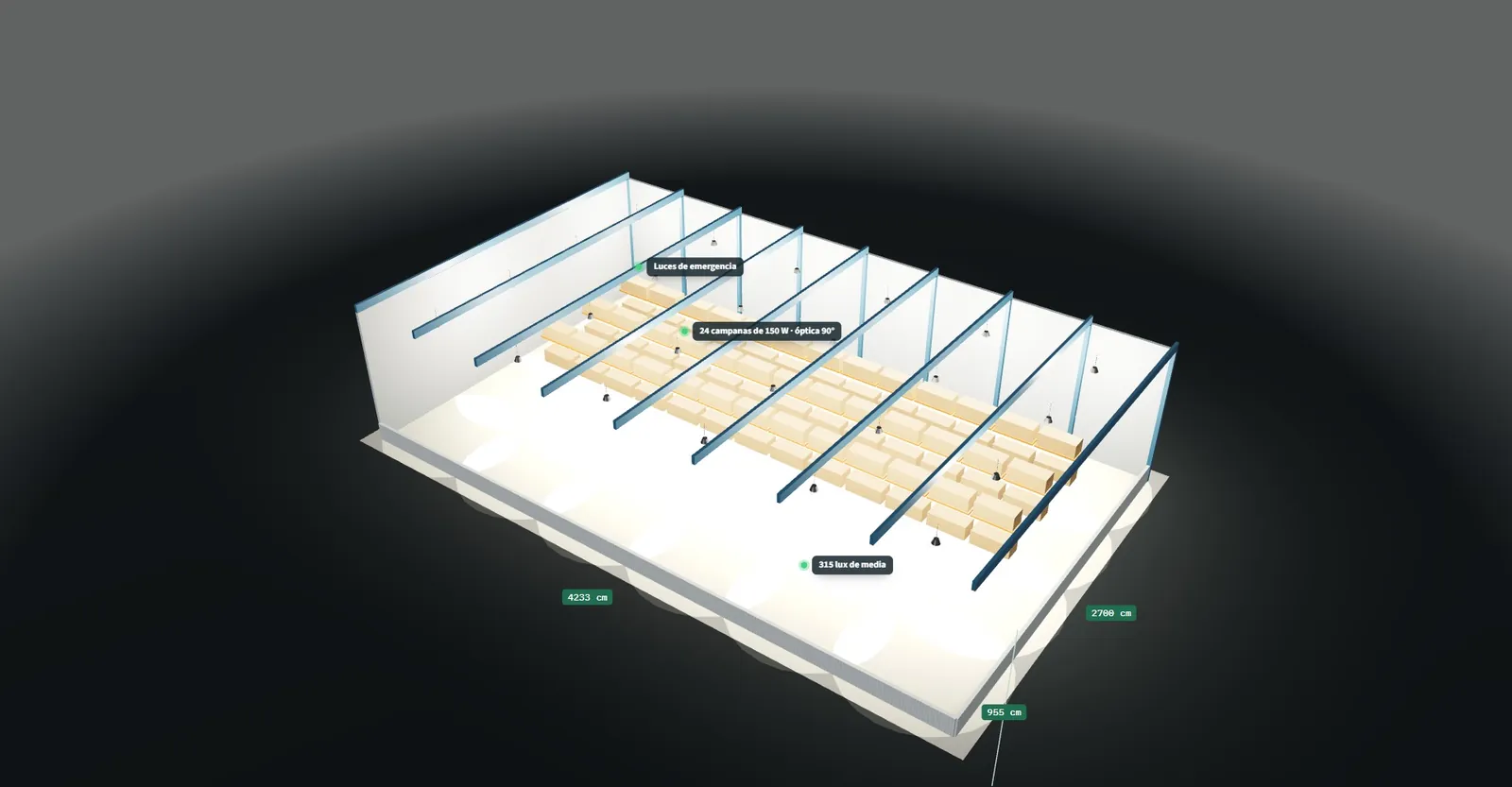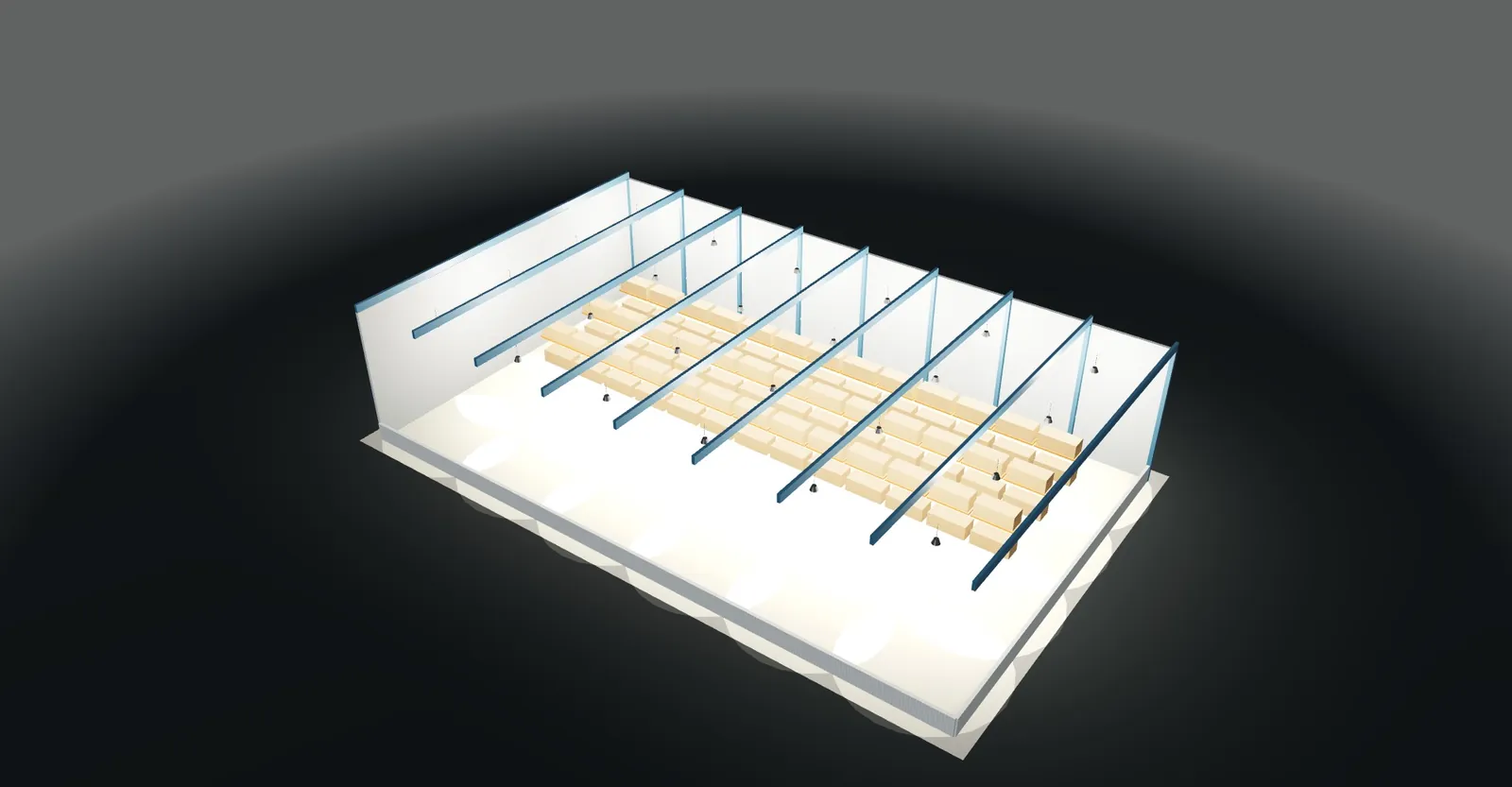
Industrial warehouse in 3D lit at night with 24 LED high bays in four rows and the lux and savings calculation
LIGHTING, ELECTRICAL AND ENERGY · OPEN DEMO
— FOR LED HIGH BAY MANUFACTURERS

3D configurator
for warehouse
lighting.

Purchasing has put your LED high bay next to a cheaper one per unit and the decision is being made in that column. Meanwhile, every LED conversion quote asks you for a lighting study with a drawing, heights and layout, even when the warehouse has no approved budget yet.

— WHAT HAPPENS TO YOU

The purchasing sheet
has one column:
price per unit

Your company manufactures LED high bays and industrial floodlights, and your technical sales rep handles the LED conversion quotes. Your buyers are the maintenance managers of logistics warehouses, workshops and production plants who want to get rid of their old metal halide fittings. On a Thursday an email arrives from the purchasing department of a 40 × 24 metre warehouse: they have received three quotes, yours is the second most expensive per fitting and they want an answer within forty-eight hours.

You know your 150 W fitting with a 90° optic puts more useful light on the floor than the cheapest quote's, and that with presence and daylight sensors it uses considerably less. But proving it means asking for the drawing, confirming the mounting height, redoing the lighting study with the layout and working out the yearly consumption against what they have now. Another whole afternoon for a quote that may come to nothing.

On the other side, the maintenance manager is on your side: he spends the year going up on a scissor lift to change blown lamps and knows what it is like to work in a dim aisle. But he does not sign. The signature belongs to a finance director who has never set foot in the warehouse at night and only wants to know two things: how much it costs and how much it saves. Neither appears on the purchasing sheet.

— WHERE THE SALE LEAKS AWAY

The bottlenecks
you will recognise
straight away.

“Send us a price per fitting.”

Customers who only compare unit price

Purchasing puts three quotes in a spreadsheet and sorts them by unit price. It does not show how many fittings each one needs, how much light reaches the floor or how much the whole installation consumes. A cheaper fitting with a poorer optic may need more units for the same lux, but that does not fit in a column.

What it costs youYou lose quotes that gave more light per euro.
“We need the lighting study by Monday.”

A lighting study for every quote

Every LED conversion asks for a drawing, heights, use and layout, and a study someone in the technical office has to produce among ten others. It gets done even when the customer is only collecting prices for next year's budget. When the project is really approved, the dimensions or the use have often changed and it has to be done again.

What it costs youA technical office swamped with quotes that are not projects yet.

“Fine, and how much do we save?”

The saving is invisible

The finance director does not think in lumens or watts per square metre: they think about the electricity bill. If the quote does not say in euros how much the new installation will consume per year and how much it saves against the current metal halide, the investment looks like nothing but an expense. And the saving from presence sensors is even harder to defend without a figure.

What it costs youThe lighting upgrade gets postponed another year.

“How many would you put and where?”

The layout gets argued over a drawing

Rows, spacing between fittings, mounting height: the maintenance manager wants to know whether the aisles between racking will be properly lit and where the emergency lights will go. On a paper drawing that is hard to see, and every doubt is another call, another meeting or another visit to the warehouse with the sales rep and the engineer.

What it costs youWeeks of back and forth before there is an order.

“The 200 W one will be better, right?”

Optic and power chosen by eye

Some customers ask for the most powerful fitting thinking that gives them margin, or the widest optic because it sounds like more light. At eight metres high, in a warehouse or a workshop, the right choice depends on the use and the layout. If they cannot see it, they decide on instinct and then come the complaints about glare or dark areas.

What it costs youOversized installations or complaints right after they are fitted.

— DO THE MATHS

What it costs you
today, with
your own numbers.

Count the quotes you lose when the decision is made on unit price. It is an example: put in your own figures.

quotes
fittings
€
MARGIN LOST EACH YEAR TO COMPARING ONLY THE UNIT PRICE 0

€ a year

The values are an example: replace them with yours. The calculation is a simple multiplication and does not come from any study.

— HOW IT IS SOLVED

Every bottleneck,
with its
answer.

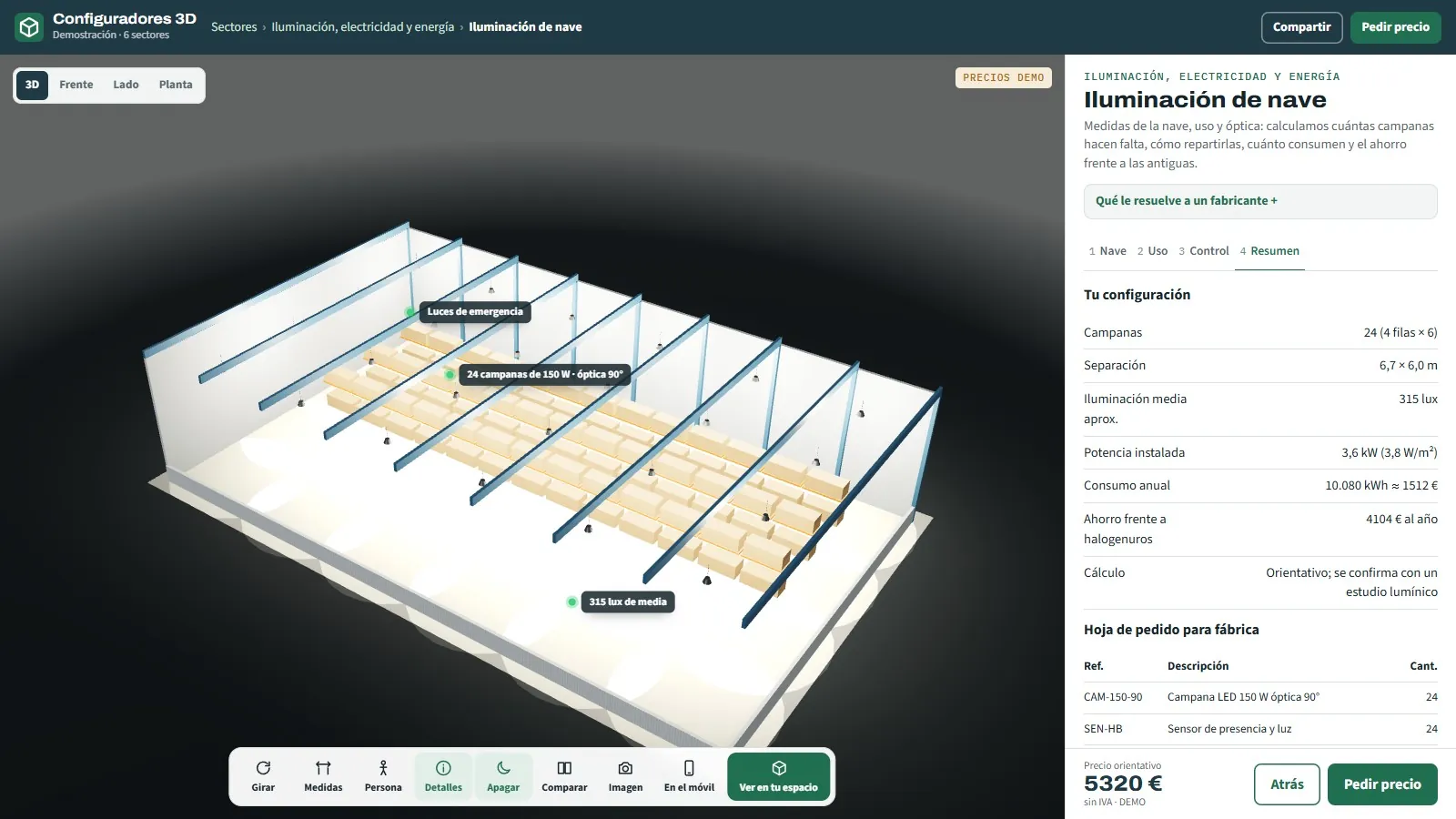
Summary with 24 fittings in four rows, spacing, average lux, installed power, yearly consumption and savings
Answers · A lighting study for every quote

The first calculation comes out in the same meeting

Length, width, mounting height and use: the configurator works out how many fittings are needed, how to lay them out in rows and at what spacing, and what average lighting level is achieved. It is indicative and says so; the full lighting study is kept for when the project is serious.

Calculation of fittings, layout and lux
Warehouse lighting configurator screen with length, width, mounting height, use, power and optic
Answers · The saving is invisible

The saving, in euros and not in watts

From the hours of use per year and the presence and daylight sensors come the yearly consumption in kWh and in euros, and the saving against metal halide. That is the figure the finance director understands, and it goes in a PDF the maintenance manager can forward without having to explain anything.

Consumption and yearly savings in a PDF
Industrial LED high bays in 3D with detail labels for power, optic, sensors and mounting height
Answers · Customers who only compare unit price

You compare the light, not just the price

Three versions of the same warehouse, side by side: 100, 150 and 200 W, or 60°, 90° and 120° optics, with the differences highlighted: fittings needed, lux, power and consumption. That is how you show that the cheapest unit is not always the cheapest installation.

Comparison of optics and power ratings
Industrial warehouse in 3D at night with 24 LED high bays switched on in four rows lighting the warehouse floor
Answers · The layout gets argued over a drawing

The warehouse lit, at night, in 3D

The fittings appear in position inside the warehouse, with a person for scale to understand the height and a night scene with everything switched on. It rotates, opens on a phone with a QR code and can be shown in the meeting, with no paper drawing and no extra visit to the warehouse.

3D night view and opening on a phone
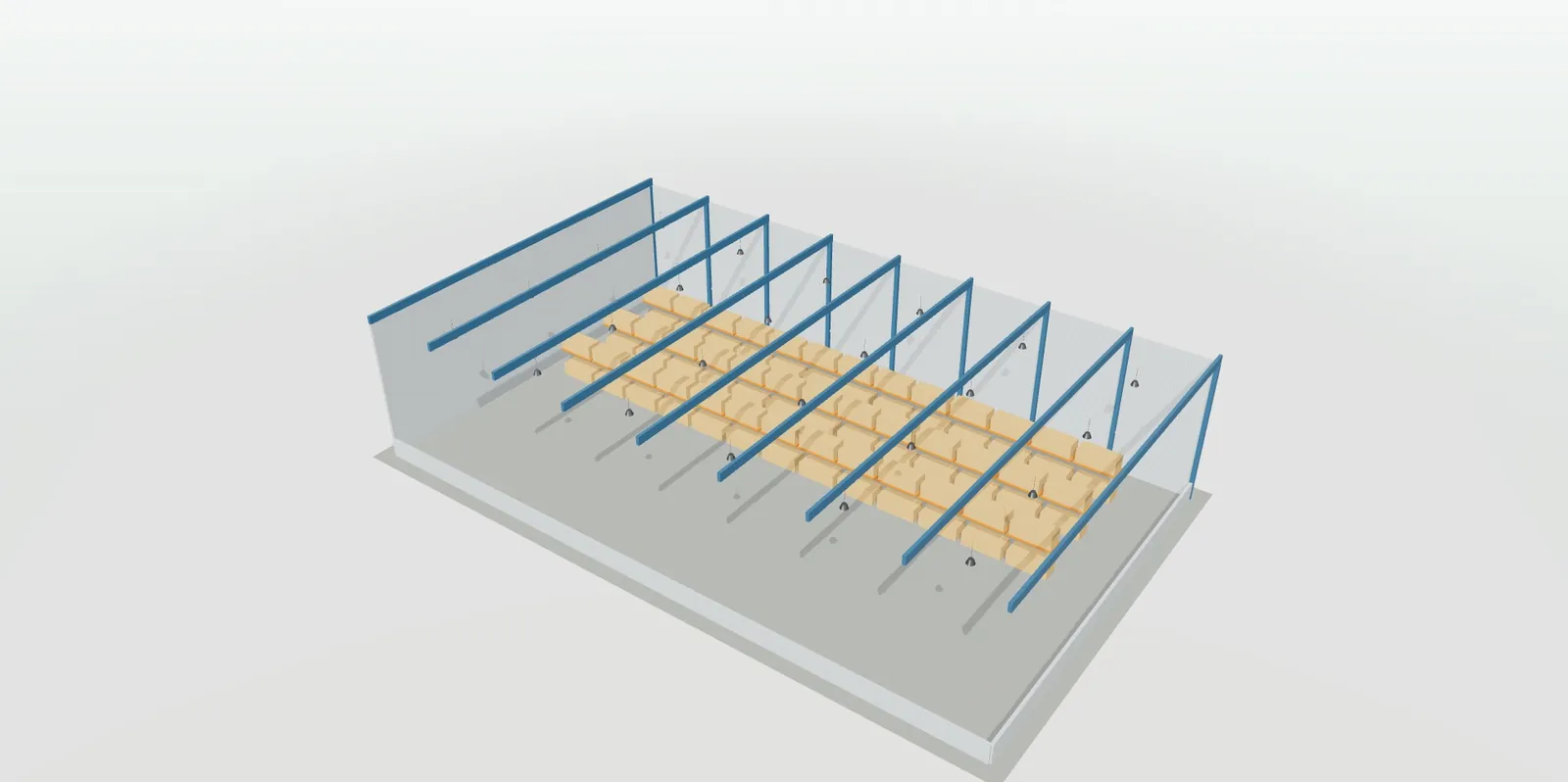
Overall 3D view of a 40 by 24 metre warehouse with LED high bays hung at eight metres
Answers · Optic and power chosen by eye

Each use, with its own light level

Warehouse, workshop or precision industry: changing the use changes the lighting level sought and the number of fittings. The customer sees that at eight metres they do not always need the most powerful one, but the right optic. And the order sheet comes out with fittings, sensors, emergency lights and cable.

Warehouse use and order sheet
— TRY IT NOW

Try it
for
yourselves.

Set a 60 × 30 metre warehouse at 10 metres high and compare the 150 W fitting with a 60° optic and with a 120° optic.

An open demo, with no registration, with example products and prices. It is designed for manufacturers, dealers and installers: private customers are welcome to try it, but we do not sell the product.

— INVESTMENT AND NEXT STEP

Win the quote on light, not on price

In twenty minutes you will see how it would work with your fittings, your optics and your price list, and with the enquiries assigned by area to each sales rep.

From €6,500

Most projects for manufacturers fall between €14,500 and €35,000, depending on the catalogue, the manufacturing rules and the integrations. Maintenance and hosting from €190 a month. We start from a base that already works: you are not paying for development from scratch.

  • What is includedThe configurator with your products, your rules and your price list, embedded in your website and in your dealers' sites, with training for the sales team.
  • TimeframeBetween 3 and 16 weeks depending on the scope; the exact date goes in the proposal.
  • Payment terms40% to start, 40% with the test version and 20% at go-live.

Would you rather talk it through? Call 662 061 421 or write to grup3d@grup3d.es.

— FREQUENTLY ASKED QUESTIONS

What we
get asked.

There are more short answers in frequently asked questions about 3D configurators and who we are in 3D configurator company.

Does the lux calculation count as a lighting study?

No, and the configurator says so: it is an indicative calculation of average lighting from the number of fittings, the optic, the height and the area. It is there to take a first proposal into the meeting and to filter which quotes deserve the full study. The definitive lighting study, with racking and obstacles, is still done by your technical office.

How many lux does a warehouse or a workshop need?

It depends on the use: a storage area needs less light than a workshop, and considerably less than a precision industry or assembly station. The demo works with three indicative levels — 200 lux for storage, 300 for a workshop and 500 for precision industry — and calculates the fittings accordingly. In your version, those levels can be the ones your technical office already uses.

How much does an industrial lighting configurator cost?

Developments start from €6,500 for a visual configurator of one product family; most projects for manufacturers fall between €14,500 and €35,000, depending on the catalogue, the rules and the integrations, plus maintenance from €190 a month. With industrial lighting, the scope is set by the families of high bays and floodlights you include, the calculation rules of your technical office that have to be carried across and the connection to your CRM for the enquiries. If you show us a recent lighting study, in the demo we can see which part the configurator can handle.

How does it work out the saving against the old installation?

From the installed power, the hours of use per year and the effect of the sensors, if they are switched on, it works out the consumption of the LED installation and compares it with metal halide for that same warehouse. The result comes out in kWh and in euros per year. The energy price and the comparison references are adjusted in your version.

Does it include emergency lights and sensors in the order?

Yes. If they are switched on, the presence and daylight sensors and the emergency lights go into the order sheet with their quantity, alongside the fittings and an estimate of cable and boxes. IP65 protection can also be requested for warehouses with dust or water. Everything comes out with references, ready for the factory or the warehouse.

Is it suitable for showing in a meeting with the customer?

That is what it is designed for. It opens on a laptop or on a phone with a QR code, sizes, power ratings and optics are changed in front of the customer and up to three versions are compared. At the end, the PDF with the number of fittings, lux, consumption and savings stays with whoever has to defend the investment to management.