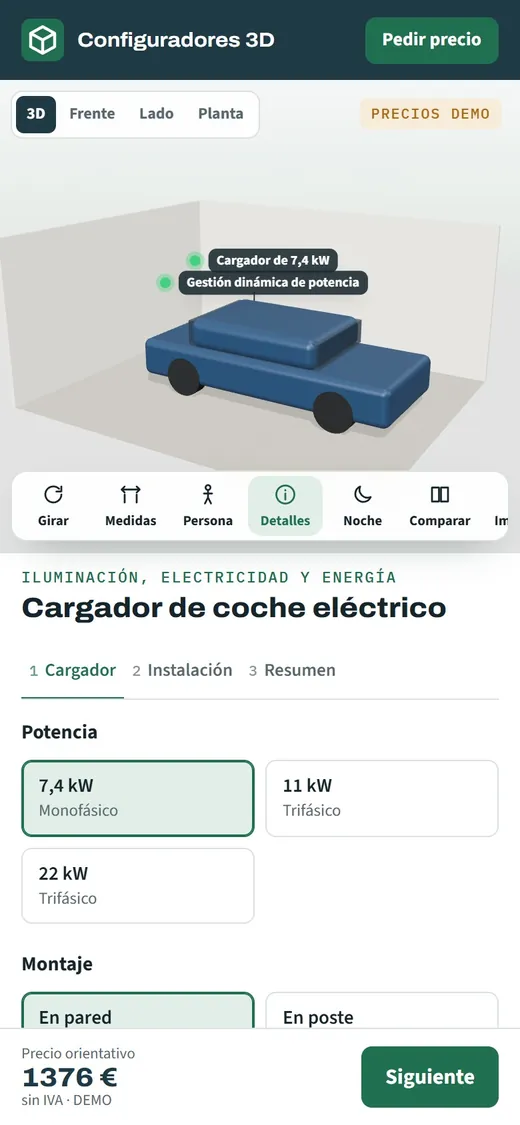
Wall-mounted electric car charger in 3D, white and with a 5-metre cable, next to a parking space
LIGHTING, ELECTRICAL AND ENERGY · OPEN DEMO
— FOR CHARGING POINT COMPANIES

3D configurator
for electric car
chargers.

The dealership hands over the electric car and passes you the customer's phone number. They call without knowing what supply they have contracted, whether their house is single phase or how many metres away the consumer unit is, and ask for “the 22 kW one, it charges faster”.

— WHAT HAPPENS TO YOU

Three phone calls
before the first coffee
and no two alike

You sell and install charging points for private customers, residents' associations and companies, and a good share of your customers come from two local dealerships that pass on the contact when they hand over an electric car. On Friday, before ten o'clock, you already have three calls waiting. None of the three really knows what they need, all three have seen charger prices online and all three want yours today.

The first lives in a terraced house and wants “the 22 kW one”; after five minutes of questions it turns out his house is single phase and the breaker already trips when he runs the oven and the washing machine at once. The second has a space in a communal garage, about forty metres from the consumer unit, and asks who pays for the electricity and whether she will be able to lock the charger. The third runs a company with five vans and wants to know how much each driver charges.

All three conversations end the same way: a visit is needed to look at the consumer unit, measure the cable run and take photos, and a quote that will not be ready until the following week. Meanwhile, the customer already has the car at the door and charges from a normal socket or at the shopping centre. Some wait patiently for the technician; others accept the first quote that reaches them, even if it does not include what their installation actually needed.

— WHERE THE SALE LEAKS AWAY

The bottlenecks
you will recognise
straight away.

“Give me the fastest one you have.”

The customer does not know what power they need

They equate power with quality and ask for 11 or 22 kW without knowing that in a single-phase home they will not be able to use it, or how many kilometres each option recovers overnight. Explaining it on the phone sounds like trying to sell them the cheap option, and not explaining it ends in a more expensive installation that does not perform as they expected.

What it costs youQuotes that never get accepted or customers who end up disappointed.
“Since you fitted it, my breaker keeps tripping.”

Installations that trip the breaker

The car charges at the same time as the oven, the hob and the air conditioning, and the contracted supply cannot take it all. The customer calls annoyed and thinks the charger is faulty. The solution exists — dynamic load management — but if it was not offered and explained at the start, now it is another visit and an uncomfortable conversation.

What it costs youUnpaid visits and a customer who already distrusts the charger.

“And who pays for the garage electricity?”

Residents and companies with doubts about control

In a communal garage, the resident wants nobody else using their charger and the association wants to know how much each one consumes. In a company with a fleet, the manager wants one card per driver. If they cannot see how card access and per-user control work, the conversation drags on through meetings and emails.

What it costs youResidents' or fleet projects that are left hanging.

“How much does it cost to put one in my space?”

The cable run changes the whole quote

A charger three metres from the consumer unit is not the same as one forty metres away at the back of a garage. The cable, the protections and sometimes a pedestal change the final price, and the customer has only seen the price of the unit online. Without the distance, any figure you give them on the phone is a risky promise.

What it costs youQuotes that shoot up after the visit.

“And how does it look on the wall, next to the car?”

The charger gets bought without seeing it fitted

White or black, wall or pedestal mounted, with a 5 or 7.5 metre cable: the customer will see it every day when they come into the garage and want to know how it looks next to their car. A product data sheet does not convey the size or where the cable hangs, and those small doubts delay the yes.

What it costs youDecisions postponed over details that get settled by looking.

— DO THE MATHS

What it costs you
today, with
your own numbers.

Count the enquiries you handle before the customer decides, with or without a visit. Replace the values with yours.

enquiries
h
€
MONTHLY COST OF HANDLING ENQUIRIES BEFORE SELLING 0

€ a month

The values are an example: replace them with yours. The calculation is a simple multiplication and does not come from any study.

— HOW IT IS SOLVED

Every bottleneck,
with its
answer.

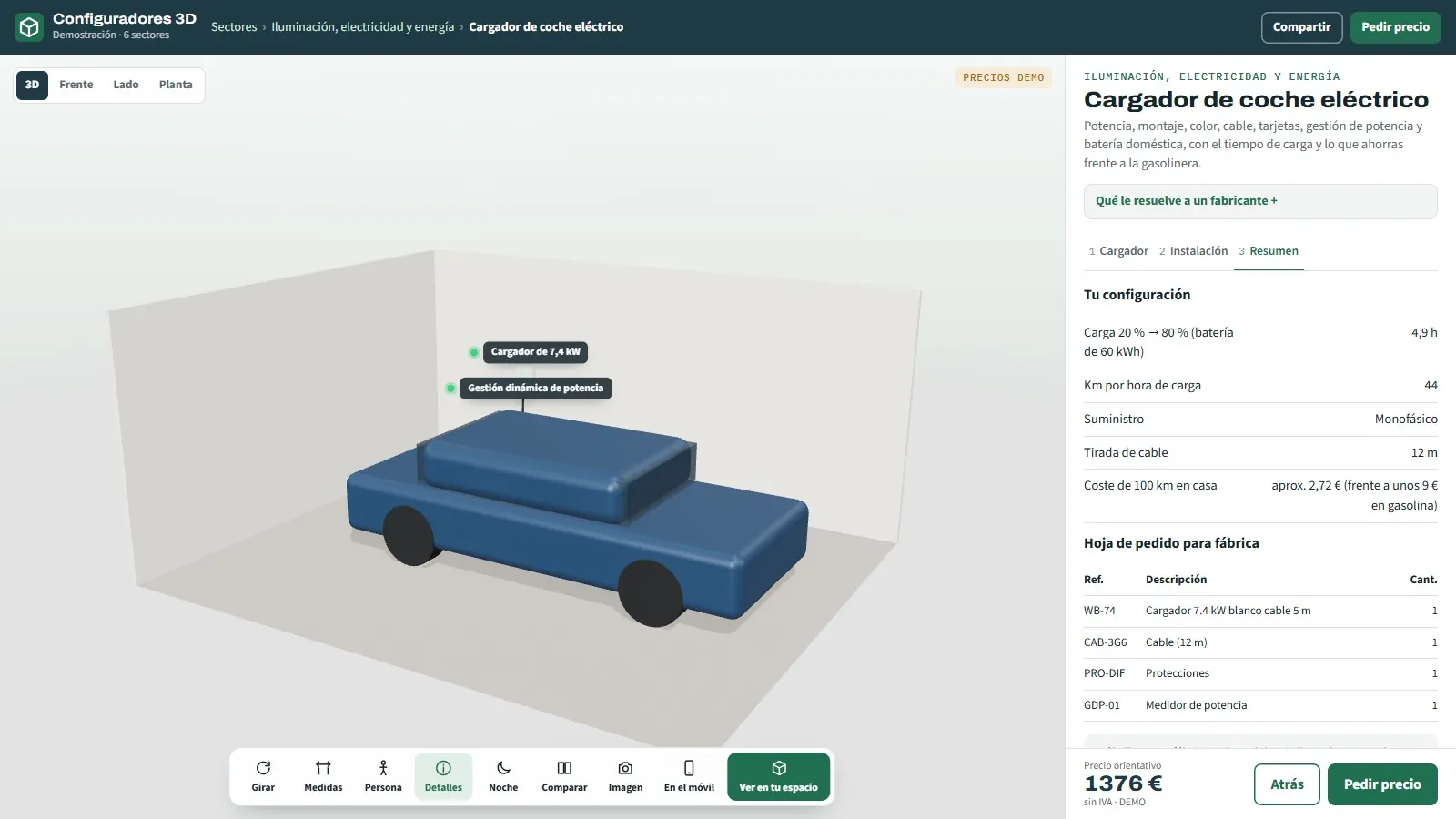
Charger summary with charging time, kilometres per hour, single-phase supply, cable run and cost per 100 km
Answers · The customer does not know what power they need

They see how long it takes to charge at each power

When they choose 7.4, 11 or 22 kW they see the charging time for a typical battery, the kilometres recovered per hour and what supply is needed. They work out for themselves why the 22 kW one makes no sense in their home, without anyone having to argue it on the phone.

Charging time and supply per power rating
Wall charger in 3D with detail labels for power, cable, dynamic load management and protections
Answers · Installations that trip the breaker

Load management, offered from the start

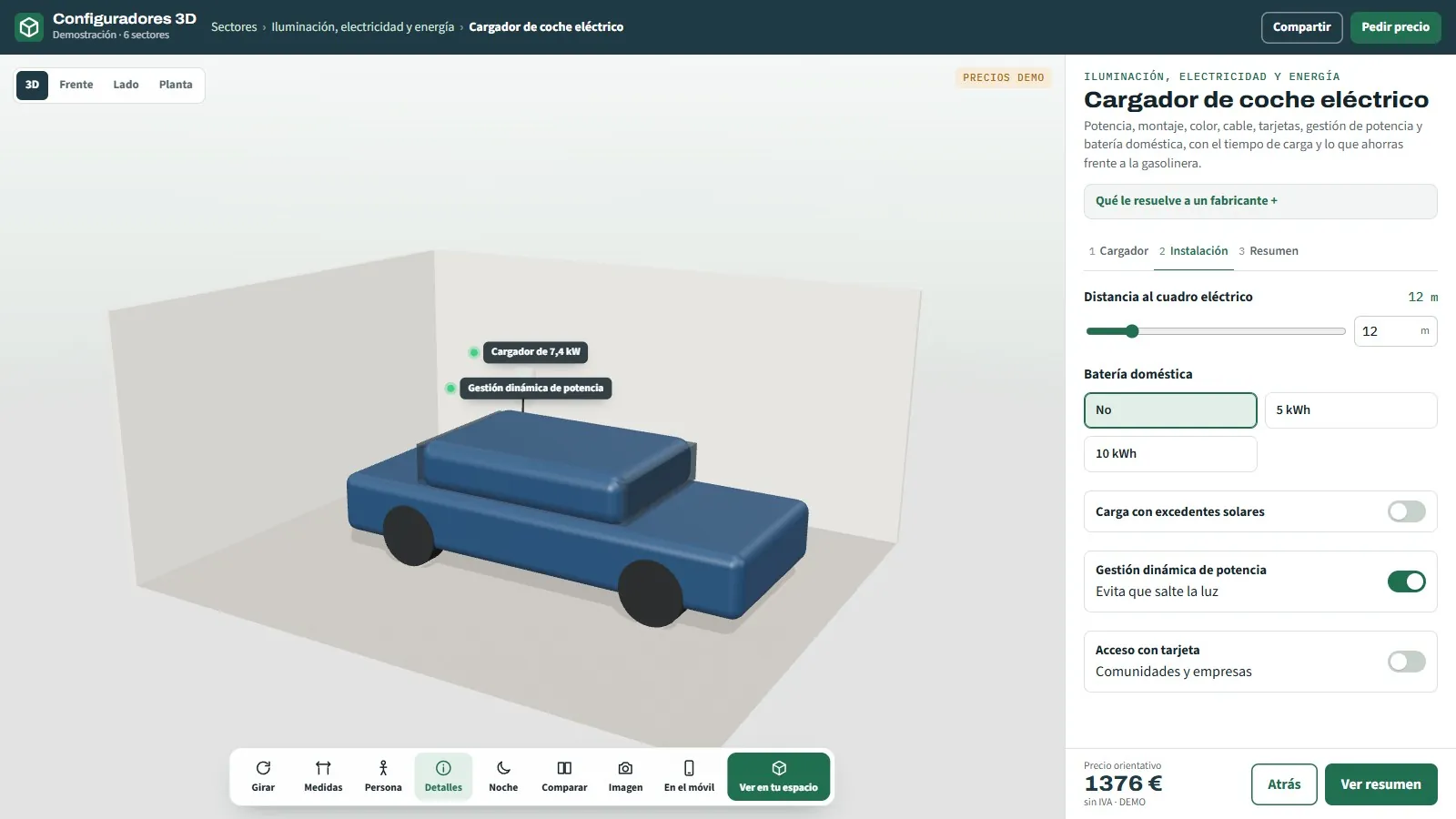
Dynamic load management appears as an option, with its explanation and with the meter included on the order sheet. The customer chooses it before the installation, not after the first blackout. If they have solar panels, they can switch on charging with surplus solar and add a 5 or 10 kWh home battery.

Load management, solar surplus and battery
Electric car charger configurator open on a phone with the installation options and the wall charger
Answers · Residents and companies with doubts about control

Cards and per-user control, in plain view

Card access is switched on in the configurator and goes into the quote. The resident sees that nobody else will use their charger; the fleet manager, that they can know how much each driver charges. The conversation stops being theoretical and the meeting has something concrete to approve.

Card access
Charger configurator screen with power, mounting, cable, colour and distance to the consumer unit chosen
Answers · The cable run changes the whole quote

The distance to the consumer unit, inside the price

The customer says how many metres away their consumer unit is, from 3 to 60, and the indicative price includes cable and protections. The order sheet comes out with the charger, metres of cable, protections and meter, and the installer prepares the visit knowing what they will find.

Cable run and order sheet
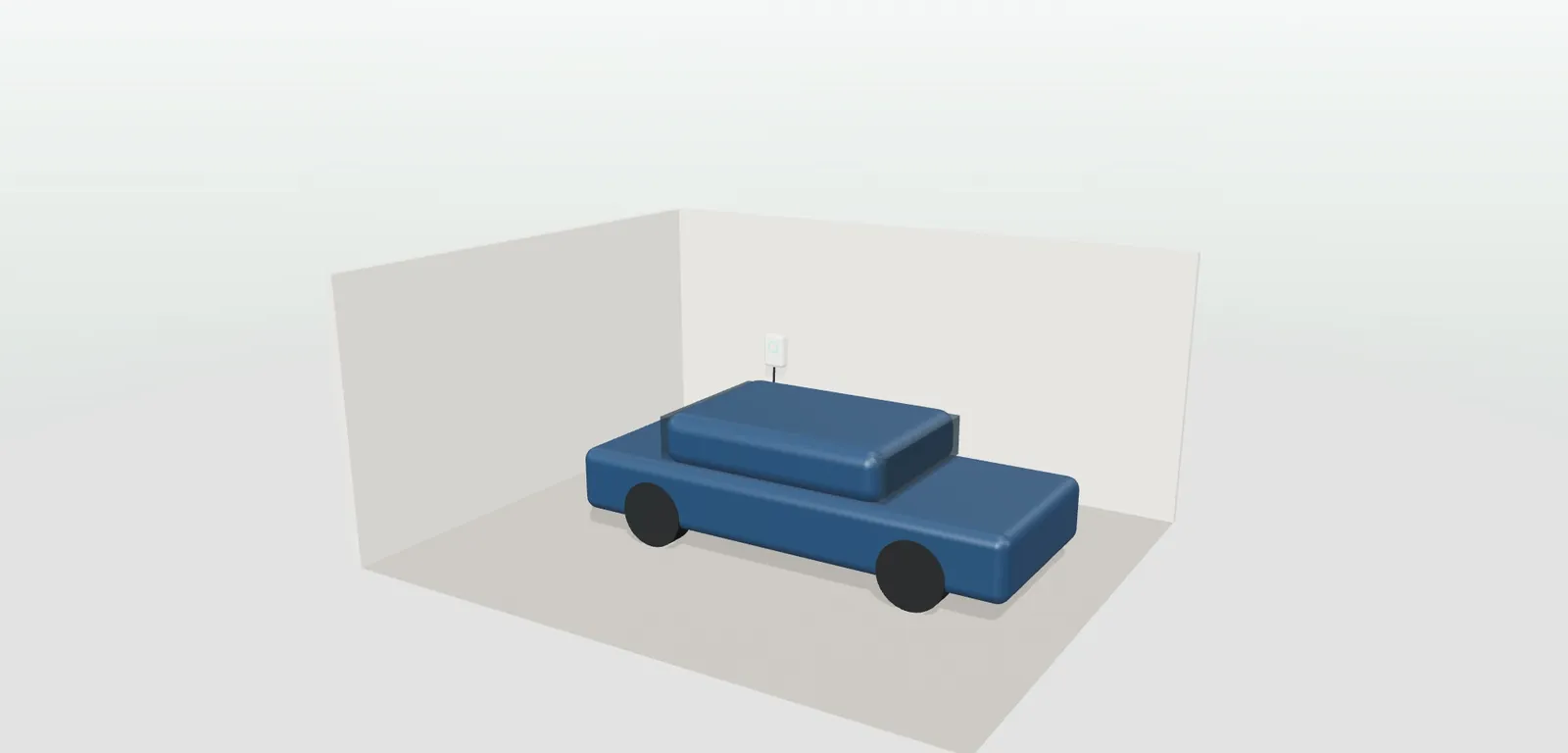
7.4 kW electric car charger in 3D, wall mounted, white and with the 5-metre cable coiled
Answers · The charger gets bought without seeing it fitted

Their charger, at real size, in their garage

Wall or pedestal, white or black, with its cable: they rotate it in 3D next to a person for scale and place it at real size in their own garage in augmented reality from their phone, with nothing to install. They decide where they want it before the installer arrives.

Augmented reality
— TRY IT NOW

Try it
for
yourselves.

Choose 22 kW and look at the supply it asks for; then drop to 7.4 kW, put the consumer unit 40 metres away and switch on card access.

An open demo, with no registration, with example products and prices. It is designed for manufacturers, dealers and installers: private customers are welcome to try it, but we do not sell the product.

— INVESTMENT AND NEXT STEP

Let the customer call knowing what they want

Tell us which chargers you install and how you charge for the installation, and we will go through how the enquiries would reach you, already shared out by area between your installers.

From €6,500

Most projects for manufacturers fall between €14,500 and €35,000, depending on the catalogue, the manufacturing rules and the integrations. Maintenance and hosting from €190 a month. We start from a base that already works: you are not paying for development from scratch.

  • What is includedThe configurator with your products, your rules and your price list, embedded in your website and in your dealers' sites, with training for the sales team.
  • TimeframeBetween 3 and 16 weeks depending on the scope; the exact date goes in the proposal.
  • Payment terms40% to start, 40% with the test version and 20% at go-live.

Would you rather talk it through? Call 662 061 421 or write to grup3d@grup3d.es.

— FREQUENTLY ASKED QUESTIONS

What we
get asked.

There are more short answers in frequently asked questions about 3D configurators and who we are in 3D configurator company.

How does it work out the charging time?

From the charger's power and a reference 60 kWh battery, it works out how long it takes to go from a low to a high state of charge and how many kilometres are recovered per hour. It is indicative, because each car accepts a different maximum AC power. In your version you can use whichever reference batteries you prefer.

Why can a 22 kW charger not go in just any house?

Because that power needs a three-phase supply and a contracted capacity many homes do not have; with a single-phase supply, the usual maximum is 7.4 kW. The car also has to accept that charging power. The configurator shows the supply needed when each option is chosen, so the conversation starts from what is actually possible.

How much does a charging point configurator cost?

With a charging point, the price of the unit is the easy part; the work is in putting in your installation rates per metre of cable, the protections and the supply rules. On top of that come the models you offer and whether you want every enquiry to land straight in your CRM. Developments start from €6,500 for a visual configurator of one product family; most projects for manufacturers fall between €14,500 and €35,000, depending on the catalogue, the rules and the integrations, plus maintenance from €190 a month. In the demo we tell you what would change with your catalogue.

Does it work for communal garages and company fleets?

Yes. It includes wall or pedestal mounting, card access, dynamic load management and the distance to the consumer unit, which is what changes most in a communal garage. For a fleet, per-user control is understood as soon as the cards are switched on. The study of a full communal installation is still yours to do.

Can the dealerships that send us customers use it?

Yes. In your version, each dealership can have its own space with its own brand, show it when handing over the car or send the link to the buyer. The enquiry reaches you with the chosen configuration and is assigned to the installer in your network who covers that area.

Does it show the saving against petrol?

Yes, as a guide: it works out what 100 km cost when charging at home and compares it with what they would cost in petrol. If the customer has solar panels, they can switch on charging with surplus solar and add a home battery to the quote. The reference price of the kWh and of petrol are set by you in your version.