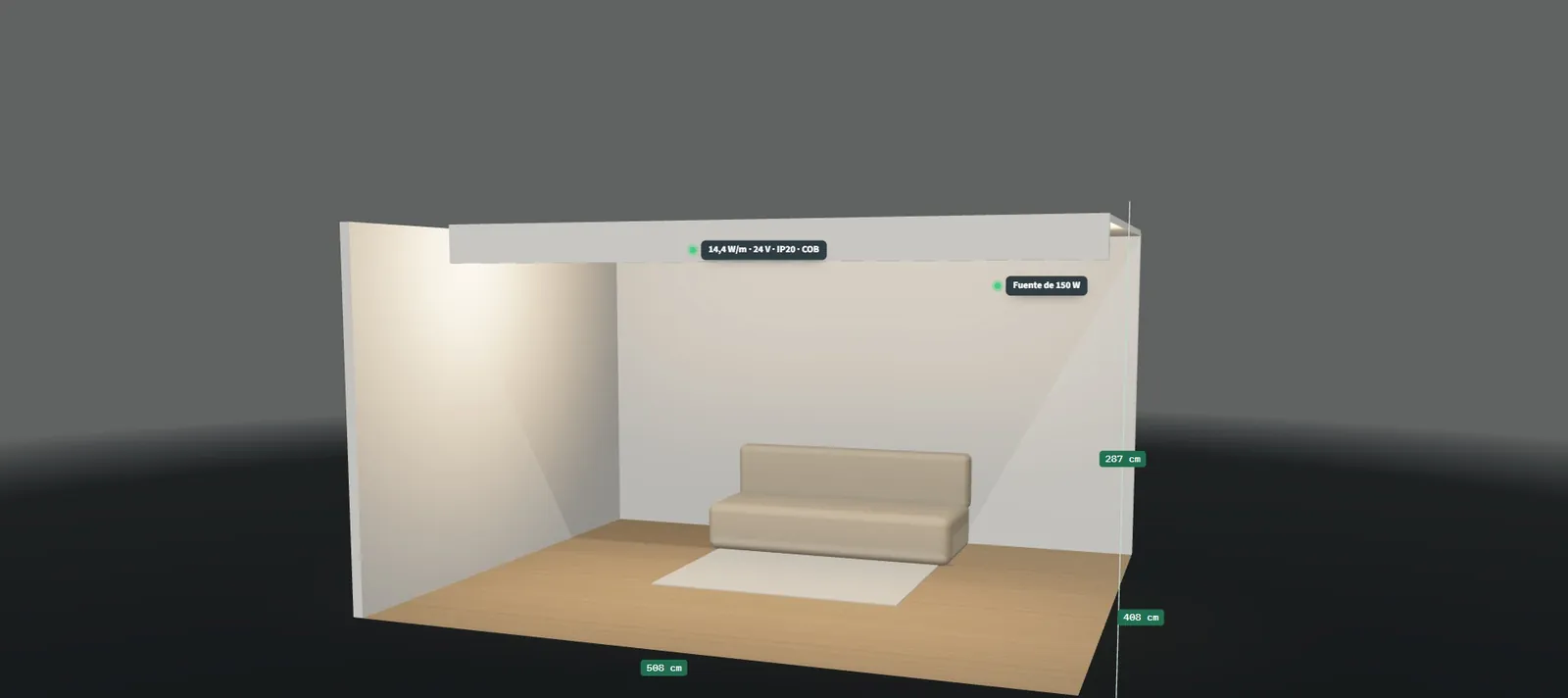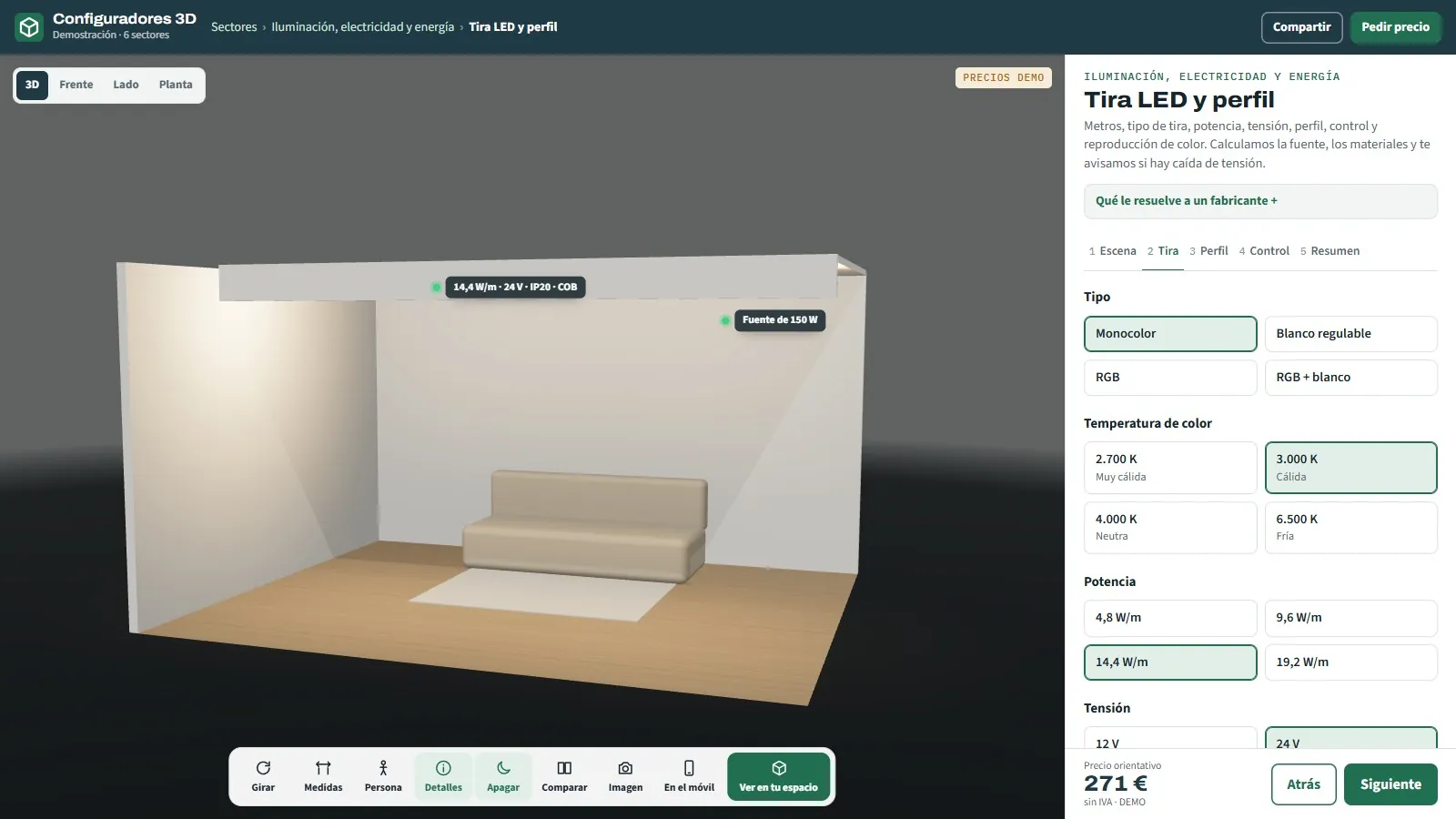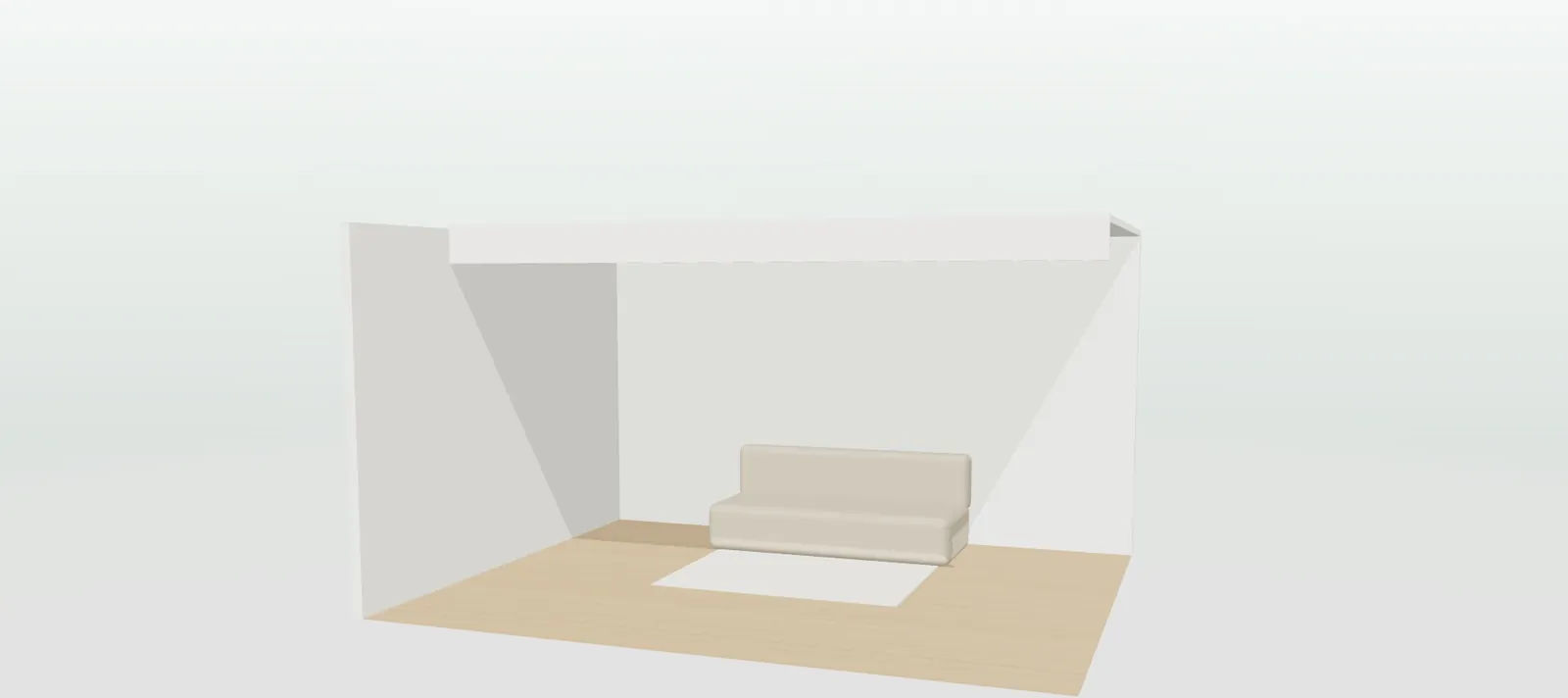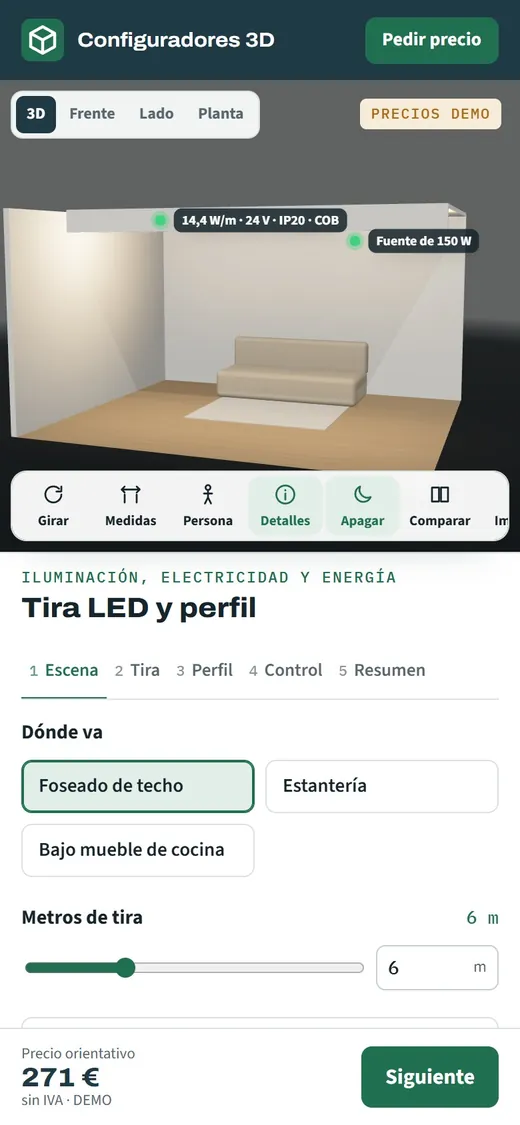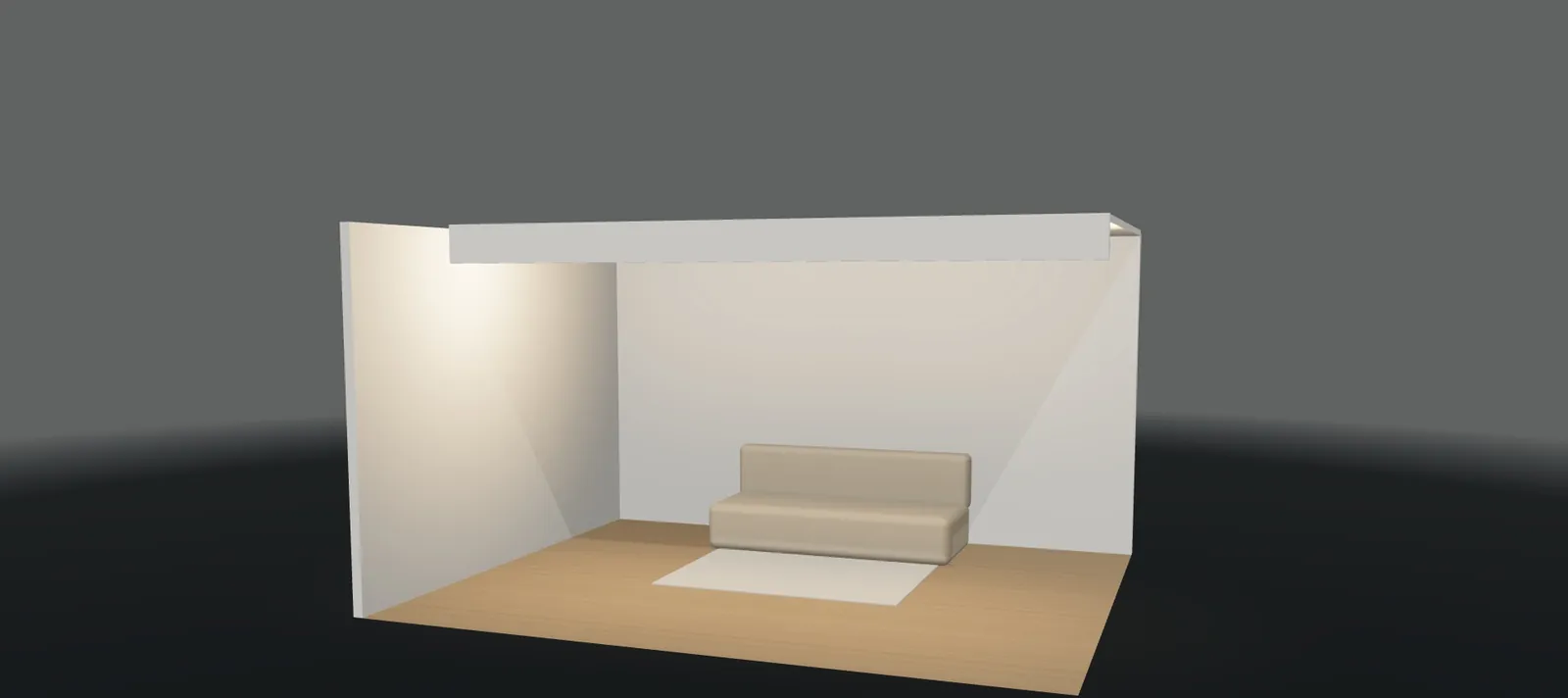
A 3D LED strip configurator in a lit ceiling cove, with a recessed aluminium profile and an opal diffuser
LIGHTING, ELECTRICAL AND ENERGY · OPEN DEMO
— FOR LED MANUFACTURERS AND DISTRIBUTORS

3D configurator
for LED strips
and profiles.

The electrician calls you from the job with six metres of cove and a single question: which driver do I use? Then the order arrives with no end caps, no clips, or with a 12 V strip for a run that needed 24 V, and the second delivery is on you.

— WHAT HAPPENS TO YOU

Tuesday, 7:40,
trade counter
and the phone ringing

You are a manufacturer and distributor of LED strip and aluminium profile. You sell to electricians, to lighting shops and to the occasional interior designer, and in the warehouse you have a technical counter with two people who already have a queue first thing. One brings a photo of a living room ceiling with a six-metre cove; another, a sketch of a kitchen with three runs under the units. Both want to be out in ten minutes with the material loaded in the van.

Meanwhile, the counter phone never stops. One installer asks whether a 100 W driver is enough for two rolls at 14.4 W/m; another does not know whether 12 or 24 V suits a ten-metre run better; and a third asks for “the good white strip” without saying colour temperature or colour rendering. Every answer is a calculation in someone's head: watts per metre, metres, driver headroom, voltage drop. And it is done standing up, between two customers.

In the afternoon the emails arrive: the recessed profile that had no end caps, the missing clips, the driver that came up short. Nobody was entirely wrong; it is simply that an LED strip is not a product, it is a system of six or seven parts that have to match each other. And the end customer, the one paying for the refurbishment, still does not know whether their ceiling will end up with a warm, calm light or an operating-theatre one.

— WHERE THE SALE LEAKS AWAY

The bottlenecks
you will recognise
straight away.

“Which driver do I put on this?”

The driver is worked out in someone's head

Metres times watts per metre, plus some headroom, and done. Except when the installer switches from 9.6 to 14.4 W/m without saying so, or adds two metres to the run on site. Your counter does that calculation several times a day, over the phone and without seeing the installation, and the error only shows up when the driver runs at its limit or the strip flickers.

What it costs youA warranty claim for a driver that was never the right one.
“The end caps and the clips are missing.”

Orders that arrive incomplete

The strip and the profile get ordered, because they are what you see, and the small things are forgotten: end caps, fixing clips, diffuser, controller. The installer discovers it up the ladder, with the ceiling open and the customer watching. That means a second delivery of parts worth very little, which cost almost as much to pick and send as the whole order.

What it costs youThe margin on the order goes on carriage for small parts.

“Twelve or twenty-four volts?”

Nobody sees the voltage drop coming

On a long run at 12 V, the end of the strip looks dimmer than the beginning. The installer does not notice it at the warehouse; they notice it when the cove is finished and the customer asks why the far corner is dimmer. Explaining voltage drop over the phone to someone in a hurry rarely works.

What it costs youA complaint that ends with the ceiling being opened up again.

“Show me how it looks lit.”

The end customer cannot picture the effect

You show a private customer a roll of strip on the counter or a catalogue photo. They do not know what the difference is between 2,700 K and 4,000 K, or why an opal diffuser stops you seeing the individual points of light. If they cannot picture it, they decide on the price of the roll, and the strip with the better colour rendering stays on the shelf.

What it costs youThe cheap option gets sold because the good one cannot be shown.

“Send me a price for the lot.”

Quoting a system piece by piece

An RGB strip with a remote, a corner profile and a movement sensor are five or six references, each with its price. Putting that quote together by hand, checking everything is compatible and sending it as a PDF takes a while that nobody invoices. And the installer is often asking two other suppliers at the same time.

What it costs youWhoever answers first wins, not whoever has the better product.

— DO THE MATHS

What it costs you
today, with
your own numbers.

Put in your own numbers. Only the orders that go out with a part missing count here, plus what it costs to send on what was left out; the counter time is separate.

orders
€
MONTHLY COST OF INCOMPLETE ORDERS 0

€ a month

The values are an example: replace them with yours. The calculation is a simple multiplication and does not come from any study.

— HOW IT IS SOLVED

Every bottleneck,
with its
answer.

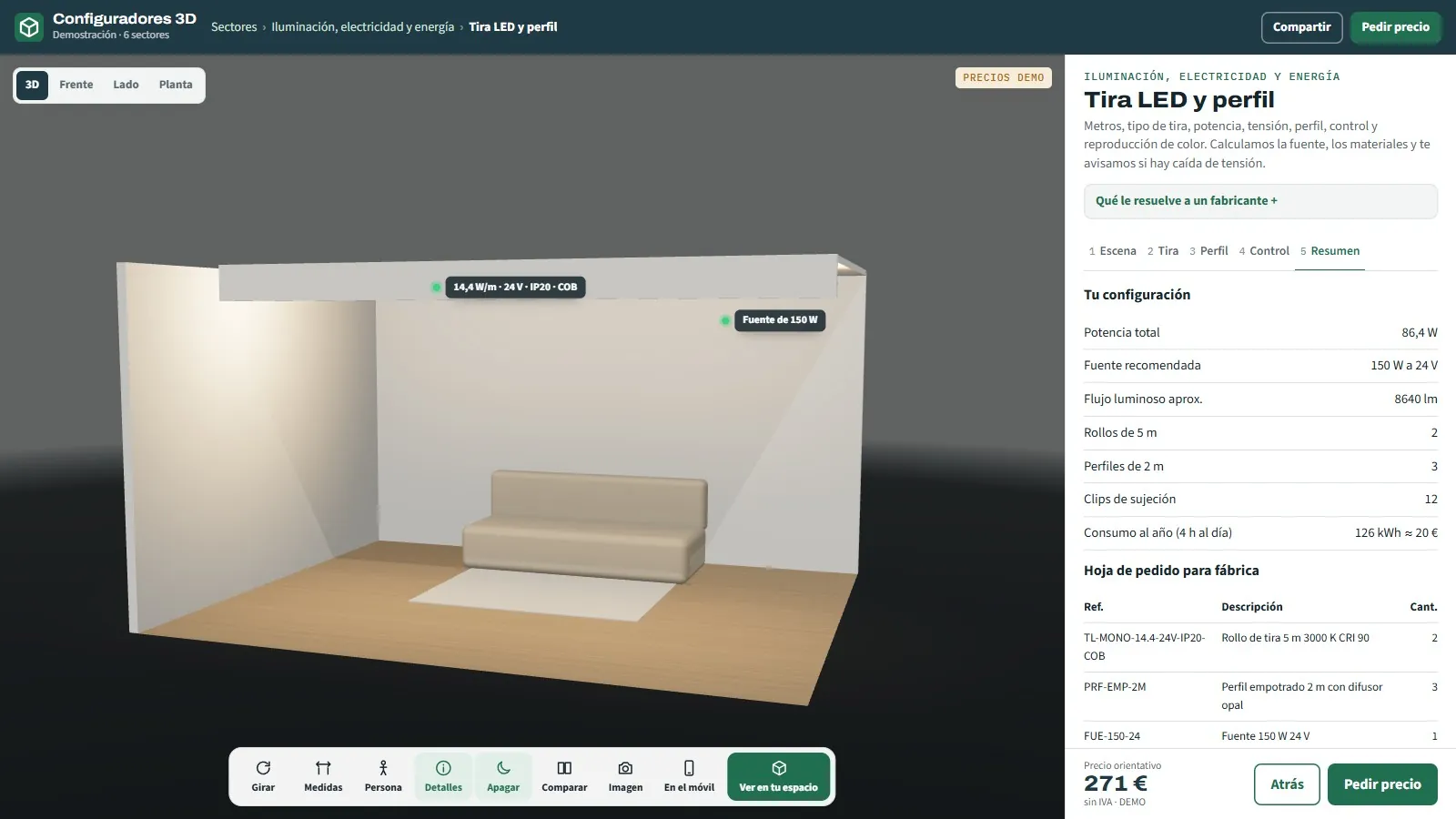
LED strip configurator summary with total power, recommended driver, rolls, profiles and yearly consumption
Answers · The driver is worked out in someone's head

The driver comes out calculated before they even call you

The installer chooses metres, watts per metre and voltage, and immediately sees the total power, the recommended driver and the approximate light output. If they switch from 9.6 to 14.4 W/m, the driver changes with them. Your counter stops doing sums in its head and moves to checking a calculation that arrives already done.

Power and driver calculation
Close-up of the LED strip inside a recessed aluminium profile with an opal diffuser and labels on the 3D model
Answers · Nobody sees the voltage drop coming

The warning comes before the strip is cut

If the run is too long for the chosen voltage, the configurator warns about the voltage drop. The installer moves to 24 V or checks with you before ordering, not once the cove is closed up and the far end looks dimmer than the entrance.

Voltage drop warning
LED strip configurator screen with the chosen strip type, colour temperature, wattage, voltage and profile
Answers · Orders that arrive incomplete

End caps, clips and driver on the same list

With the strip, the profile and the control chosen, out comes the order sheet with references and quantities: 5 m rolls, 2 m profiles, end caps, clips and driver. The small parts stop depending on anyone's memory and the order reaches the warehouse ready to pick.

Factory order sheet
A ceiling cove in 3D at night with the LED strip lit in warm 3,000 K light along the whole perimeter
Answers · The end customer cannot picture the effect

Their ceiling lit, at night, on screen

The cove, the shelving or the kitchen is shown in 3D with the strip lit and the night scene on. Up to three versions are compared, 3,000 K against 4,000 K or opal against clear, with the differences highlighted. The private customer opens it on their phone with a QR code and decides by seeing, not by imagining.

Day and night and an option comparison tool
LED strip configurator open on a mobile phone with the ceiling cove lit and the strip options
Answers · Quoting a system piece by piece

The price of the whole system, in a PDF

An indicative price for the complete system calculated with your price list and a PDF the installer forwards to their customer that same afternoon. If you work with distributors or shops, each one can have their area with their margin and their brand, and the orders reach you just as complete.

Indicative price and PDF
— TRY IT NOW

Try it
for
yourselves.

Extend the cove strip to 12 metres, switch from 24 to 12 V and see what the configurator warns about; then turn on the night scene.

An open demo, with no registration, with example products and prices. It is designed for manufacturers, dealers and installers: private customers are welcome to try it, but we do not sell the product.

— INVESTMENT AND NEXT STEP

Show us your strip and profile catalogue

With your references for strip, profile, driver and control we will show you how the configurator would look applying your own calculation rules.

From €6,500

Most projects for manufacturers fall between €14,500 and €35,000, depending on the catalogue, the manufacturing rules and the integrations. Maintenance and hosting from €190 a month. We start from a base that already works: you are not paying for development from scratch.

  • What is includedThe configurator with your products, your rules and your price list, embedded in your website and in your dealers' sites, with training for the sales team.
  • TimeframeBetween 3 and 16 weeks depending on the scope; the exact date goes in the proposal.
  • Payment terms40% to start, 40% with the test version and 20% at go-live.

Would you rather talk it through? Call 662 061 421 or write to grup3d@grup3d.es.

— FREQUENTLY ASKED QUESTIONS

What we
get asked.

There are more short answers in frequently asked questions about 3D configurators and who we are in 3D configurator company.

What exactly does the LED strip configurator calculate?

From the metres, the watts per metre and the voltage it works out the total power, the recommended driver, the approximate light output, how many 5 m rolls, 2 m profiles and clips are needed and the yearly consumption. It also warns when a run is at risk of voltage drop. In your version, the driver headroom and the compatibility rules are yours.

Why does it recommend 24 V on long runs?

Because, at the same power, 24 V carries half the current of 12 V and the voltage drops less along the strip. On a long run at 12 V, the end looks dimmer than the beginning. The configurator warns about it so the change is made before ordering. If your strips have different length limits, yours are programmed in.

How much does a bespoke LED strip and profile configurator cost?

Developments start from €6,500 for a visual configurator of one product family; most projects for manufacturers fall between €14,500 and €35,000, depending on the catalogue, the rules and the integrations, plus maintenance from €190 a month. With an LED strip what moves the figure most is the number of strip, profile and control families, the compatibility and driver calculation rules that have to be programmed and the link to your ERP, if you want one. Going through your catalogue in the demo, we tell you what we would leave for a second phase.

Can our distributors use it with their own prices?

Yes, as part of the bespoke development. Each distributor or shop logs into their own area, with their logo and the margin they apply to your price list, and uses the configurator at their counter or on their website. Orders reach you with the complete sheet, with your references, and end-customer enquiries can be assigned by area to the right distributor.

Does it work for an installer on site with a phone?

Yes. It opens on a phone with a QR code, with no app to install. The installer enters the metres they have just measured, chooses strip, profile and control, and has the driver, the bill of materials and the indicative price within minutes. They can forward the PDF to their customer or to your warehouse from the job itself.

Can you tell the difference between 2,700 K, 3,000 K and 4,000 K on screen?

Enough to decide whether the space ends up warm, neutral or cool, especially with the night scene on and comparing two or three versions side by side. Every screen has its own tone, so for a fine colour choice it is still worth having a physical sample of the strip at your counter or in the shop.