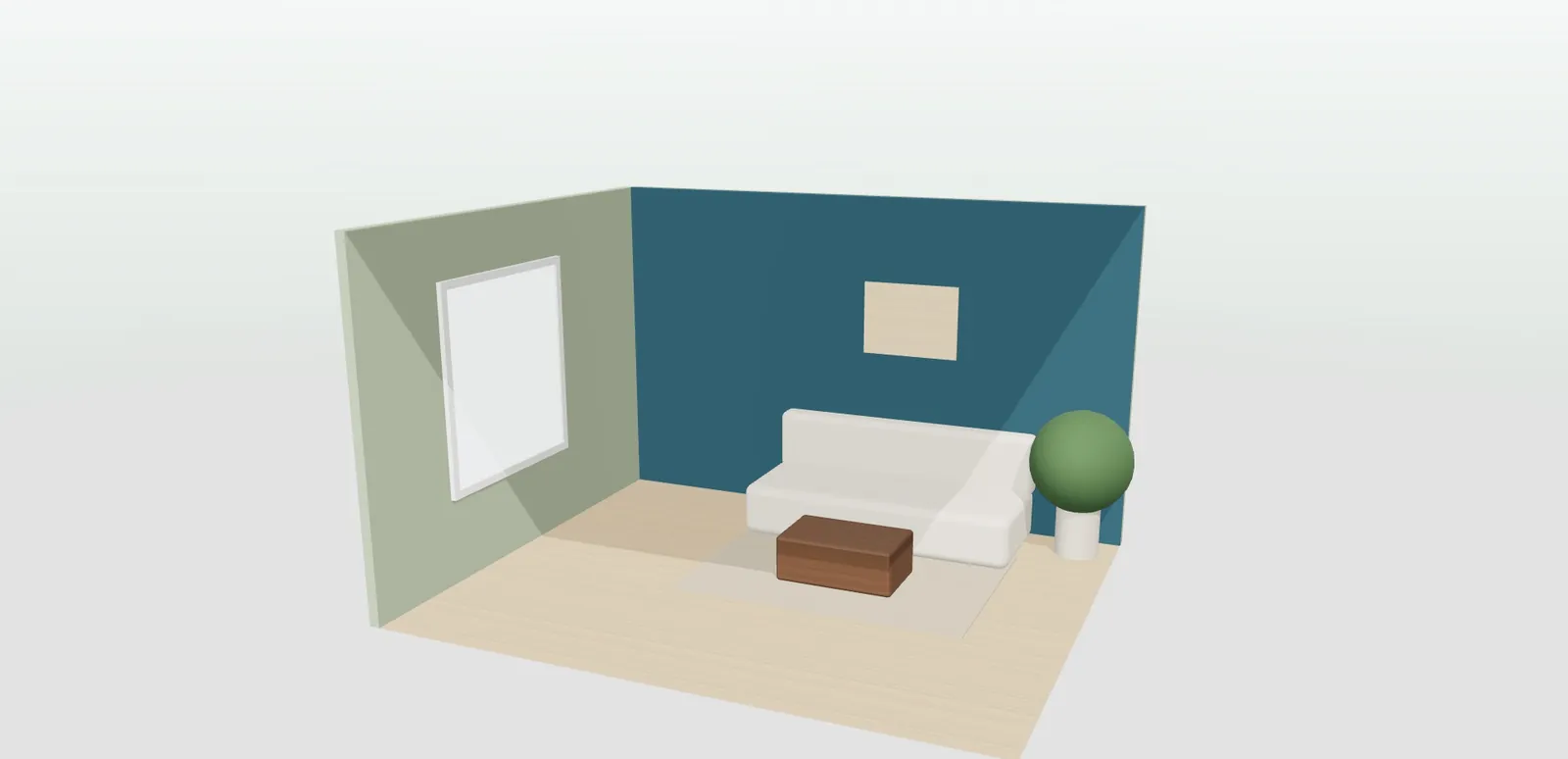
Living room in 3D painted in sage green with a petrol blue accent wall and white woodwork in the paint simulator
BATHROOM, CERAMICS AND MATERIALS · OPEN DEMO
— FOR PAINT MANUFACTURERS AND SHOPS

3D simulator
for paint colour
made for manufacturers.

Four tester pots, nine painted squares on the wall and the customer still does not dare go for the green. When they finally decide, they work out the litres on their own and halfway through the second coat discover there is not enough for the ceiling: another trip to the shop and another tint of the same colour.

— WHAT HAPPENS TO YOU

Nine squares
on the wall
and no decision

On the wall of the customer's living room there are nine colour squares painted three weeks ago. Sage, olive green, pearl grey and six more, each from a tester pot bought at your shop. In the morning she likes one and in the afternoon another. Her partner prefers off-white, as always. Today she comes back to the counter with a phone full of photos of squares and a new question: “And if I paint just one wall in petrol blue, will it not be too dark?”

The counter staff show her the colour chart, those two-centimetre strips that say nothing about a four-metre wall with light from a window. They recommend a washable paint, but she has seen a cheaper fifteen-litre tin of emulsion in another shop and does not understand why she should pay more. Then comes the calculation: sixty metres, ceiling or no ceiling, two coats. The sum is done in their head at the counter, with three customers waiting behind.

Ten days later she comes back for another four-litre tin: she came up short on the ceiling. The same colour has to be tinted again and everyone hopes the shade matches the first one. Across your network of shops this happens at every counter, every week. And with professional painters it is the same: the owner cannot decide, the painter waits with the job on hold and the order is delayed until somebody chooses out of sheer exhaustion.

— WHERE THE SALE LEAKS AWAY

The bottlenecks
you will recognise
straight away.

“I love it on the chart, but on the wall it scares me.”

The customer does not dare go for colour

A strip of the chart does not show how a sage green looks in a whole living room, or a terracotta on a façade, or a petrol blue accent wall with the rest in off-white. The customer is afraid of getting wrong something they will see every day, and goes back to the usual white.

What it costs youTester pots that never turn into an order and chart colours that never sell.

“Will a four-litre tin cover the whole living room?”

Paint orders that fall short

Wall metres, ceiling or not, one coat or two, the coverage of each type of paint: every member of counter staff applies their own rough rule or the customer does the sum at home. If they come up short, they come back for more and the colour tinted again may not match. If they have too much, they feel they were oversold.

What it costs youSecond visits, shade differences and customers who distrust the calculation.

“And why does this one cost so much more than that one?”

Selling on price alone

Emulsion, washable, anti-mould, eco. To the customer they are white tins with different prices, and if nobody explains the difference they choose the cheapest. In a bathroom with no window or in the children's room the right paint matters, but at the counter there is not always time to explain it calmly.

What it costs youThe cheap tin gets sold and the margin on technical paints is lost.

“I will talk it over with my partner and come back.”

Decisions made at home, with nothing to show

The colour of a living room or a façade is decided between two or more people, and in a residents' association, between many. What they take home is a strip of chart and a painted square. Without a clear image of the whole, everyone imagines a different colour and the decision is postponed another week.

What it costs youWeeks of waiting in which the customer may end up buying somewhere else.

“The painter says black woodwork will not go with it.”

The colour is not seen with the rest of the room

A wall is not painted on its own: there is the ceiling, the white, black or wooden woodwork, the matt, satin or gloss finish. On the chart the colour is isolated and the customer cannot see how it works with what they already have at home. They paint, are not quite convinced and paint again.

What it costs youA job done twice that the customer remembers as bad advice from the shop.

— DO THE MATHS

What it costs you
today, with
your own numbers.

Count only the trips back to the counter for paint that ran out. Testers that never become a sale and customers who go elsewhere are separate.

shops
customers
h
COUNTER HOURS PER MONTH REPEATING CALCULATIONS AND TINTING 0

hours a month

The values are an example: replace them with yours. The calculation is a simple multiplication and does not come from any study.

— HOW IT IS SOLVED

Every bottleneck,
with its
answer.

Living room in 3D painted in sage green with a petrol blue accent wall, white ceiling and white woodwork
Answers · The customer does not dare go for colour

The customer sees their colour in a whole room before buying

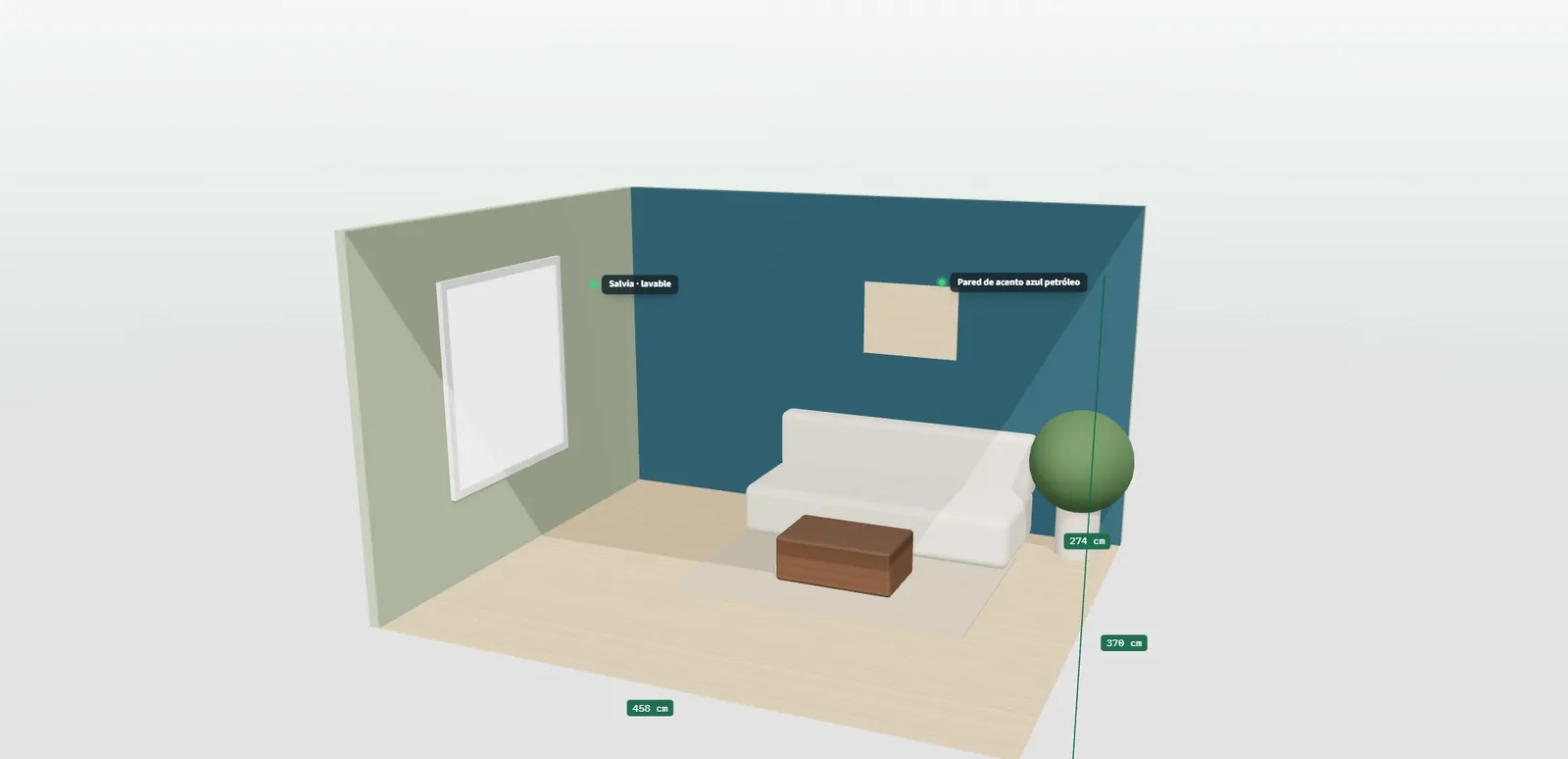
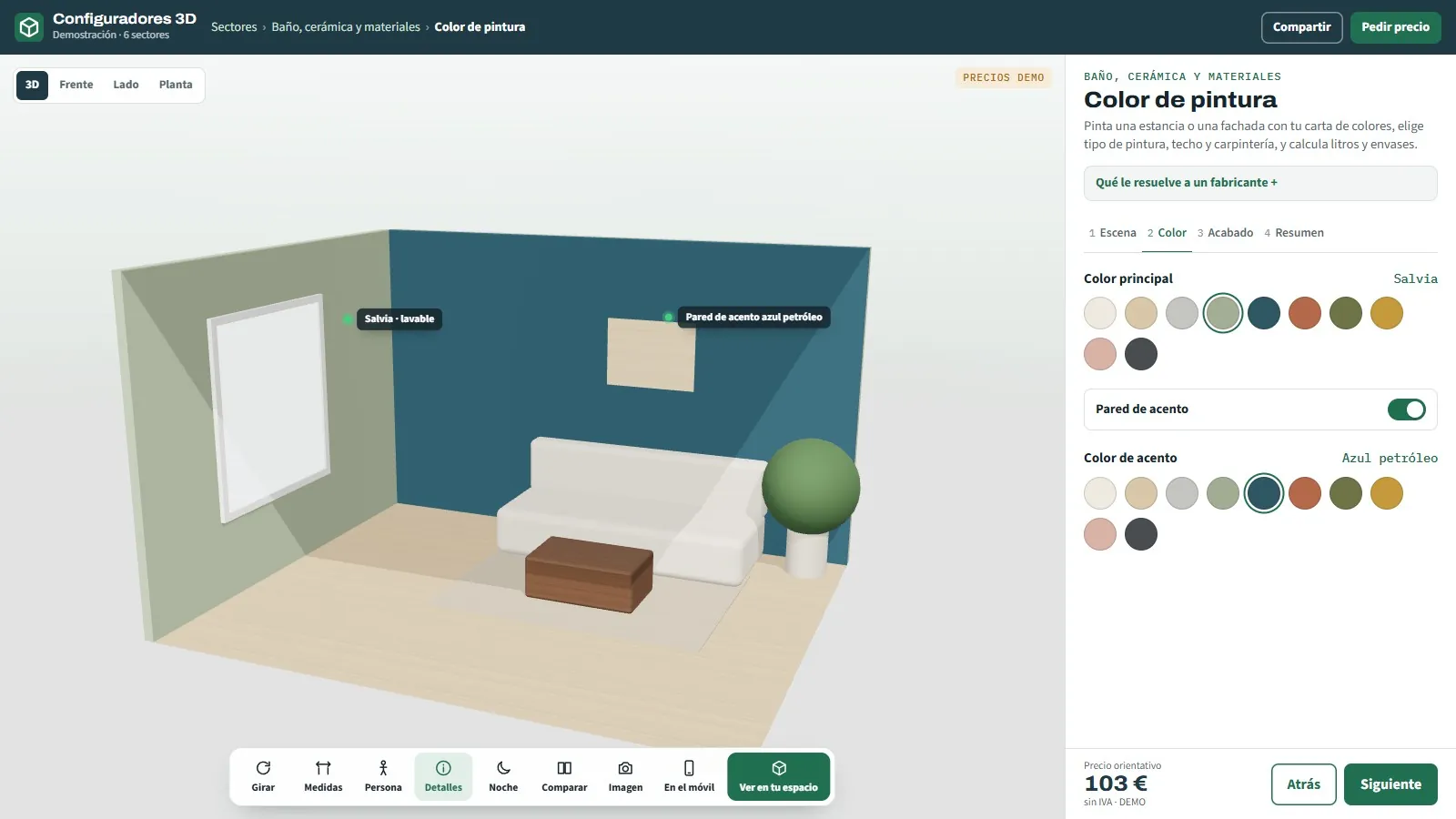
They pick a living room, a bedroom or a façade and paint with the chart colours, with an accent wall if they want to try the petrol blue or the terracotta. They rotate the scene, look at it close up and discover the sage green was not so risky after all. In your development, the full chart is yours, with its names and references.

Chart colours applied in a living room, bedroom or façade
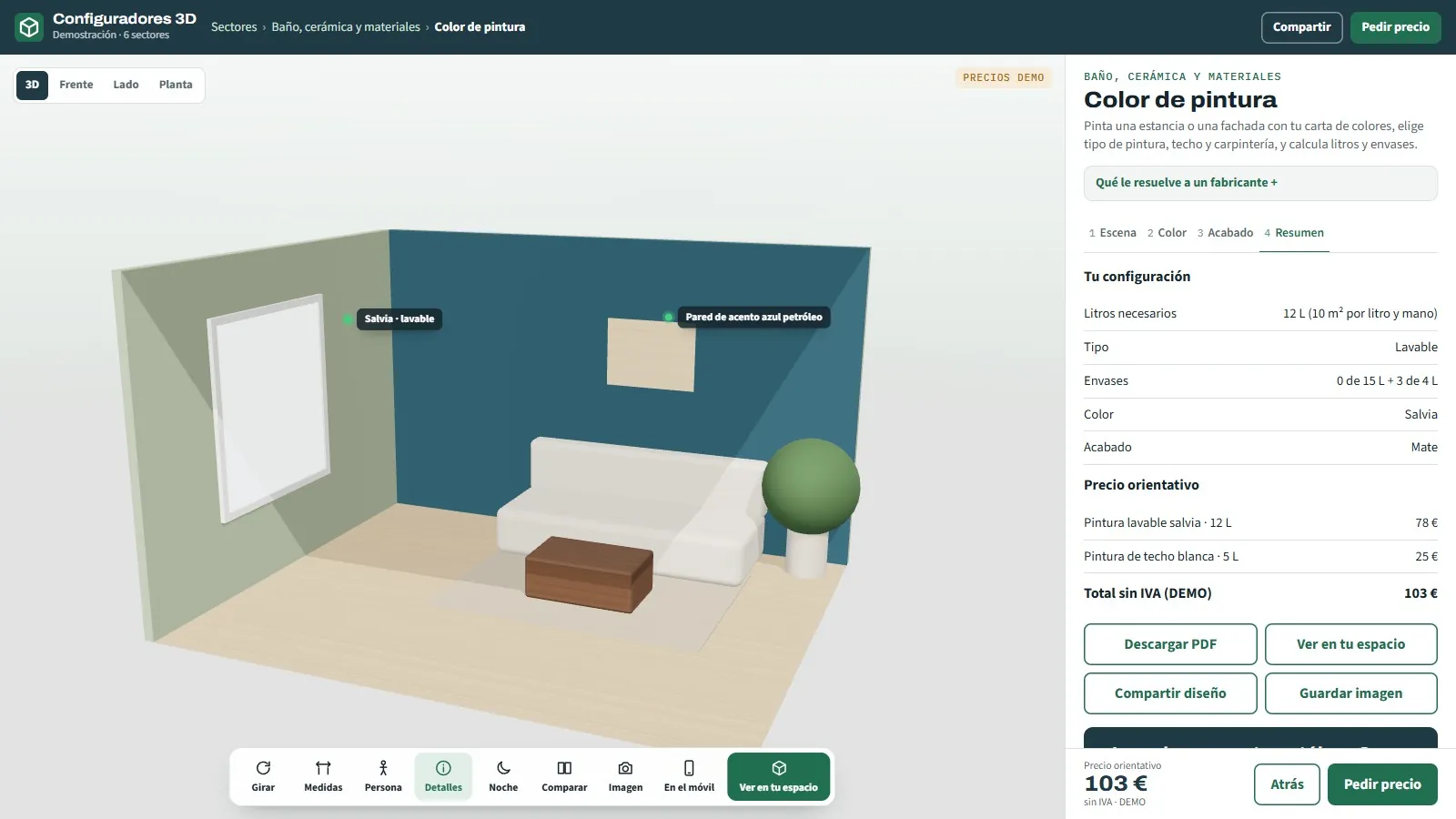
Paint simulator summary with the litres needed, the type of paint, the tins, the colour and the finish
Answers · Paint orders that fall short

The litres and the tins come out calculated

From the metres, whether the ceiling is included and the number of coats, the simulator works out the litres and how they split into 15 and 4 litre tins. In your development it uses the coverage of each type of paint and your tin sizes. The customer buys it all at once and nobody has to do sums at the counter.

Calculation of litres and tins
Painted room in 3D with labels showing the main colour, the accent colour, the finish and the type of paint
Answers · Selling on price alone

Each type of paint explains why it costs what it costs

Emulsion, washable, anti-mould or eco are chosen in the same flow, with their benefit explained and their indicative price next to the colour. The customer understands what they gain with a washable paint in the hallway or an anti-mould one in the bathroom, and the shop stops competing on the cheapest tin alone.

Paint types with their benefit and their indicative price
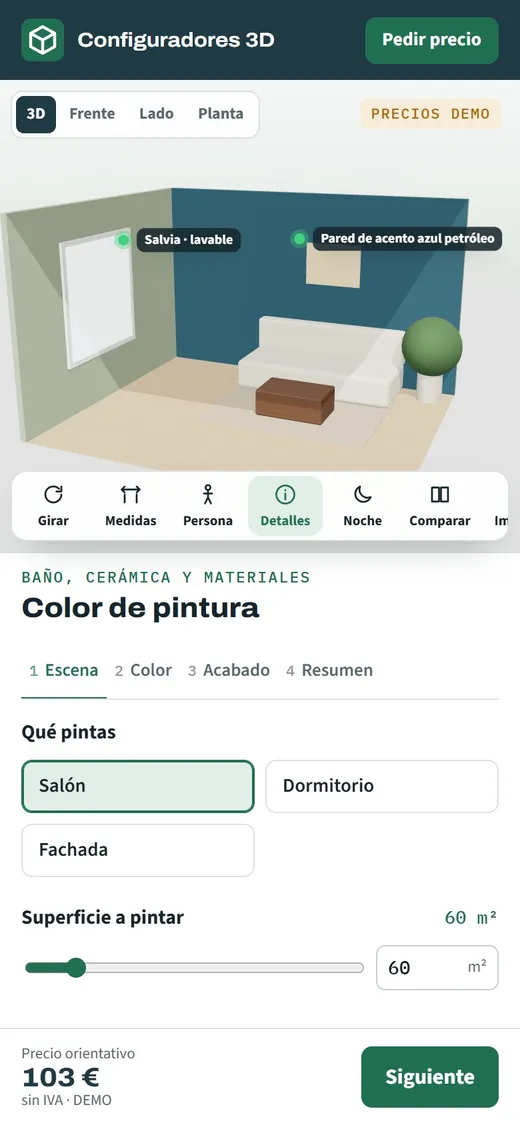
Living room painted in 3D on a phone screen, with the simulator's colour chart just below
Answers · Decisions made at home, with nothing to show

The colour goes home on their phone

From the shop screen, the customer opens their configuration on their phone with a QR code, or takes away an image or the PDF with the colour, the finish and the litres. They can save up to three combinations and show them side by side, with the differences highlighted, to their partner or at the residents' meeting.

QR to the phone, image, PDF and a comparison of 3 options
Paint simulator screen with scene, area, main colour, accent colour, finish, type and woodwork
Answers · The colour is not seen with the rest of the room

The colour, with its ceiling, its finish and its woodwork

The simulator also paints the ceiling if you want, changes the finish between matt, satin and gloss and sets the woodwork in white, black or wood. The customer sees the whole thing, not an isolated colour, and the painter works on a decision already made with everything in view.

Ceiling, finish and woodwork in the same scene
— TRY IT NOW

Try it
for
yourselves.

Paint the living room in sage with a petrol blue accent wall, change the woodwork to black and look at how many litres and tins come out with two coats and the ceiling included.

An open demo, with no registration, with example products and prices. It is designed for manufacturers, dealers and installers: private customers are welcome to try it, but we do not sell the product.

— INVESTMENT AND NEXT STEP

Bring us your colour chart

With your chart, your paint types and the tins you sell, in 20 minutes we show you how the simulator would work at your shop counters.

From €6,500

Most projects for manufacturers fall between €14,500 and €35,000, depending on the catalogue, the manufacturing rules and the integrations. Maintenance and hosting from €190 a month. We start from a base that already works: you are not paying for development from scratch.

  • What is includedThe configurator with your products, your rules and your price list, embedded in your website and in your dealers' sites, with training for the sales team.
  • TimeframeBetween 3 and 16 weeks depending on the scope; the exact date goes in the proposal.
  • Payment terms40% to start, 40% with the test version and 20% at go-live.

Would you rather talk it through? Call 662 061 421 or write to grup3d@grup3d.es.
— FREQUENTLY ASKED QUESTIONS

What we
get asked.

There are more short answers in frequently asked questions about 3D configurators and who we are in 3D configurator company.

Can our full colour chart be loaded?

Yes. The demo comes with ten example colours; in your simulator it is your chart, with its names and references, and the paint types, finishes and tins you sell. When the chart changes, the simulator is updated, without waiting to reprint strips or sample books for the shops.

Is the colour shown on screen exact?

No screen reproduces a colour perfectly: it depends on the brightness and on each device. The simulator is there to decide the colour in its context, with the ceiling, the woodwork and the accent wall, and to narrow the list of candidates to one or two. For the final shade, the physical sample is still the reference.

How does it work out the litres and the tins?

It multiplies the metres to be painted by the coats, takes into account whether the ceiling is painted and divides by the coverage. The demo uses 10 m² per litre and coat; in your development the coverage of each type of paint and your tin sizes are used, so it produces the combination of tins the customer takes home.

How much does a paint colour simulator cost?

A simulator with your colour chart starts from this: developments start from €6,500 for a visual configurator of one product family; most projects for manufacturers fall between €14,500 and €35,000, depending on the catalogue, the rules and the integrations, plus maintenance from €190 a month. The final figure depends on the size of the chart, the scenes you want to include and whether shops or painters will have their own login with their margin, or whether it has to be connected to your ERP. We close it once we have seen how your network is organised.

Does it work for choosing the colour of a façade?

Yes, the façade is one of the scenes in the demo, along with the living room and the bedroom. It shows the colour on a typical façade, not on the real building, and it is useful when several people have to approve it, such as a residents' association: up to three proposals can be saved, compared side by side and shared as an image or PDF.

Can professional painters use it with their customers?

Yes. The painter opens it in their phone or tablet browser, shows the colour to the owner in the right scene and leaves them the PDF with colour, finish, type of paint and litres. With a professional login they see their own price, and private enquiries coming through your website are shared out between the shops by area.