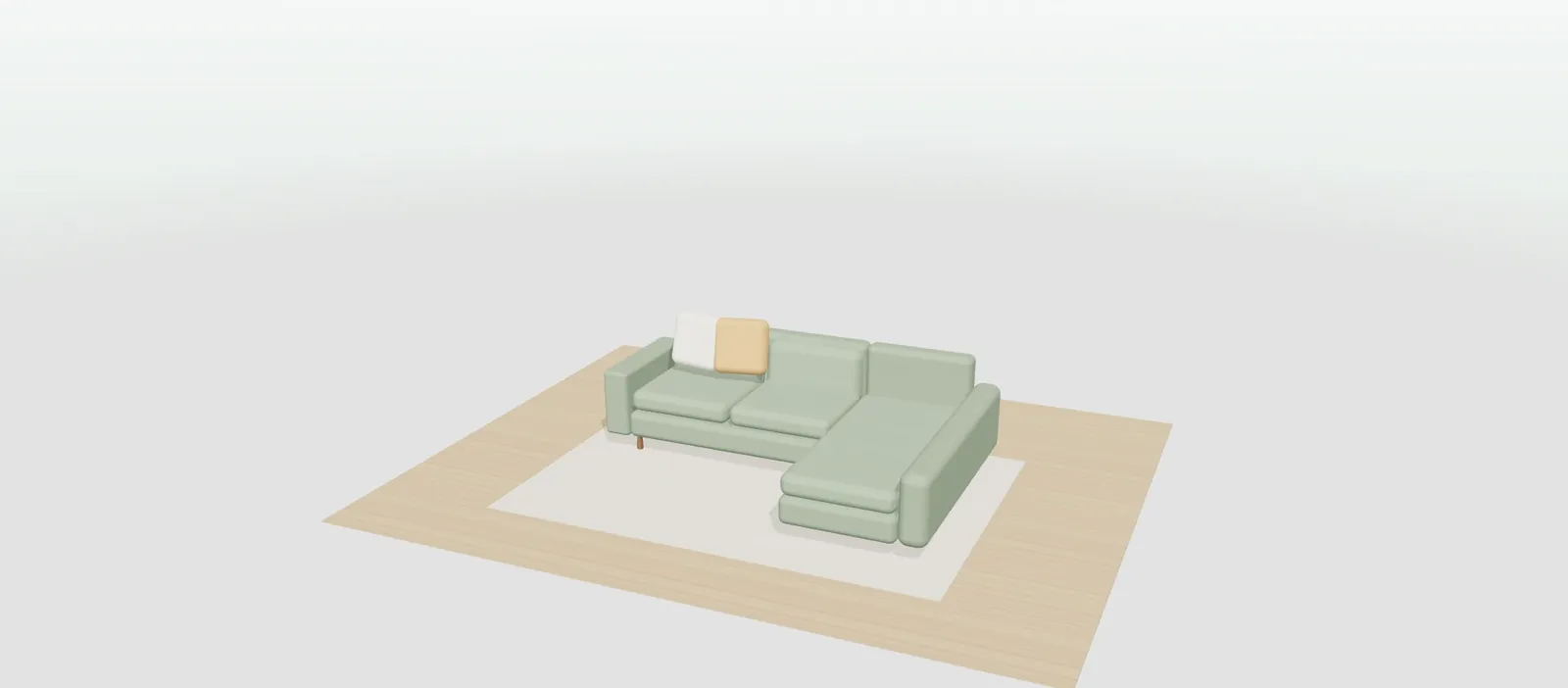
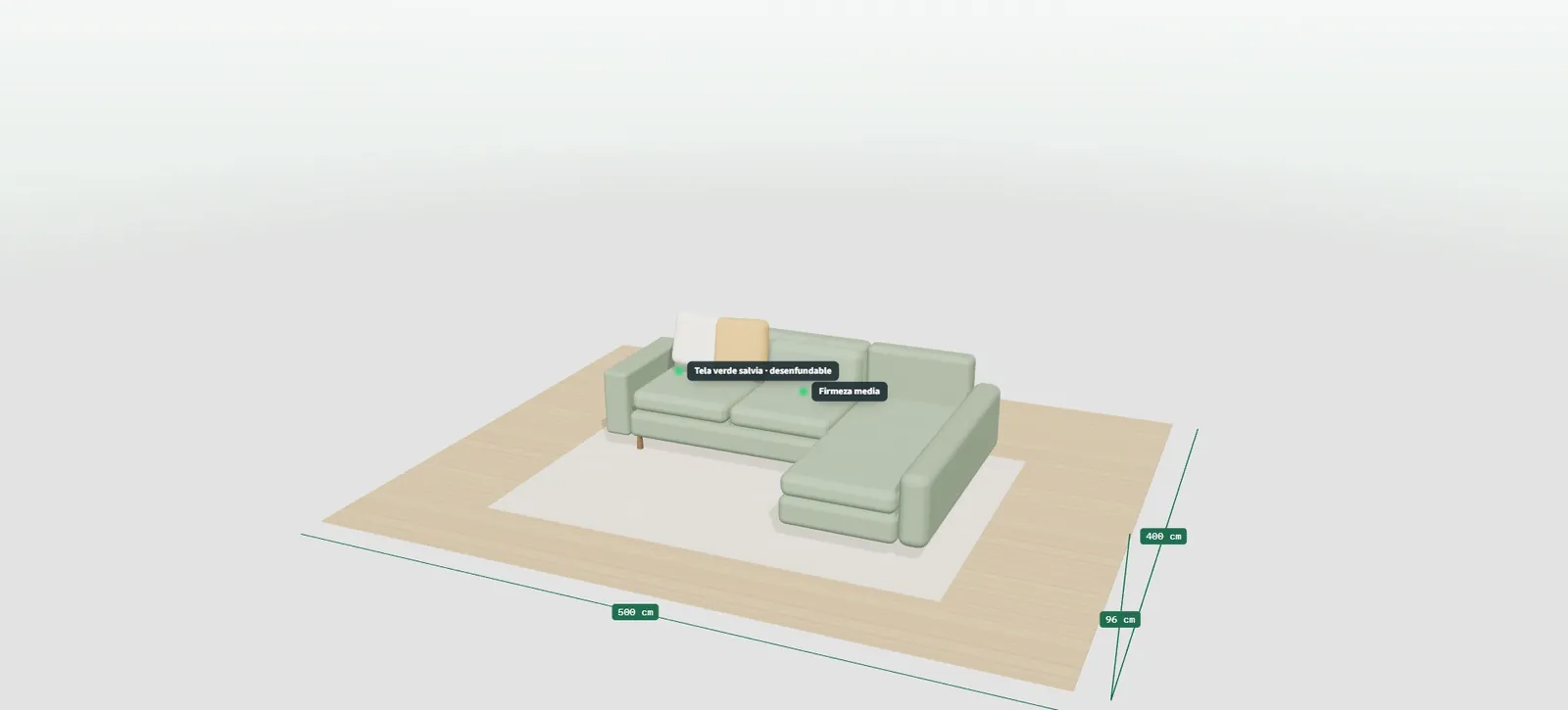
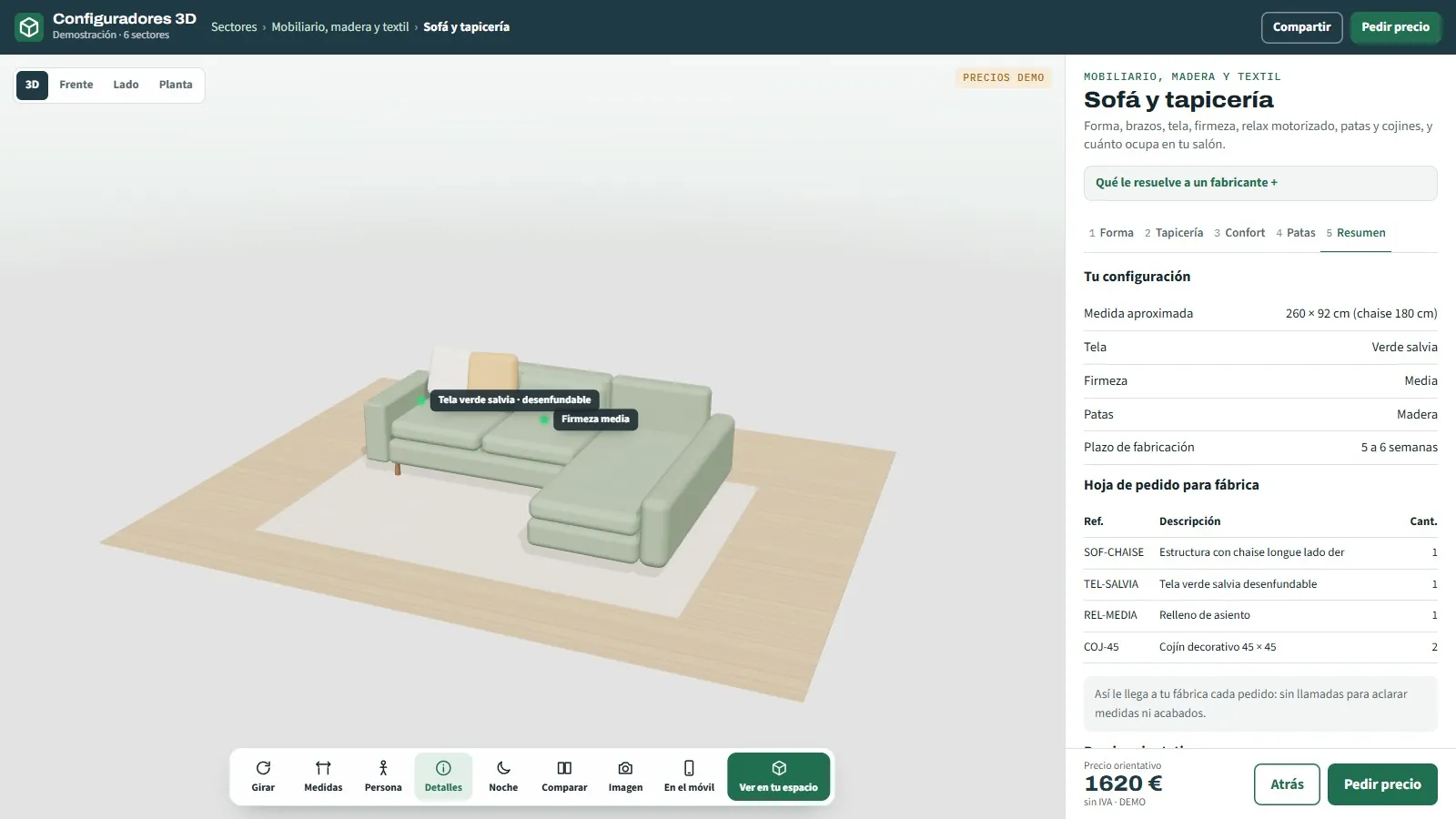
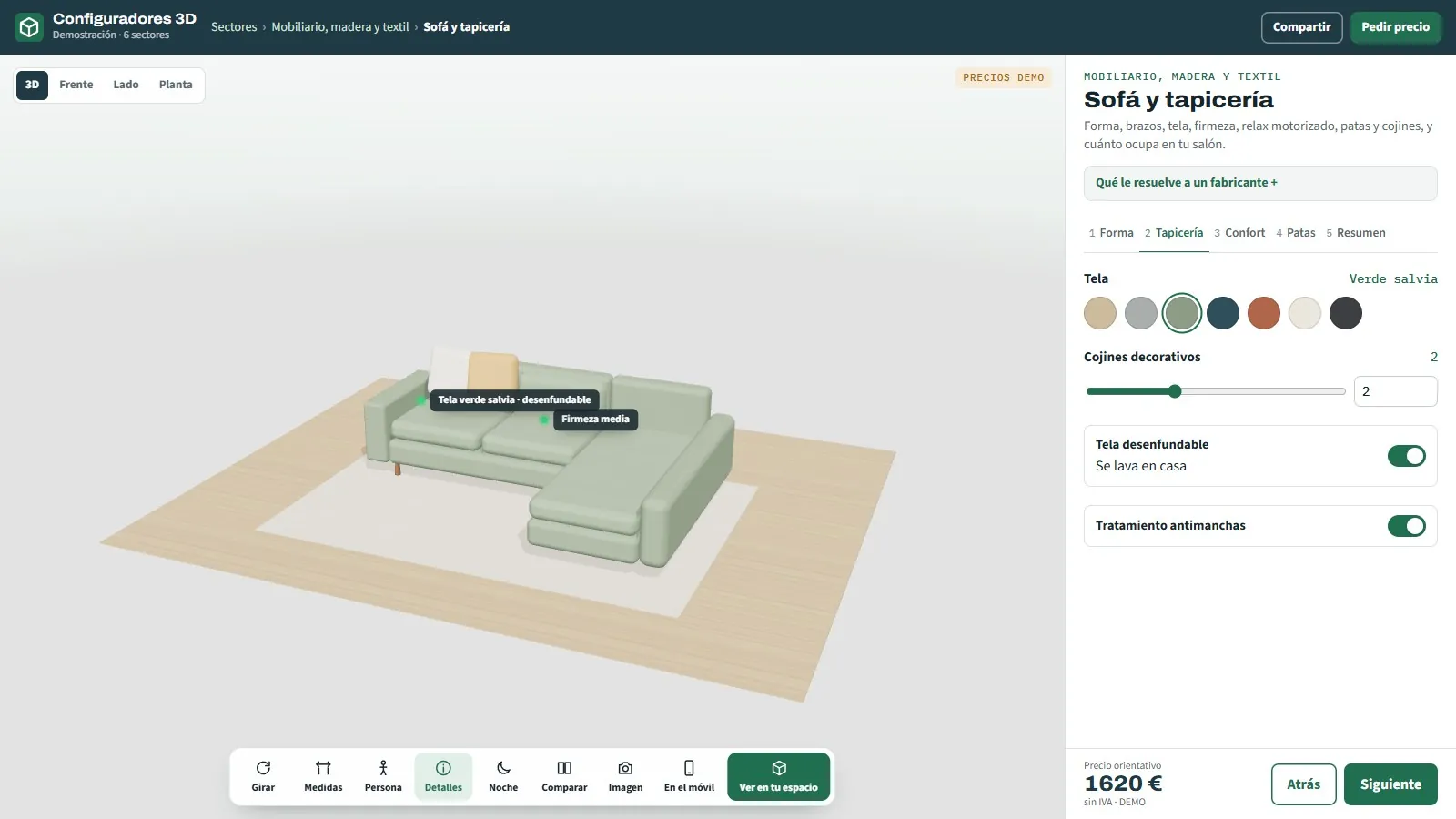
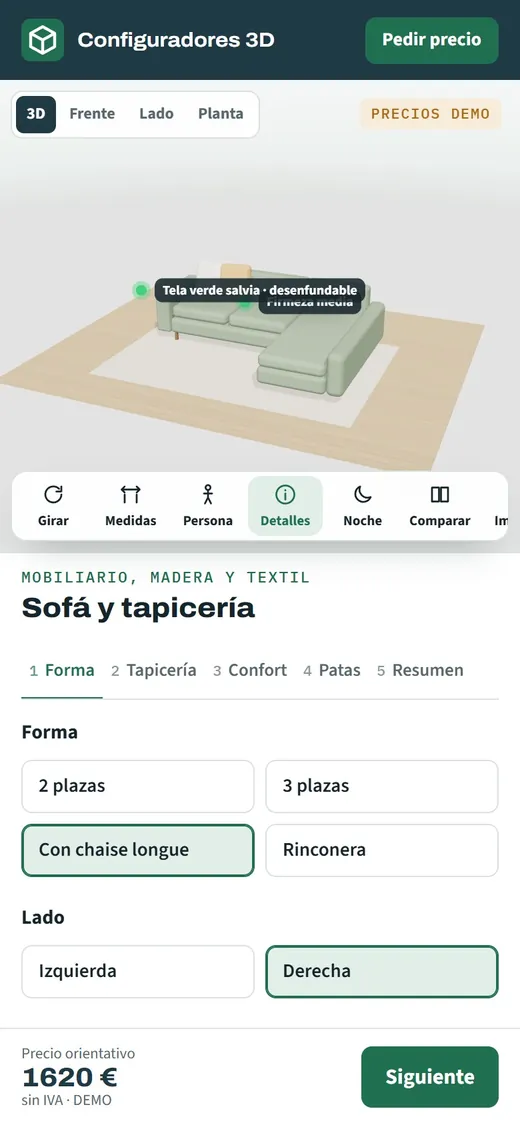
It is ten o'clock and in production there is an order nobody dares pass to the workshop. It comes from a furniture shop on the coast: sofa with chaise longue, sage green fabric, wooden legs, medium firmness. It is written on the shop's form, with the fabric reference copied from the swatch book and, in the margin, “right-hand chaise”. Whoever is holding it hesitates: right as you look at the sofa, or right as you sit on it? They call the shop, but the salesperson who took it is off until Thursday.
Meanwhile, in another shop, a couple have been standing in front of your swatch book for half an hour. They like the chaise model on display in pearl grey, but they want it in terracotta and do not dare: on the small swatch it looks too bold for a whole sofa. On top of that, they do not know whether a 1.80 metre chaise will leave room to get to the terrace. They leave with a catalogue and two fabric samples in a bag, and the salesperson knows that sale has just moved further away.
The shop can only display three or four sofas; your catalogue has four shapes, three arm types, two seat depths, dozens of fabrics, three firmness levels, motorised recliners and three types of leg. Almost everything you make is sold without ever having been seen made up. And when the sofa arrives home with the chaise on the wrong side, or the fabric was not what they pictured, the complaint comes back to your factory, even though the order was taken somewhere else.